
How to Introduce Gentle Grooming to a Cat That Dislikes Being Brushed

Brushing helps remove loose fur, reduce tangles and keep a cat's coat in good condition. However, not every cat enjoys being groomed. Some move away as soon as they see a brush, while others flatten their ears, flick their tails, growl or try to scratch when someone attempts to brush them.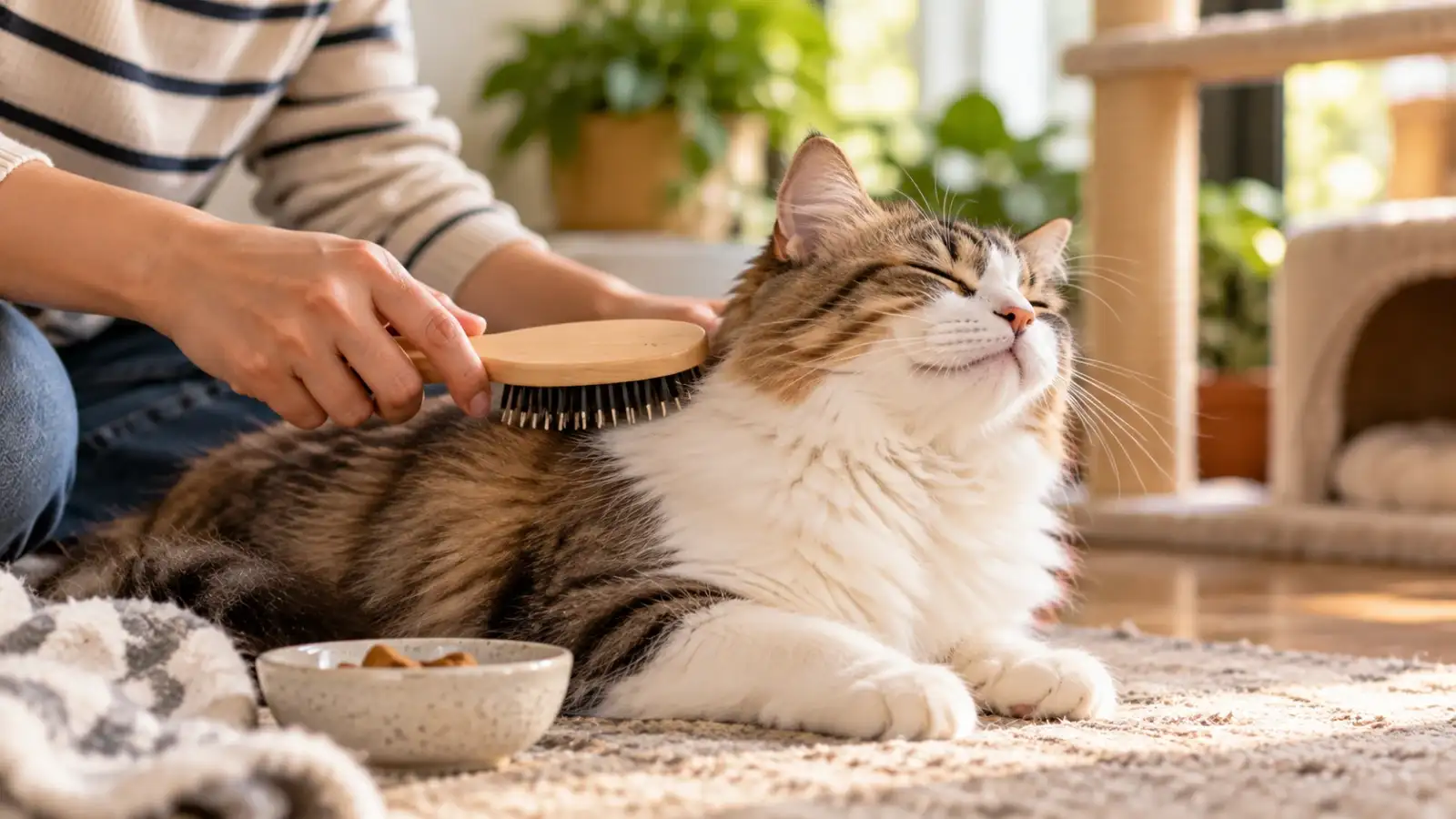
This reaction does not necessarily mean a cat will never accept grooming. It may be unfamiliar with the sensation, sensitive to certain areas being touched or anxious because of an unpleasant experience in the past. The key is to introduce grooming gradually, allowing the cat to become comfortable at its own pace.
Rather than trying to complete a full grooming session immediately, focus on building trust through short, positive interactions. With patience, suitable tools and a consistent approach, you can help your cat become more comfortable with basic coat care.
Past experiences can also influence a cat's response. If brushing has previously involved pulling at knots, holding the cat down or continuing after it became distressed, the animal may begin associating the brush with discomfort. Cats can also dislike being groomed around their belly, legs, tail or lower back, where handling may feel particularly intrusive.
Pay attention to when the resistance occurs. If your cat tolerates gentle petting but reacts as soon as the brush touches its coat, the tool or brushing sensation may be the issue. If it suddenly becomes sensitive to touch, cries when handled or avoids grooming altogether, arrange a veterinary check-up to rule out pain or an underlying health problem.
A rubber grooming mitt can be a useful option for cats that enjoy being stroked but dislike conventional brushes. It allows you to introduce the sensation through a familiar hand movement. However, not every cat will prefer a mitt, so watch how your pet responds.
Your cat's coat type also matters. Short-haired cats may need only occasional gentle brushing, depending on shedding and coat condition. Long-haired cats often require more regular care to prevent tangles and mats. Choose a tool suitable for the coat rather than assuming one brush will work for every cat.
Avoid using a brush to pull apart tight knots. Matted fur can tug painfully on the skin, and attempting to remove severe mats at home may cause injury. A veterinarian or experienced professional groomer can assess the safest way to remove them.
Repeat this introduction over several short sessions. You can offer a small treat when your cat calmly approaches or sniffs the brush, helping it associate the object with something pleasant. Keep the brush still rather than waving it around or bringing it suddenly towards the cat's face.
At this stage, there is no need to make contact with the fur. The aim is to help your cat understand that the brush can be present without anything unpleasant happening. If it backs away or appears frightened, give it more distance and try again another time.
Pet your cat briefly with your hand, then stop and observe its response. If it remains relaxed, allow it to sniff the brush or gently bring the tool near its body without brushing. Reward calm behaviour with a treat or quiet praise if your cat responds well to these rewards.
Do not hold the cat in place to complete this step. It should be able to move away whenever it wants. Giving your pet a choice helps reduce the feeling of being trapped and makes future grooming sessions easier to introduce.
Stop immediately after the stroke and observe your cat. If it remains relaxed, offer a treat and end the session or wait briefly before trying another stroke. The first few sessions may last only a few seconds, and that is enough.
Gradually increase the number of strokes as your cat becomes more comfortable. You might move from one stroke to two, then slowly extend the area being groomed over several days or weeks. There is no fixed timeline, so let your cat's response determine how quickly you progress.
If it starts moving away, stiffens or shows signs of irritation, return to an easier step at the next session. A brief, comfortable interaction is more useful than a long session that ends in a struggle.
Watch for flattened or rotated ears, a rapidly flicking tail, tense muscles, repeated attempts to move away, skin twitching or sudden turning towards the brush. Growling, hissing, swatting and biting are stronger signs that the cat needs the interaction to stop.
Not every tail movement means the same thing, so consider the overall behaviour rather than relying on one signal alone. A relaxed cat may remain loosely positioned, accept gentle contact and return for another interaction. A tense cat that keeps looking towards the brush may need a break even if it has not tried to escape.
Never punish your cat for resisting grooming. Shouting, grabbing or forcing it to stay can increase fear and make future sessions more difficult. Put the brush away, allow the cat to settle and try again later with a smaller step.
Leave the belly, legs, paws and base of the tail until your cat is comfortable with simpler grooming. These areas can be particularly sensitive, and some cats may never enjoy being brushed there. You do not need to groom every area in a single session.
For long-haired cats, however, areas such as the armpits, hindquarters and behind the ears can be prone to tangles. Check these areas gently without pulling the fur. If your cat consistently reacts painfully or you find dense mats, seek professional help rather than trying to complete the grooming yourself.
Keep the brush in the same general area and use a predictable routine. For example, you might let your cat inspect the brush, offer a treat, try one gentle stroke and finish. Over time, this familiar pattern can make grooming less surprising.
Reward-based interactions should remain positive. Use small treats that fit comfortably into your cat's normal diet, and avoid giving so many that they interfere with its usual meals. If your cat prefers attention or play to food, a calm interaction may work better.
Consistency matters more than the length of each session. Practising briefly on a regular basis can help your cat build tolerance without becoming overwhelmed. If progress slows, return to the last step your cat accepted comfortably.
Another mistake is brushing too firmly or repeatedly passing over the same spot. Even a suitable brush can become uncomfortable when used with excessive pressure. Always use gentle movements and stop if the coat catches or the cat reacts negatively.
Do not restrain your cat simply to finish a grooming task. Avoid holding it tightly, chasing it around the house with the brush or continuing after it has tried to leave. These approaches can make the brush more frightening.
Finally, do not assume that all resistance is behavioural. Sudden sensitivity, excessive shedding, skin irritation, wounds or a noticeable decline in self-grooming may indicate a health problem that needs veterinary attention.
Introducing gentle grooming to a cat that dislikes being brushed requires patience, observation and a willingness to work at the animal's pace. Begin by allowing your cat to investigate the brush, use a tool suited to its coat and introduce contact through short, gentle strokes paired with positive experiences.
Pay attention to body language and allow your cat to leave whenever it needs a break. Some cats learn to enjoy brushing, while others become comfortable with only brief grooming sessions. The goal is not to force your cat to accept a full grooming routine immediately, but to make necessary coat care safer and less stressful over time.
If brushing causes pain, severe distress or repeated defensive behaviour, consult a veterinarian or qualified feline behaviour professional. The right support can help identify the underlying problem and establish a more suitable grooming approach.
This reaction does not necessarily mean a cat will never accept grooming. It may be unfamiliar with the sensation, sensitive to certain areas being touched or anxious because of an unpleasant experience in the past. The key is to introduce grooming gradually, allowing the cat to become comfortable at its own pace.
Rather than trying to complete a full grooming session immediately, focus on building trust through short, positive interactions. With patience, suitable tools and a consistent approach, you can help your cat become more comfortable with basic coat care.
1. Understand Why Your Cat Dislikes Brushing
Before introducing a new grooming routine, consider what might be causing your cat's resistance. Some cats dislike the sound or feel of a brush, while others become uncomfortable when their fur is pulled. A brush that works well for one coat type may be too harsh for another.Past experiences can also influence a cat's response. If brushing has previously involved pulling at knots, holding the cat down or continuing after it became distressed, the animal may begin associating the brush with discomfort. Cats can also dislike being groomed around their belly, legs, tail or lower back, where handling may feel particularly intrusive.
Pay attention to when the resistance occurs. If your cat tolerates gentle petting but reacts as soon as the brush touches its coat, the tool or brushing sensation may be the issue. If it suddenly becomes sensitive to touch, cries when handled or avoids grooming altogether, arrange a veterinary check-up to rule out pain or an underlying health problem.
2. Choose a Brush That Feels Gentle
The right grooming tool can make a noticeable difference. A brush with stiff bristles or sharp pins may irritate a sensitive cat, particularly if it is used with too much pressure. Starting with a soft-bristled brush or a gentle rubber grooming mitt may be more comfortable.A rubber grooming mitt can be a useful option for cats that enjoy being stroked but dislike conventional brushes. It allows you to introduce the sensation through a familiar hand movement. However, not every cat will prefer a mitt, so watch how your pet responds.
Your cat's coat type also matters. Short-haired cats may need only occasional gentle brushing, depending on shedding and coat condition. Long-haired cats often require more regular care to prevent tangles and mats. Choose a tool suitable for the coat rather than assuming one brush will work for every cat.
Avoid using a brush to pull apart tight knots. Matted fur can tug painfully on the skin, and attempting to remove severe mats at home may cause injury. A veterinarian or experienced professional groomer can assess the safest way to remove them.
3. Let Your Cat Investigate the Brush First
Do not begin by approaching your cat and immediately brushing its body. Instead, place the brush nearby when your cat is relaxed and allow it to investigate voluntarily. It may sniff the tool, walk around it or simply ignore it at first. All these responses are acceptable.Repeat this introduction over several short sessions. You can offer a small treat when your cat calmly approaches or sniffs the brush, helping it associate the object with something pleasant. Keep the brush still rather than waving it around or bringing it suddenly towards the cat's face.
At this stage, there is no need to make contact with the fur. The aim is to help your cat understand that the brush can be present without anything unpleasant happening. If it backs away or appears frightened, give it more distance and try again another time.
4. Begin With Familiar Petting
Once your cat is comfortable seeing the brush, begin with the type of contact it already enjoys. Many cats prefer gentle strokes around the cheeks, head, neck and shoulders, although individual preferences vary.Pet your cat briefly with your hand, then stop and observe its response. If it remains relaxed, allow it to sniff the brush or gently bring the tool near its body without brushing. Reward calm behaviour with a treat or quiet praise if your cat responds well to these rewards.
Do not hold the cat in place to complete this step. It should be able to move away whenever it wants. Giving your pet a choice helps reduce the feeling of being trapped and makes future grooming sessions easier to introduce.
5. Try One Gentle Brush Stroke at a Time
When your cat appears comfortable with the brush nearby, try one short, light stroke over an area it already accepts, such as the upper back or shoulders. Brush in the direction of the fur's growth and use very little pressure.Stop immediately after the stroke and observe your cat. If it remains relaxed, offer a treat and end the session or wait briefly before trying another stroke. The first few sessions may last only a few seconds, and that is enough.
Gradually increase the number of strokes as your cat becomes more comfortable. You might move from one stroke to two, then slowly extend the area being groomed over several days or weeks. There is no fixed timeline, so let your cat's response determine how quickly you progress.
If it starts moving away, stiffens or shows signs of irritation, return to an easier step at the next session. A brief, comfortable interaction is more useful than a long session that ends in a struggle.
6. Learn to Recognise Signs of Stress
Cats communicate discomfort through body language, and recognising these signals can help you stop before the situation escalates.Watch for flattened or rotated ears, a rapidly flicking tail, tense muscles, repeated attempts to move away, skin twitching or sudden turning towards the brush. Growling, hissing, swatting and biting are stronger signs that the cat needs the interaction to stop.
Not every tail movement means the same thing, so consider the overall behaviour rather than relying on one signal alone. A relaxed cat may remain loosely positioned, accept gentle contact and return for another interaction. A tense cat that keeps looking towards the brush may need a break even if it has not tried to escape.
Never punish your cat for resisting grooming. Shouting, grabbing or forcing it to stay can increase fear and make future sessions more difficult. Put the brush away, allow the cat to settle and try again later with a smaller step.
7. Gradually Introduce More Sensitive Areas
Once your cat accepts brushing on its upper back, you can gradually introduce other areas. Move slowly towards the sides and other parts of the body, watching carefully for changes in posture or behaviour.Leave the belly, legs, paws and base of the tail until your cat is comfortable with simpler grooming. These areas can be particularly sensitive, and some cats may never enjoy being brushed there. You do not need to groom every area in a single session.
For long-haired cats, however, areas such as the armpits, hindquarters and behind the ears can be prone to tangles. Check these areas gently without pulling the fur. If your cat consistently reacts painfully or you find dense mats, seek professional help rather than trying to complete the grooming yourself.
8. Make Grooming Part of a Calm Routine
Choose a quiet time when your cat is settled and the surroundings are familiar. Avoid introducing brushing during noisy household activity or when your pet is excited, frightened or trying to sleep undisturbed.Keep the brush in the same general area and use a predictable routine. For example, you might let your cat inspect the brush, offer a treat, try one gentle stroke and finish. Over time, this familiar pattern can make grooming less surprising.
You may also like
- Swadesh Anniversary 2026: Ambani Women Showcase Traditional Elegance and Modern Style
- mental health: IITs Plan Dedicated Cadre for Campus
- Bigg Boss 20 Wild Card Entry: Manish Goel's Career, Popular Shows and More
- Arijit Singh's 'Phir Se' Enters Grammy Consideration Alongside Dhurandhar: The Revenge Soundtrack
- Imran Khan Detained at Mumbai CJP Protest, Kirit Somaiya Demands Investigation
Reward-based interactions should remain positive. Use small treats that fit comfortably into your cat's normal diet, and avoid giving so many that they interfere with its usual meals. If your cat prefers attention or play to food, a calm interaction may work better.
Consistency matters more than the length of each session. Practising briefly on a regular basis can help your cat build tolerance without becoming overwhelmed. If progress slows, return to the last step your cat accepted comfortably.
Common Grooming Mistakes to Avoid
One of the most common mistakes is trying to brush the entire coat during the first session. This can overwhelm a cat that is still learning to tolerate the tool. Begin with a small area and increase the duration gradually.Another mistake is brushing too firmly or repeatedly passing over the same spot. Even a suitable brush can become uncomfortable when used with excessive pressure. Always use gentle movements and stop if the coat catches or the cat reacts negatively.
Do not restrain your cat simply to finish a grooming task. Avoid holding it tightly, chasing it around the house with the brush or continuing after it has tried to leave. These approaches can make the brush more frightening.
Finally, do not assume that all resistance is behavioural. Sudden sensitivity, excessive shedding, skin irritation, wounds or a noticeable decline in self-grooming may indicate a health problem that needs veterinary attention.
Introducing gentle grooming to a cat that dislikes being brushed requires patience, observation and a willingness to work at the animal's pace. Begin by allowing your cat to investigate the brush, use a tool suited to its coat and introduce contact through short, gentle strokes paired with positive experiences.
Pay attention to body language and allow your cat to leave whenever it needs a break. Some cats learn to enjoy brushing, while others become comfortable with only brief grooming sessions. The goal is not to force your cat to accept a full grooming routine immediately, but to make necessary coat care safer and less stressful over time.
If brushing causes pain, severe distress or repeated defensive behaviour, consult a veterinarian or qualified feline behaviour professional. The right support can help identify the underlying problem and establish a more suitable grooming approach.






Loving Newspoint? Download the app now
