
Introducing Solid Foods? These Easy Homemade Recipes Make Mealtimes Simpler

For babies aged 6–8 months, recipes should be soft, smooth or gently mashed, easy to swallow and made with age-appropriate ingredients. The article below focuses on quick vegetarian homemade recipes, with no added salt or sugar.Introducing solid foods is an important milestone in a baby's development. Around six months, babies gradually begin exploring new tastes, textures and nutrients alongside breast milk or infant formula. Parents can start with simple homemade vegetarian recipes prepared using familiar ingredients such as rice, lentils, fruits and vegetables.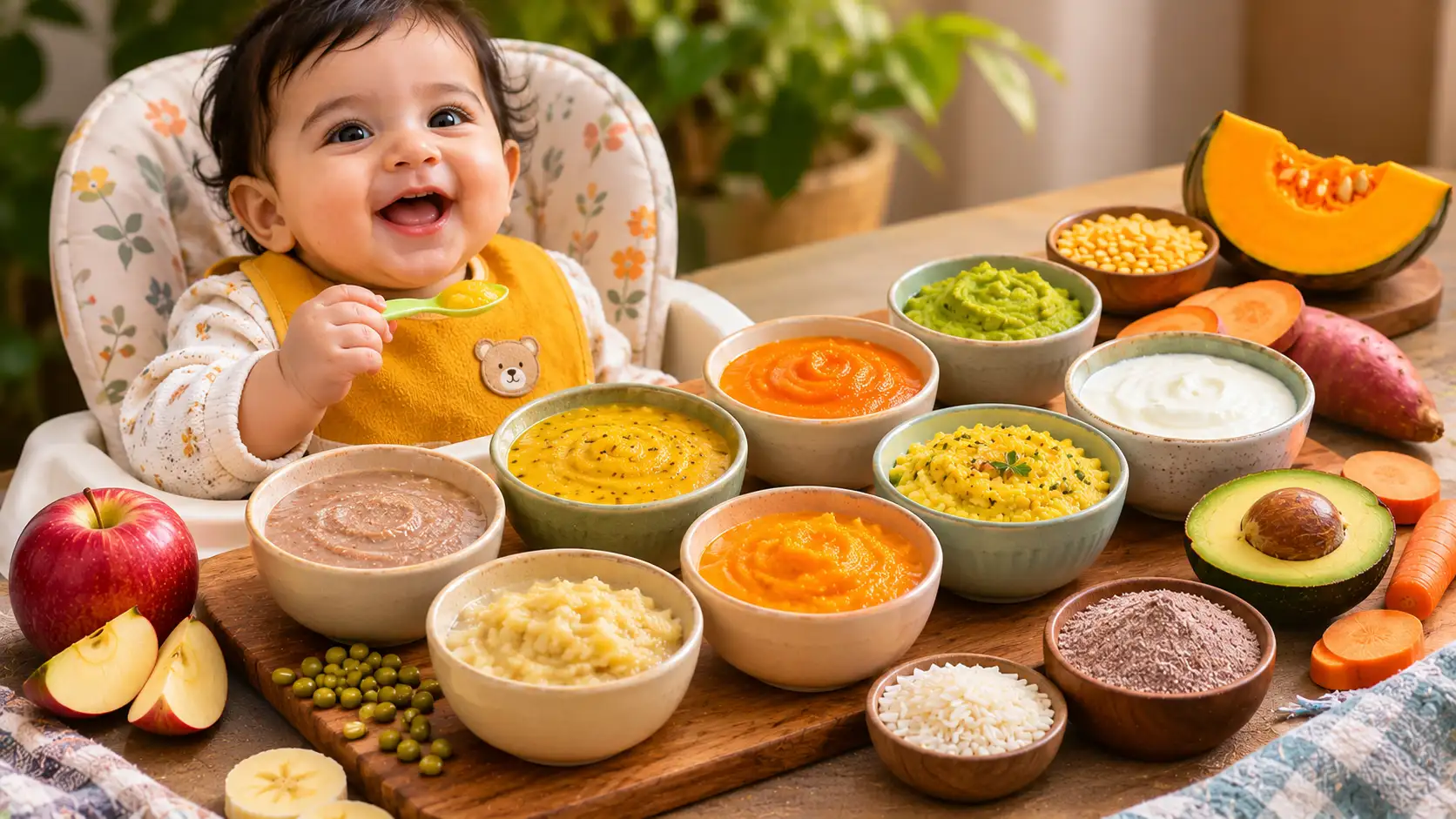
The key is to offer freshly prepared, age-appropriate food without unnecessary salt, sugar or strong spices. These quick recipes can help make everyday feeding easier while introducing variety into your baby's diet.
Avoid adding salt, sugar, honey or artificial sweeteners. Never offer whole nuts, hard raw vegetables or other choking hazards. Introduce common allergens in safe, age-appropriate forms, one at a time, and seek medical advice if your baby has eczema, known allergies or a family history of food allergies.
Most importantly, keep meals relaxed and never force-feed your baby. Consult your paediatrician about individual nutritional needs, particularly iron intake and the use of supplements.
The key is to offer freshly prepared, age-appropriate food without unnecessary salt, sugar or strong spices. These quick recipes can help make everyday feeding easier while introducing variety into your baby's diet.
1. Moong Dal Puree
Wash yellow moong dal thoroughly and cook it with water until completely soft. Blend or mash it into a smooth, thick consistency. This simple preparation provides plant-based protein and is easy to prepare in small quantities.2. Apple Puree
Peel and chop a fresh apple into small pieces. Steam until soft and blend into a smooth puree. Allow it to cool before serving. It introduces a naturally sweet fruit flavour without added sugar.3. Carrot Puree
Wash, peel and chop a carrot. Steam or boil until completely tender, then blend with a little cooled boiled water if needed. Carrots provide beta-carotene, which the body converts into vitamin A.4. Rice and Moong Dal Khichdi
Cook rice and yellow moong dal together with extra water until both become very soft. Mash thoroughly to create a thick, lump-free or gently textured preparation, depending on your baby's feeding ability.5. Mashed Sweet Potato
Steam or boil sweet potato until tender. Remove the skin and mash it thoroughly. Add a little breast milk, formula or cooled boiled water if needed to achieve a suitable consistency.6. Banana Mash
Choose a ripe banana, peel it and mash thoroughly with a fork. Serve immediately in a soft, smooth consistency. No cooking or additional sweetener is required.7. Pumpkin Mash
Steam peeled pumpkin pieces until completely soft. Mash or blend until smooth. Its naturally mild flavour makes it a useful vegetable to introduce during complementary feeding.You may also like
- Brezza over bride! Delhi cop calls off wedding after not getting car of his choice
- Why couldn't Ravana take the Shivalinga to Lanka? What is the story behind the nine severed heads being offered?
- When will the new exam schedule for MP Police Constable recruitment be released? Here is what the Board has to say
- Life Insurance: Before buying, check these figures to see if the insurance company will pay your claim
- New ESIC Rules: Sickness and Maternity Benefits to be Credited Directly to Accounts Without Separate Claims
8. Ragi Porridge
Mix ragi flour with water until smooth, then cook on a low flame while stirring continuously. Cook thoroughly until it becomes a thick, soft porridge. Use plain, unsweetened ragi flour.9. Mashed Avocado
Take a small portion of ripe avocado and mash it until creamy. Its soft texture makes preparation simple, while it provides energy and healthy fats.10. Plain Homemade Curd
Offer a small amount of plain, pasteurised, unsweetened full-fat yoghurt. Choose a smooth consistency and introduce dairy carefully, watching for possible allergic reactions. Do not use unpasteurised milk products.Important Feeding Tips for Babies Aged 6–8 Months
Start with small portions, gradually increasing the quantity according to your baby's appetite. The World Health Organization recommends complementary foods two to three times daily at this age, alongside continued breastfeeding. Begin with smooth, thick purees and gradually introduce mashed textures as your baby develops the ability to manage them.Avoid adding salt, sugar, honey or artificial sweeteners. Never offer whole nuts, hard raw vegetables or other choking hazards. Introduce common allergens in safe, age-appropriate forms, one at a time, and seek medical advice if your baby has eczema, known allergies or a family history of food allergies.
Most importantly, keep meals relaxed and never force-feed your baby. Consult your paediatrician about individual nutritional needs, particularly iron intake and the use of supplements.






Loving Newspoint? Download the app now
