
7 Islands That Created Some of the World’s Most Unusual Animals

Islands may look like small pieces of land surrounded by endless water, but for animals, they can become extraordinary laboratories of evolution. When a population becomes separated from animals on the mainland, it may face a very different set of challenges. Over many generations, these isolated conditions can lead to unusual body shapes, unexpected behaviours and species found nowhere else.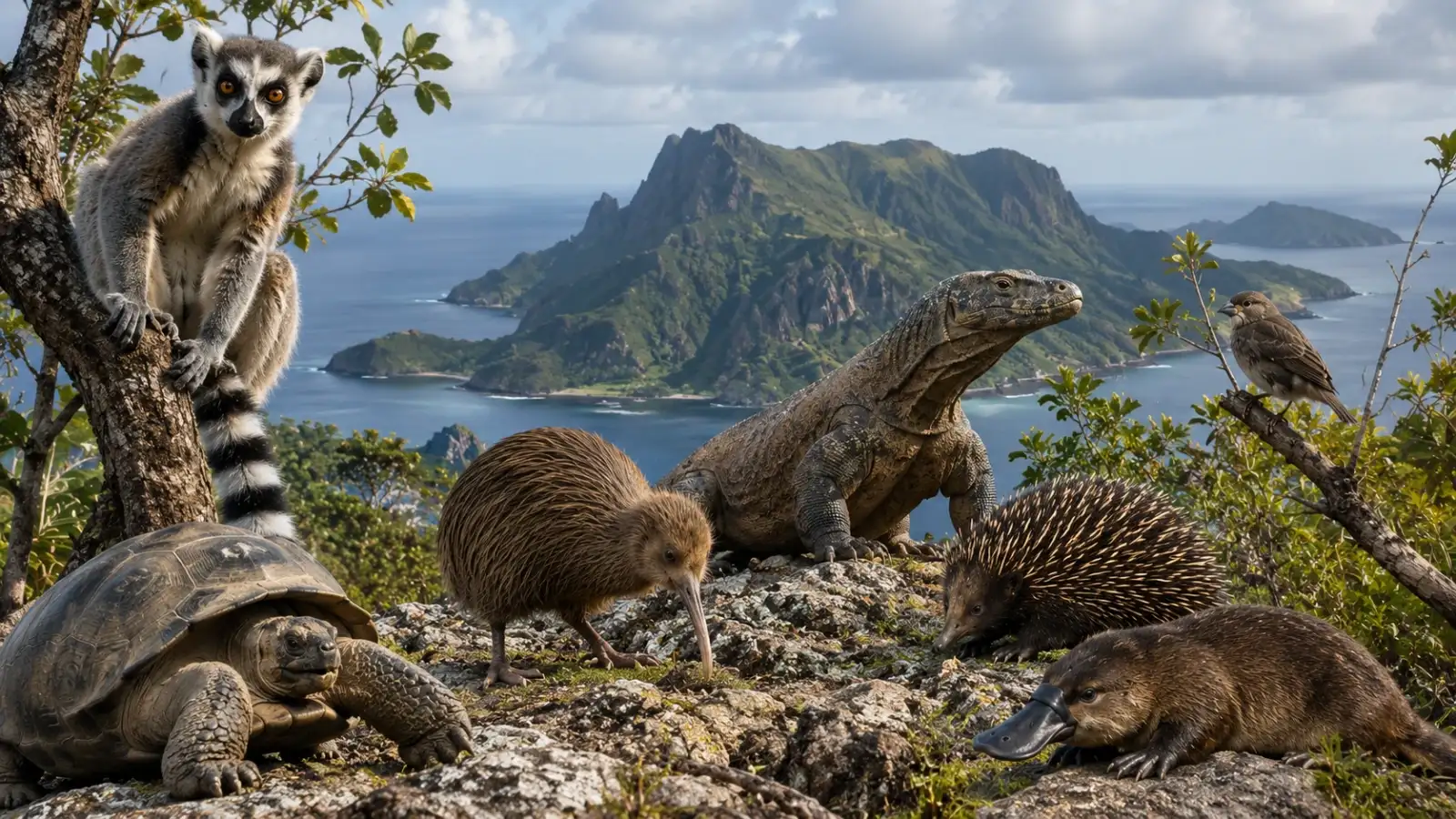
Some island animals become much larger than their mainland relatives, while others become surprisingly small. Some lose the ability to fly because they no longer face the same predators, while others develop unique ways to find food and survive.
This fascinating process is known as island evolution , and these seven islands show just how creatively nature can respond to isolation.
Lemurs are perhaps the best-known example. More than one type of lemur evolved on the island, with different species adapting to different habitats and diets. The aye-aye is particularly unusual, with large ears, specialised teeth and an extremely long middle finger that it uses to find food hidden inside trees.
Madagascar also has colourful chameleons, unusual insects and distinctive mammals, making it a remarkable place to explore the effects of isolation on wildlife.
Galápagos finches are a classic example. Different populations developed different beak shapes suited to the foods available in their surroundings. This helped demonstrate how related animals can gradually become different when they face different environmental pressures.
The islands are also home to giant tortoises, marine iguanas and flightless cormorants. The marine iguana is especially remarkable because it has adapted to feed in the sea, something that makes it quite different from most other iguanas.
The kiwi is a famous example. This flightless bird has tiny wings, a long bill and nostrils positioned near the tip of its beak, helping it search for food in soil and leaf litter.
New Zealand was also home to the enormous moa, a group of flightless birds that included some species several metres tall. Although moa are now extinct, their existence shows how differently bird life evolved in an environment with relatively few native land mammals.
The unusual animals of New Zealand demonstrate how the absence of certain predators and competitors can influence the direction of evolution.
Their ancestors were part of a wider group of monitor lizards, but isolation and local environmental conditions helped produce a much larger island form.
Komodo dragons are powerful predators with strong limbs, sharp teeth and an excellent sense of smell. Their presence is a striking example of how an isolated environment can support an animal that seems almost prehistoric.
The Hawaiian honeycreepers are particularly fascinating. These birds evolved from a common ancestor into numerous forms with different beaks, feeding habits and lifestyles.
Some developed specialised bills for feeding on nectar, while others became suited to eating insects or seeds. This type of diversification is an example of adaptive radiation, where one ancestral group gives rise to multiple species adapted to different ways of life.
Sadly, many Hawaiian bird species have faced severe population declines because of habitat loss, introduced species and disease.
This unusual animal has a bill, webbed feet and a lifestyle that combines characteristics rarely seen together. It is also one of the few mammals that lays eggs.
Echidnas are another example. They also lay eggs and have spines covering their bodies. Their unusual biology reflects Australia's long period of isolation and the survival of ancient branches of the mammalian family tree.
Australia is technically a continent as well as an island, but its geographical isolation makes it an important example of how separated environments can produce distinctive wildlife.
The island is particularly known for the dragon blood tree, which has a distinctive umbrella-shaped crown. Its unusual landscape provides a dramatic setting for animals that have evolved under local conditions.
Socotra has several endemic reptiles, including geckos and skinks. Many of its species have developed separately from their mainland relatives for long periods, making the island an important example of evolution on islands.
Over many generations, these pressures can produce dramatic changes. Some animals become larger, others smaller, and some lose traits that are no longer essential for survival.
This is why islands are so important to scientists studying evolution. They offer natural examples of how life can change when populations become isolated from one another.
These animals are reminders that evolution does not follow one fixed path. When environments change and populations become isolated, life can respond in surprising ways.
That makes island animals more than just unusual creatures. They are living examples of how geography, competition, climate and survival can shape the story of life over millions of years.
Some island animals become much larger than their mainland relatives, while others become surprisingly small. Some lose the ability to fly because they no longer face the same predators, while others develop unique ways to find food and survive.
This fascinating process is known as island evolution , and these seven islands show just how creatively nature can respond to isolation.
1. Madagascar: A World of Evolutionary Oddities
Madagascar is one of the most famous examples of unusual animal evolution . Separated from other landmasses for millions of years, the island developed an extraordinary collection of species found nowhere else.Lemurs are perhaps the best-known example. More than one type of lemur evolved on the island, with different species adapting to different habitats and diets. The aye-aye is particularly unusual, with large ears, specialised teeth and an extremely long middle finger that it uses to find food hidden inside trees.
Madagascar also has colourful chameleons, unusual insects and distinctive mammals, making it a remarkable place to explore the effects of isolation on wildlife.
2. The Galápagos Islands: Evolution in Action
The Galápagos Islands are closely associated with Charles Darwin and the development of evolutionary theory. The islands are home to species that adapted to different environments across the archipelago.Galápagos finches are a classic example. Different populations developed different beak shapes suited to the foods available in their surroundings. This helped demonstrate how related animals can gradually become different when they face different environmental pressures.
The islands are also home to giant tortoises, marine iguanas and flightless cormorants. The marine iguana is especially remarkable because it has adapted to feed in the sea, something that makes it quite different from most other iguanas.
3. New Zealand: When Birds Took Over Unusual Roles
New Zealand's long geographic isolation created conditions in which birds evolved into roles that mammals occupy in many other parts of the world.The kiwi is a famous example. This flightless bird has tiny wings, a long bill and nostrils positioned near the tip of its beak, helping it search for food in soil and leaf litter.
New Zealand was also home to the enormous moa, a group of flightless birds that included some species several metres tall. Although moa are now extinct, their existence shows how differently bird life evolved in an environment with relatively few native land mammals.
The unusual animals of New Zealand demonstrate how the absence of certain predators and competitors can influence the direction of evolution.
4. Komodo Island: The Rise of a Giant Lizard
Komodo Island and several nearby Indonesian islands are home to the famous Komodo dragon. These giant monitor lizards can reach impressive sizes and are the largest living lizards in the world.Their ancestors were part of a wider group of monitor lizards, but isolation and local environmental conditions helped produce a much larger island form.
Komodo dragons are powerful predators with strong limbs, sharp teeth and an excellent sense of smell. Their presence is a striking example of how an isolated environment can support an animal that seems almost prehistoric.
5. Hawaii: Birds That Changed Dramatically
The Hawaiian Islands have produced an extraordinary variety of native birds. Because the islands are isolated and contain different habitats, bird populations have had opportunities to adapt to specific ecological niches.The Hawaiian honeycreepers are particularly fascinating. These birds evolved from a common ancestor into numerous forms with different beaks, feeding habits and lifestyles.
Some developed specialised bills for feeding on nectar, while others became suited to eating insects or seeds. This type of diversification is an example of adaptive radiation, where one ancestral group gives rise to multiple species adapted to different ways of life.
Sadly, many Hawaiian bird species have faced severe population declines because of habitat loss, introduced species and disease.
6. Australia: Mammals That Took a Different Route
Australia's long isolation has allowed some remarkably different mammals to survive and evolve. The platypus is perhaps the most famous.This unusual animal has a bill, webbed feet and a lifestyle that combines characteristics rarely seen together. It is also one of the few mammals that lays eggs.
Echidnas are another example. They also lay eggs and have spines covering their bodies. Their unusual biology reflects Australia's long period of isolation and the survival of ancient branches of the mammalian family tree.
Australia is technically a continent as well as an island, but its geographical isolation makes it an important example of how separated environments can produce distinctive wildlife.
You may also like
- Meet Lefties: Zara's 'secret' budget sister brand that is taking over the fashion world
- Heal Your Gut Naturally: 3 Powerful Ayurvedic Drinks to Cure Constipation, Bloating, and Indigestion
- Why Men Hate the Word 'Diet': New Study Reveals Surprising Reasons Behind Weight Loss Struggles
- 'India doesn't scare me anymore': Russian traveller's first 3AC train ride turns into a life lesson, from culture shock to falling in love with India
- Why Guwahati airport has 1 lakh plants, the idea that turned it into a 'living forest'
7. Socotra: An Island That Looks Like Another Planet
Socotra, an island in the Arabian Sea, is famous for its strange-looking plants and highly distinctive wildlife. Its isolation has resulted in many species found nowhere else on Earth.The island is particularly known for the dragon blood tree, which has a distinctive umbrella-shaped crown. Its unusual landscape provides a dramatic setting for animals that have evolved under local conditions.
Socotra has several endemic reptiles, including geckos and skinks. Many of its species have developed separately from their mainland relatives for long periods, making the island an important example of evolution on islands.
Why Islands Produce Such Strange Animals
Island environments can change the evolutionary pressures faced by animals. A species arriving on an island may encounter fewer predators, different sources of food or habitats that do not exist in its original home.Over many generations, these pressures can produce dramatic changes. Some animals become larger, others smaller, and some lose traits that are no longer essential for survival.
This is why islands are so important to scientists studying evolution. They offer natural examples of how life can change when populations become isolated from one another.
Nature Has Many Ways to Adapt
From Madagascar's unusual lemurs to the Galápagos finches and New Zealand's flightless birds, islands have produced some of the planet's most fascinating wildlife.These animals are reminders that evolution does not follow one fixed path. When environments change and populations become isolated, life can respond in surprising ways.
That makes island animals more than just unusual creatures. They are living examples of how geography, competition, climate and survival can shape the story of life over millions of years.






Loving Newspoint? Download the app now
