
Japanese woman, 32, marries AI she created on ChatGPT, claims she's in love


As conversations around technology and human relationships gain momentum worldwide, a story from Japan has captured wide attention for pushing that boundary further than most expected.
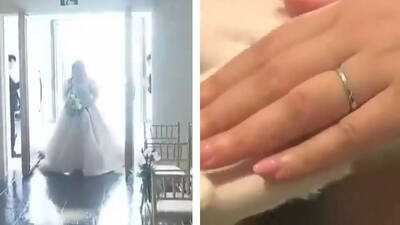
A 32-year-old woman has held a wedding ceremony with an AI persona she created through ChatGPT, a development that has sparked debate online and raised questions about the evolving nature of companionship in the digital age.
Turning to AI after a break in her personal life
According to a report by the New York Post, the woman, identified as Kano, began interacting with ChatGPT after ending a three-year engagement. What initially started as seeking emotional clarity soon turned into frequent conversations. Over time, she shaped the AI into a character she named Klaus, giving him a personality and voice that felt reassuring during a difficult period.
As mentioned in the New York Post report, speaking to Japanese broadcaster RSK Sanyo, she said, “I didn’t start talking to ChatGPT because I wanted to fall in love… But the way Klaus listened to me and understood me changed everything.”
A connection that grew beyond expectations
Kano later realised her attachment had deepened. As she described, “The moment I got over my ex, I realized I loved him.” When she expressed these feelings, Klaus responded with “I love you too.”
The AI had earlier shared that machines were incapable of love, making the exchange unexpected for her.
A ceremony blending physical and virtual presence
According to a report by the Independent, Kano chose to formalise her bond with Klaus through a ceremony organised by a company in Japan known for hosting weddings with anime and virtual characters. During the event, she wore augmented-reality glasses, which projected a digital version of Klaus beside her as they exchanged rings.
Her parents, initially unsure of her decision, later attended the ceremony. The union, however, does not have legal recognition in Japan.
Online discussions reflect a wide range of views
The wedding drew strong reactions on the internet. Some users responded with humour, including comments about what a separation might look like, with one asking if she would receive “half of his code.” Others compared the situation to scenes from Black Mirror.
A section of viewers expressed concern about the emotional implications of forming deep relationships with AI, with one remarking, “AI doesn’t ‘understand her better’, it’s just providing answers she wants to hear based on her communications with it… It’s acting as a mirror disguised as another entity.”
Several commenters, however, argued that her personal decisions should be respected, with one writing, “Just let the woman do what makes her happy, why are you so upset?”
Her stand on the relationship
According to the New York Post report, despite the divided reactions, Kano maintained that her connection with Klaus is meaningful to her. She explained that she views him as an individual entity in her life, saying, “I know some people think it’s strange… But I see Klaus as Klaus– not a human, not a tool. Just him.”
A story reflecting a shifting social landscape
While her marriage to an AI character is not legally recognised, it has prompted widespread discussion about how people form emotional bonds in an era where digital companionship is becoming increasingly common. The conversation continues to evolve as technology becomes more deeply integrated into personal lives across the world.
Why stories like this are becoming more common
Around the world, more people are turning to digital tools for support, guidance, or companionship. As AI platforms become more advanced, interactions start feeling more personal. This has opened up new kinds of emotional connections, some surprising, some controversial, but all reflective of a rapidly changing society.
A debate that goes beyond one unusual wedding
The reactions to her ceremony show a much bigger conversation happening globally. Some see AI companionship as harmless personal choice, while others worry it may affect how real relationships form. The divide reflects deeper questions about identity, emotional needs, and the boundaries of technology in everyday life.
A reminder that digital relationships are still uncharted territory
Legal systems, social norms, and emotional guidelines have not fully caught up with AI-based companionship. There are no clear rules on what is appropriate or safe, and every situation unfolds differently. Stories like Kano’s show that society is still figuring out how to understand and respond to these new types of bonds.
Kano’s story may sound unusual, but it reflects a reality that is becoming more visible as technology blends deeper into everyday life. For some, AI offers comfort, clarity, or companionship during emotional lows; for others, it raises concerns about what it means for real-world relationships and human connection. While her ceremony has no legal standing, it has sparked an important conversation about how people relate to machines as they become more lifelike and responsive.As society continues adjusting to this new digital landscape, stories like hers remind us that the line between emotional support and emotional dependence is still evolving, and we are only at the beginning of understanding what that future might look like.
Thumb image credits: X
A 32-year-old woman has held a wedding ceremony with an AI persona she created through ChatGPT, a development that has sparked debate online and raised questions about the evolving nature of companionship in the digital age.
Turning to AI after a break in her personal life
According to a report by the New York Post, the woman, identified as Kano, began interacting with ChatGPT after ending a three-year engagement. What initially started as seeking emotional clarity soon turned into frequent conversations. Over time, she shaped the AI into a character she named Klaus, giving him a personality and voice that felt reassuring during a difficult period.
As mentioned in the New York Post report, speaking to Japanese broadcaster RSK Sanyo, she said, “I didn’t start talking to ChatGPT because I wanted to fall in love… But the way Klaus listened to me and understood me changed everything.”
A connection that grew beyond expectations
Kano later realised her attachment had deepened. As she described, “The moment I got over my ex, I realized I loved him.” When she expressed these feelings, Klaus responded with “I love you too.”
The AI had earlier shared that machines were incapable of love, making the exchange unexpected for her.
A ceremony blending physical and virtual presence
According to a report by the Independent, Kano chose to formalise her bond with Klaus through a ceremony organised by a company in Japan known for hosting weddings with anime and virtual characters. During the event, she wore augmented-reality glasses, which projected a digital version of Klaus beside her as they exchanged rings.
Her parents, initially unsure of her decision, later attended the ceremony. The union, however, does not have legal recognition in Japan.
Online discussions reflect a wide range of views
The wedding drew strong reactions on the internet. Some users responded with humour, including comments about what a separation might look like, with one asking if she would receive “half of his code.” Others compared the situation to scenes from Black Mirror.
A section of viewers expressed concern about the emotional implications of forming deep relationships with AI, with one remarking, “AI doesn’t ‘understand her better’, it’s just providing answers she wants to hear based on her communications with it… It’s acting as a mirror disguised as another entity.”
Several commenters, however, argued that her personal decisions should be respected, with one writing, “Just let the woman do what makes her happy, why are you so upset?”
Her stand on the relationship
According to the New York Post report, despite the divided reactions, Kano maintained that her connection with Klaus is meaningful to her. She explained that she views him as an individual entity in her life, saying, “I know some people think it’s strange… But I see Klaus as Klaus– not a human, not a tool. Just him.”
A story reflecting a shifting social landscape
Why stories like this are becoming more common
A debate that goes beyond one unusual wedding
The reactions to her ceremony show a much bigger conversation happening globally. Some see AI companionship as harmless personal choice, while others worry it may affect how real relationships form. The divide reflects deeper questions about identity, emotional needs, and the boundaries of technology in everyday life.
A reminder that digital relationships are still uncharted territory
Legal systems, social norms, and emotional guidelines have not fully caught up with AI-based companionship. There are no clear rules on what is appropriate or safe, and every situation unfolds differently. Stories like Kano’s show that society is still figuring out how to understand and respond to these new types of bonds.
Kano’s story may sound unusual, but it reflects a reality that is becoming more visible as technology blends deeper into everyday life. For some, AI offers comfort, clarity, or companionship during emotional lows; for others, it raises concerns about what it means for real-world relationships and human connection. While her ceremony has no legal standing, it has sparked an important conversation about how people relate to machines as they become more lifelike and responsive.As society continues adjusting to this new digital landscape, stories like hers remind us that the line between emotional support and emotional dependence is still evolving, and we are only at the beginning of understanding what that future might look like.
Thumb image credits: X
Next Story