
Can Jellyfish Become Young Again? Exploring the Science Behind Life Cycle Reversal

Most animals follow a one-way journey through life, growing from young to adult before eventually ageing and dying. However, certain jellyfish have developed a remarkable ability that challenges this familiar pattern. Under specific conditions, they can return from their adult stage to an earlier phase of development. The phenomenon has attracted scientific attention because it offers a rare example of biological rejuvenation. One species, commonly called the immortal jellyfish , is particularly famous for this ability. But how does this process work, and does it mean these tiny marine creatures can actually live forever?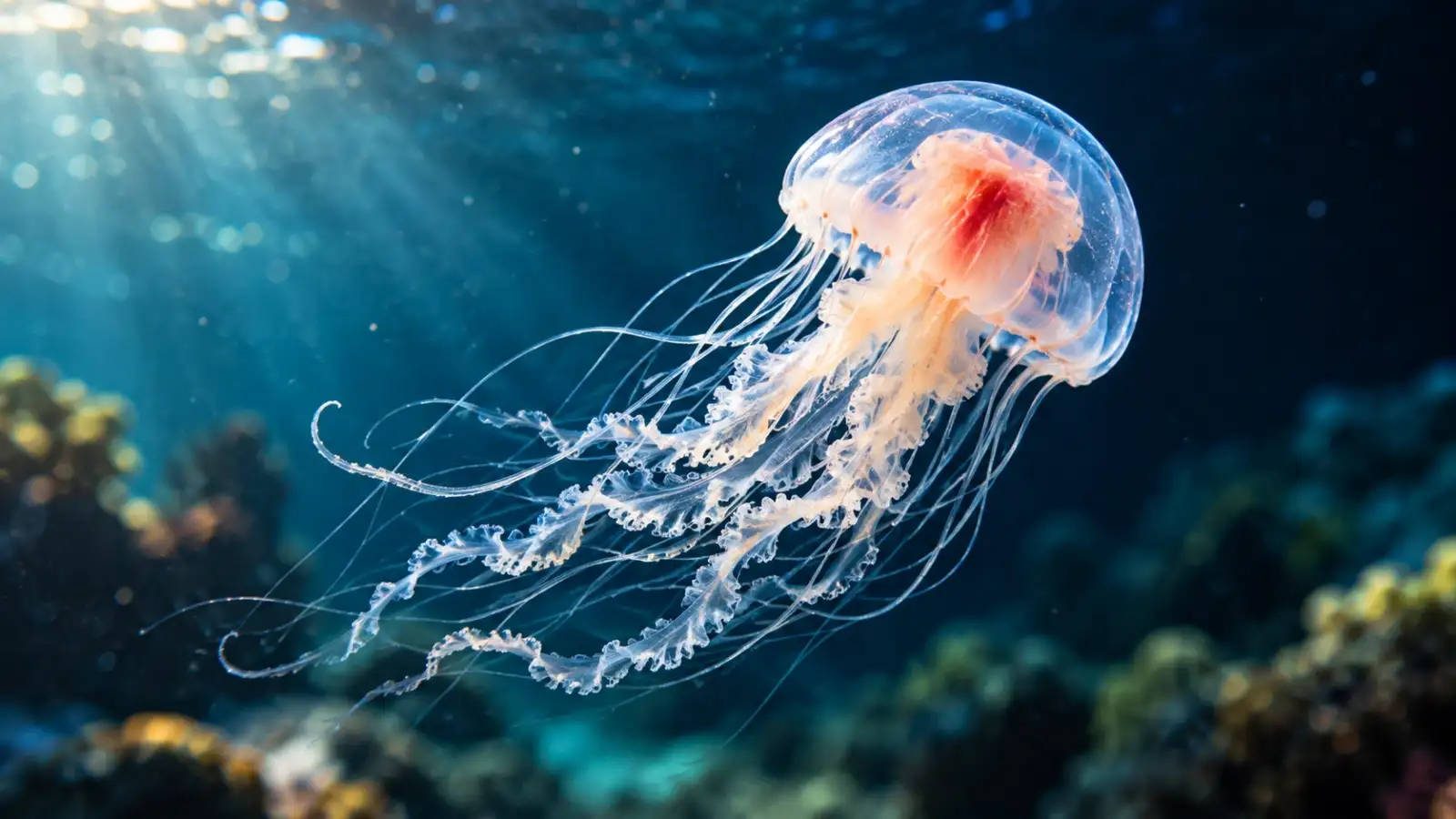
Unlike most jellyfish, which progress through their life stages in one direction, this species can potentially return from its adult medusa stage to its earlier polyp stage. The process is known as reverse development or life cycle reversal.
This ability makes Turritopsis dohrnii an important subject for scientists studying ageing, cell development and regeneration.
In Turritopsis dohrnii, the process can move backwards under certain conditions. When the adult jellyfish experiences physical damage, starvation or other environmental stress, it may shrink and transform into a cyst-like structure.
Its cells then undergo changes that allow the organism to reorganise into a polyp. From this stage, it can begin developing again.
This transformation is not simply a matter of an adult becoming smaller. It involves substantial changes in the organisation and development of its cells.
In simple terms, transdifferentiation occurs when one specialised cell type changes into another type of cell. In Turritopsis dohrnii, this cellular flexibility helps the animal reorganise its body during life cycle reversal.
Instead of following the usual pattern of ageing and development, some of its cells can change their roles as the organism returns to an earlier stage.
Scientists are interested in understanding the genetic and cellular processes involved because they may reveal more about how cells maintain or change their identities.
Possible triggers include:
However, this does not mean individual jellyfish cannot die. They remain vulnerable to predators, disease, starvation, injury and environmental changes.
They may also fail to complete the transformation successfully. Their unusual ability offers the possibility of restarting development, not protection from every danger in the ocean.
Scientists want to understand how its cells change their identities, how the organism controls regeneration and which genetic mechanisms are involved in its unusual development.
Such research may improve our understanding of cellular ageing and tissue regeneration. However, it does not mean that humans can use the same process to reverse ageing. Jellyfish biology and human biology are fundamentally different.
It is important to distinguish ordinary regeneration from complete life cycle reversal. Many marine animals can repair damaged body parts, but returning from an adult stage to an earlier developmental stage is a much rarer phenomenon.
The ability of Turritopsis dohrnii to reverse its life cycle is one of the most unusual biological adaptations found in the ocean. By transforming from an adult medusa back into a polyp, this tiny jellyfish demonstrates how flexible some living organisms can be. Although it is not truly invincible or guaranteed to live forever, its unusual development continues to offer valuable insights into cell behaviour, regeneration and the science of ageing.
1. Meet the Immortal Jellyfish
The species behind this unusual ability is Turritopsis dohrnii , commonly known as the immortal jellyfish. It is a tiny marine animal that belongs to the hydrozoan group and is generally only a few millimetres long.Unlike most jellyfish, which progress through their life stages in one direction, this species can potentially return from its adult medusa stage to its earlier polyp stage. The process is known as reverse development or life cycle reversal.
This ability makes Turritopsis dohrnii an important subject for scientists studying ageing, cell development and regeneration.
2. How Does a Jellyfish Reverse Its Life Cycle?
A typical jellyfish life cycle begins when a fertilised egg develops into a larva. The larva eventually settles on a surface and develops into a small polyp. The polyp can produce young jellyfish, which grow into free-swimming adults called medusae.In Turritopsis dohrnii, the process can move backwards under certain conditions. When the adult jellyfish experiences physical damage, starvation or other environmental stress, it may shrink and transform into a cyst-like structure.
Its cells then undergo changes that allow the organism to reorganise into a polyp. From this stage, it can begin developing again.
This transformation is not simply a matter of an adult becoming smaller. It involves substantial changes in the organisation and development of its cells.
3. The Role of Cellular Transdifferentiation
One of the most fascinating aspects of this process is a biological mechanism called transdifferentiation.In simple terms, transdifferentiation occurs when one specialised cell type changes into another type of cell. In Turritopsis dohrnii, this cellular flexibility helps the animal reorganise its body during life cycle reversal.
Instead of following the usual pattern of ageing and development, some of its cells can change their roles as the organism returns to an earlier stage.
Scientists are interested in understanding the genetic and cellular processes involved because they may reveal more about how cells maintain or change their identities.
4. What Triggers This Extraordinary Transformation?
The jellyfish does not reverse its life cycle whenever it chooses. The transformation is associated with particular conditions that place stress on the organism.Possible triggers include:
You may also like
- 'I'm REALLY worried about my...': Woman seeks financial advice after discovering parents have no retirement savings after spending Rs 17 lakh on her wedding
- Wavy Hair Care: Why It Needs Its Own Routine
- Why Does Your Hair Reject Moisture? Understanding Hair Porosity
- Fine or Thin Hair? One Difference Could Change Your Entire Haircare Routine
- Wearing Compression Clothing at the Gym? Here's What It Actually Does
- Physical injury or damage to the body.
- Lack of food or prolonged starvation.
- Sudden environmental changes.
- Other forms of physiological stress.
5. Does the Immortal Jellyfish Really Live Forever?
The term immortal can be misleading. Turritopsis dohrnii is often described as biologically immortal because it can potentially repeat its life cycle reversal rather than ageing in the usual way.However, this does not mean individual jellyfish cannot die. They remain vulnerable to predators, disease, starvation, injury and environmental changes.
They may also fail to complete the transformation successfully. Their unusual ability offers the possibility of restarting development, not protection from every danger in the ocean.
6. Why Are Scientists Studying This Jellyfish?
The life cycle reversal of Turritopsis dohrnii has attracted interest in fields such as developmental biology, genetics and ageing research .Scientists want to understand how its cells change their identities, how the organism controls regeneration and which genetic mechanisms are involved in its unusual development.
Such research may improve our understanding of cellular ageing and tissue regeneration. However, it does not mean that humans can use the same process to reverse ageing. Jellyfish biology and human biology are fundamentally different.
7. Are There Other Jellyfish With Similar Abilities?
Turritopsis dohrnii is the best-known example of a jellyfish capable of reversing its life cycle. Some related hydrozoans also show forms of developmental reversal or regeneration, but their abilities are not necessarily identical.It is important to distinguish ordinary regeneration from complete life cycle reversal. Many marine animals can repair damaged body parts, but returning from an adult stage to an earlier developmental stage is a much rarer phenomenon.
The ability of Turritopsis dohrnii to reverse its life cycle is one of the most unusual biological adaptations found in the ocean. By transforming from an adult medusa back into a polyp, this tiny jellyfish demonstrates how flexible some living organisms can be. Although it is not truly invincible or guaranteed to live forever, its unusual development continues to offer valuable insights into cell behaviour, regeneration and the science of ageing.






Loving Newspoint? Download the app now
