
Lepakshi Travel Guide: Explore the Famous Veerabhadra Temple and Its Remarkable Carvings

Lepakshi, in Andhra Pradesh, is best known for the Veerabhadra Temple , a remarkable example of Vijayanagara-era architecture. Carved pillars, painted ceilings and sculptural details make the complex a rewarding stop for travellers interested in history and traditional craftsmanship. The large monolithic Nandi nearby is another well-known feature of the area.
A visit can be planned as a relaxed heritage outing, with time to observe the temple's details rather than rushing through the complex. Knowing the main features, local travel options and visitor etiquette can help make the journey smoother and more respectful, especially during a first visit to the region.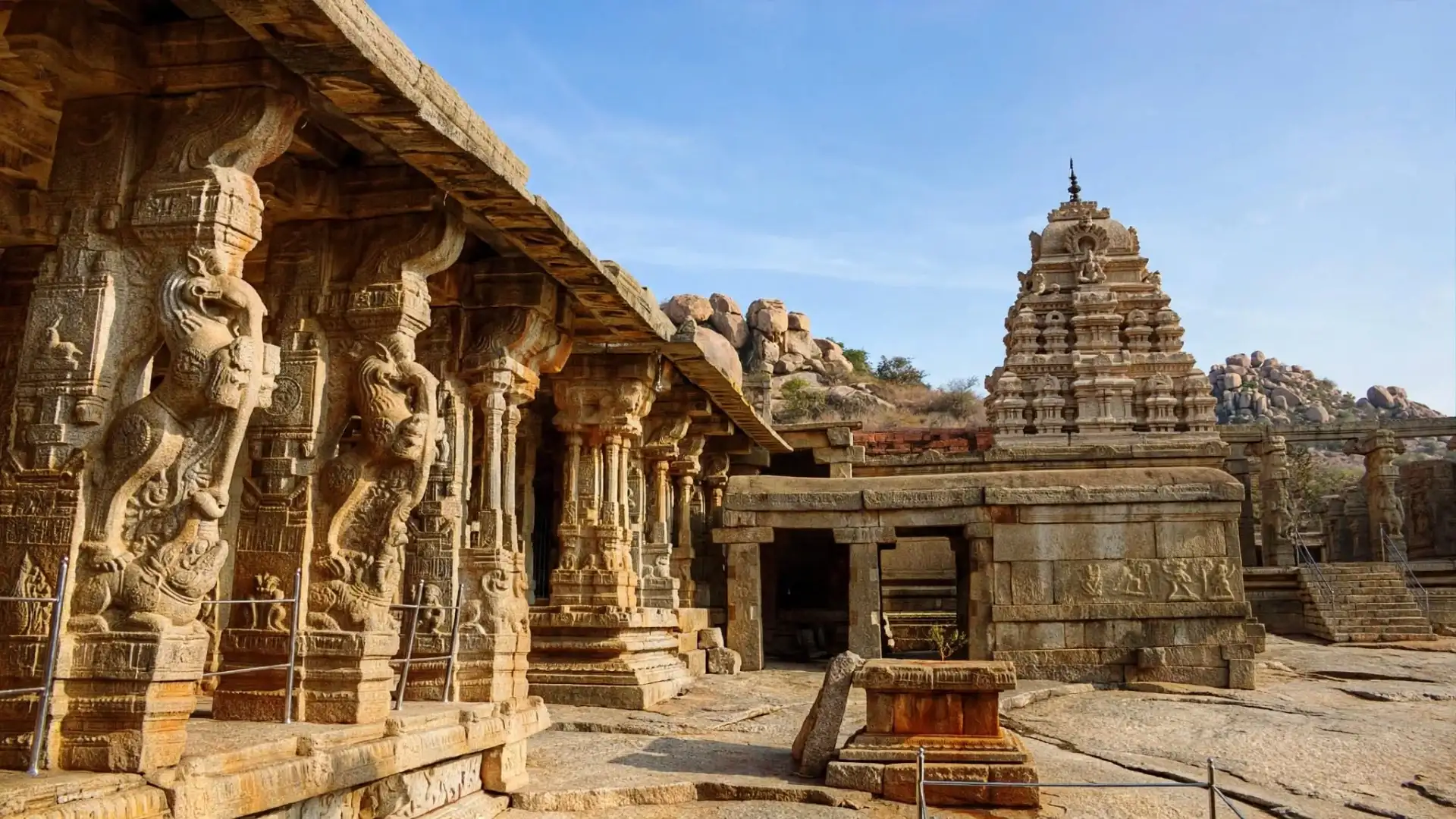
The famous hanging pillar is another feature visitors often seek out. It is best observed without attempting to force objects beneath it or disturb the structure. Follow instructions from temple staff and respect any restrictions around photography and access.
The temple and Nandi can be explored in a relaxed half-day visit, although travellers interested in architecture may wish to spend longer examining the details.
Carry drinking water, wear comfortable footwear and plan around the heat, particularly if visiting during warmer months. Some parts of the complex involve uneven stone surfaces and steps. Visitors should dress respectfully because the temple remains an active place of worship.
Lepakshi rewards slow observation. Its temple, murals and stone Nandi offer a compact introduction to regional history and craftsmanship without requiring a rushed itinerary.
A visit can be planned as a relaxed heritage outing, with time to observe the temple's details rather than rushing through the complex. Knowing the main features, local travel options and visitor etiquette can help make the journey smoother and more respectful, especially during a first visit to the region.
Explore the Veerabhadra Temple
The Veerabhadra Temple is the centrepiece of a Lepakshi visit. Its architecture reflects the Vijayanagara period, with a large pillared hall, carved columns and detailed sculptural work. Look carefully at the ceiling paintings and decorative features around the mandapas; they are easy to miss when moving quickly through the complex.The famous hanging pillar is another feature visitors often seek out. It is best observed without attempting to force objects beneath it or disturb the structure. Follow instructions from temple staff and respect any restrictions around photography and access.
You may also like
- Lending Money to Friends? 7 Things to Check First
- Why Winter Makes Us Hungrier: The Science Explained
- Blood Molecule Breakthrough in Ovarian Cancer Detection
- Essential Tips for a Quick Skincare Routine
- A 19-year-old Mumbai student raised Rs 22 lakh for a 40-year-old Dharavi school serving 560 children; as redevelopment puts its future in question, he is now trying to raise Rs 1.5 crore to secure its land
See the monolithic Nandi
A short distance from the temple stands a large monolithic Nandi, carved from a single piece of stone. The sculpture is an important landmark and offers a different perspective on the area's craftsmanship. Allow time to view it from more than one angle, while staying within designated visitor areas.The temple and Nandi can be explored in a relaxed half-day visit, although travellers interested in architecture may wish to spend longer examining the details.
Plan the journey
Lepakshi is near Hindupur in Andhra Pradesh and is commonly approached by road. Travellers coming from Bengaluru can consider a road journey, but should check current traffic and route conditions before departure. Public transport options may require onward local travel, so confirm connections rather than assuming a direct service.Carry drinking water, wear comfortable footwear and plan around the heat, particularly if visiting during warmer months. Some parts of the complex involve uneven stone surfaces and steps. Visitors should dress respectfully because the temple remains an active place of worship.
Make the visit thoughtful
Avoid touching or climbing on sculptures, pillars and fragile painted surfaces. Do not leave litter, and ask before photographing worshippers or ceremonies. If a guide is available, a local explanation can add context to the carvings and architectural layout.Lepakshi rewards slow observation. Its temple, murals and stone Nandi offer a compact introduction to regional history and craftsmanship without requiring a rushed itinerary.






Loving Newspoint? Download the app now
