
Maharashtra's New Child Malnutrition Index Explained: Why Better Measurement Matters

Child malnutrition is often discussed through individual indicators such as stunting, wasting and being underweight. However, these conditions can occur together in the same child. Adding the figures without accounting for overlap can produce a misleading picture of how many children are affected.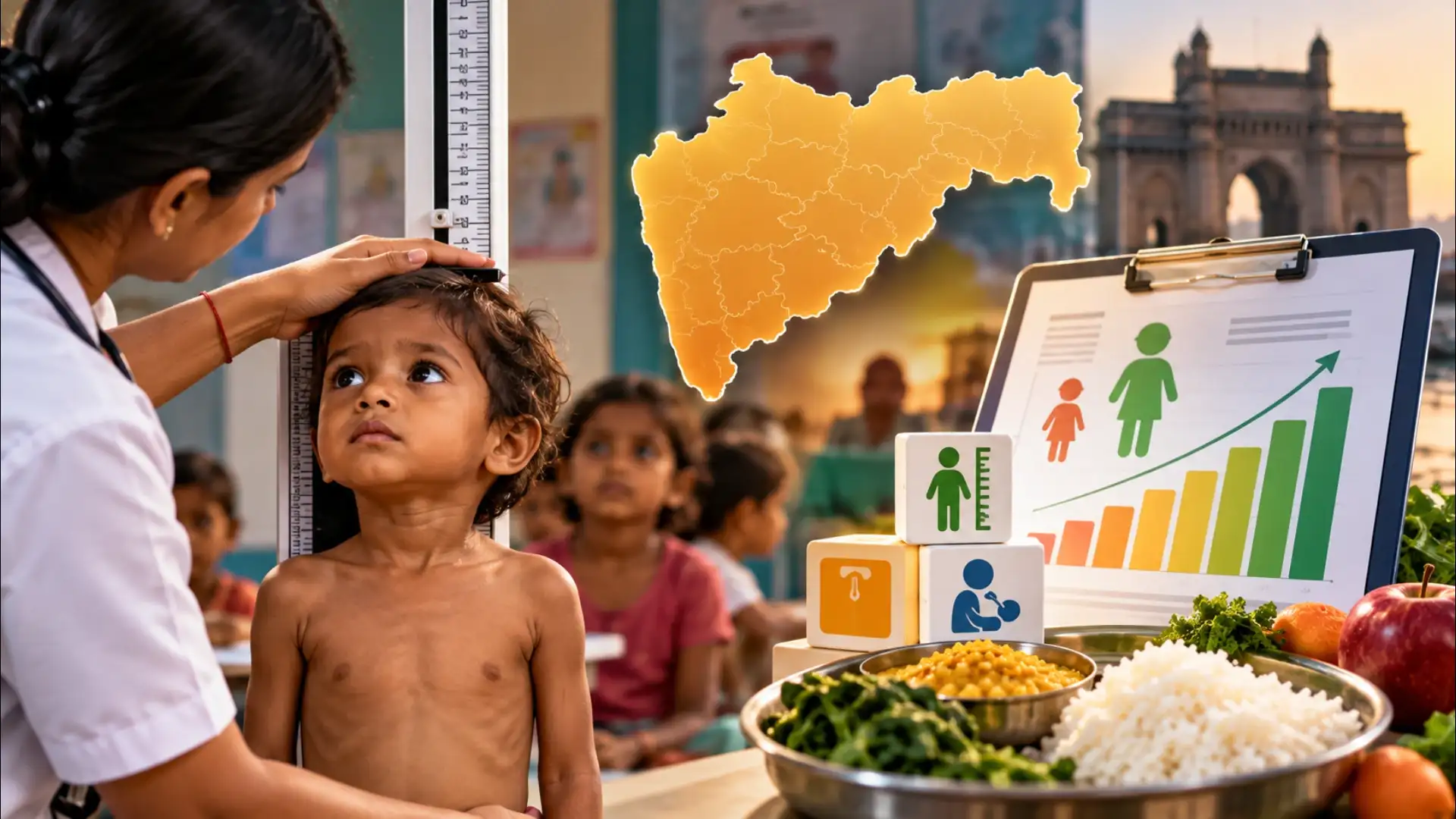
A research team associated with Maharashtra has developed a tool intended to provide a more comprehensive assessment of children's nutritional status. Reported on 15 October 2026, the Double Burden Index of Malnutrition , or DBI-PNGR, places children into distinct categories to avoid counting the same child repeatedly. The approach could help public health teams plan more targeted interventions.
It places each child into one of nine mutually exclusive categories. This means a child is assigned to a single category even if several nutritional problems are present.
The method was developed over three years by researchers and public health experts associated with UNICEF and other organisations. Its purpose is to make overall assessments easier to interpret and use when planning healthcare interventions.
The tool is a measurement approach, not a treatment or a replacement for individual medical assessment.
A child may experience more than one of these conditions. Nutritional problems can also include vitamin and mineral deficiencies, overweight and obesity.
If a child is both wasted and stunted, counting that child separately under each indicator can inflate a combined total. The figures may accurately describe individual conditions while still failing to show the number of unique children affected.
A classification method that accounts for overlap can make the overall burden easier to understand.
More precise classification could help health workers identify different patterns of nutritional need and plan appropriate follow-up. A child experiencing wasting may require a different assessment from one affected by stunting or obesity.
Better statistics may also help officials allocate resources and evaluate whether nutrition programmes are reaching the children who need them.
However, a better index alone will not resolve food insecurity, poor dietary diversity, infections or barriers to healthcare.
Parents concerned about a child's growth should seek advice from a qualified healthcare professional rather than attempting to diagnose malnutrition from isolated measurements.
The new tool's wider value will depend on how it is validated, adopted and used alongside practical nutrition services. Accurate measurement is an important first step, but children ultimately benefit when evidence leads to timely, appropriate care.
A research team associated with Maharashtra has developed a tool intended to provide a more comprehensive assessment of children's nutritional status. Reported on 15 October 2026, the Double Burden Index of Malnutrition , or DBI-PNGR, places children into distinct categories to avoid counting the same child repeatedly. The approach could help public health teams plan more targeted interventions.
What Is the DBI-PNGR Tool?
The Double Burden Index of Malnutrition is a classification method designed to provide a clearer picture of children's nutritional conditions.It places each child into one of nine mutually exclusive categories. This means a child is assigned to a single category even if several nutritional problems are present.
The method was developed over three years by researchers and public health experts associated with UNICEF and other organisations. Its purpose is to make overall assessments easier to interpret and use when planning healthcare interventions.
The tool is a measurement approach, not a treatment or a replacement for individual medical assessment.
Why Can Traditional Measurements Be Difficult to Interpret?
Malnutrition includes several conditions. Stunting refers to low height for age, wasting to low weight relative to height, and underweight to low weight for age.A child may experience more than one of these conditions. Nutritional problems can also include vitamin and mineral deficiencies, overweight and obesity.
If a child is both wasted and stunted, counting that child separately under each indicator can inflate a combined total. The figures may accurately describe individual conditions while still failing to show the number of unique children affected.
A classification method that accounts for overlap can make the overall burden easier to understand.
How Could Better Measurement Help Children?
Anganwadi workers routinely record children's age, height and weight and compare the measurements with established growth standards.More precise classification could help health workers identify different patterns of nutritional need and plan appropriate follow-up. A child experiencing wasting may require a different assessment from one affected by stunting or obesity.
Better statistics may also help officials allocate resources and evaluate whether nutrition programmes are reaching the children who need them.
However, a better index alone will not resolve food insecurity, poor dietary diversity, infections or barriers to healthcare.
What Should Parents Take Away?
The development highlights the importance of measuring child nutrition accurately rather than relying on a single number.Parents concerned about a child's growth should seek advice from a qualified healthcare professional rather than attempting to diagnose malnutrition from isolated measurements.
The new tool's wider value will depend on how it is validated, adopted and used alongside practical nutrition services. Accurate measurement is an important first step, but children ultimately benefit when evidence leads to timely, appropriate care.
Next Story