
Maharashtrian Alu Vadi Recipe: How to Make Steamed Colocasia Leaf Rolls

Alu vadi is a traditional Maharashtrian snack made by layering colocasia leaves with a thick, seasoned gram flour mixture. The leaves are rolled into a tight log, steamed and sliced into attractive pinwheels. The slices can be served steamed or lightly pan-fried for a crisp exterior.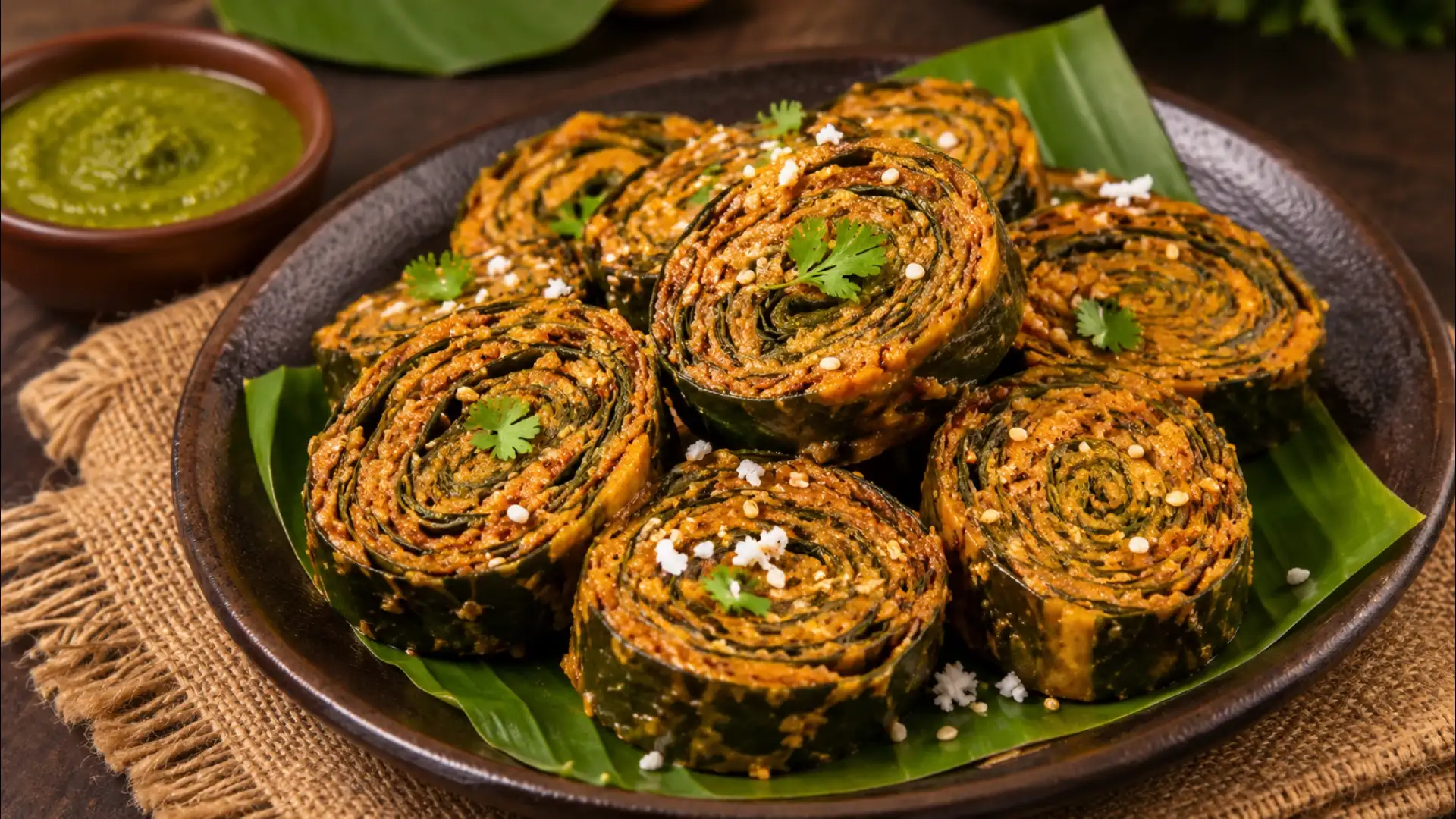
Also known as alu chi vadi, the dish combines tangy, sweet and spicy flavours. The following recipe uses easily available ingredients and a simple steaming method.
Trim the thick stems and carefully flatten the prominent central vein with a knife. This makes the leaves easier to layer and roll. Avoid cutting through the leaf itself.
Choose leaves of a similar size so the finished roll has an even shape.
Mix everything together, adding water gradually. The paste should be thick enough to spread over the leaves without running off.
Taste a small amount of the uncooked paste only for seasoning by checking the spice balance through its aroma and proportions; do not taste raw colocasia leaves or the uncooked mixture.
Place another leaf on top, with the narrower end pointing in the opposite direction. Apply another layer of paste.
Repeat with the remaining leaves, using enough paste to coat each layer without making the roll excessively thick.
Place the rolls in a greased steamer plate. Steam for around 25 to 30 minutes, or until the gram flour mixture is cooked and firm. The cooking time can vary with the thickness of the rolls and the steamer.
Remove them and allow them to cool completely before slicing.
Arrange the slices in the pan and cook over a medium flame until lightly crisp on both sides. Avoid overcrowding the pan.
Also known as alu chi vadi, the dish combines tangy, sweet and spicy flavours. The following recipe uses easily available ingredients and a simple steaming method.
Ingredients
For the rolls- 8 to 10 large colocasia leaves
- 1½ cups gram flour or besan
- 2 tablespoons rice flour
- 2 tablespoons tamarind pulp
- 2 tablespoons grated jaggery
- 1 teaspoon ginger paste
- 1 teaspoon red chilli powder
- ½ teaspoon turmeric powder
- 1 teaspoon coriander powder
- ½ teaspoon cumin powder
- A pinch of asafoetida
- Salt to taste
- Water as required
- 1 tablespoon oil
- ½ teaspoon mustard seeds
- 1 teaspoon sesame seeds
- 6 to 8 curry leaves
- A little chopped fresh coriander
Step 1: Prepare the leaves
Wash the colocasia leaves thoroughly and pat them dry. Place each leaf with the veined side facing upwards.Trim the thick stems and carefully flatten the prominent central vein with a knife. This makes the leaves easier to layer and roll. Avoid cutting through the leaf itself.
Choose leaves of a similar size so the finished roll has an even shape.
Step 2: Make the gram flour paste
Take the besan and rice flour in a mixing bowl. Add tamarind pulp, jaggery, ginger paste, chilli powder, turmeric, coriander powder, cumin powder, asafoetida and salt.Mix everything together, adding water gradually. The paste should be thick enough to spread over the leaves without running off.
Taste a small amount of the uncooked paste only for seasoning by checking the spice balance through its aroma and proportions; do not taste raw colocasia leaves or the uncooked mixture.
Step 3: Layer the leaves
Place the largest leaf on a clean surface, with its veined side facing upwards. Spread a thin layer of the gram flour paste evenly over it.Place another leaf on top, with the narrower end pointing in the opposite direction. Apply another layer of paste.
Repeat with the remaining leaves, using enough paste to coat each layer without making the roll excessively thick.
Step 4: Roll and steam
Fold the sides of the layered leaves slightly towards the centre. Roll them tightly from one end to form a firm cylinder.You may also like
- MRI or ultrasound: Which is greener and easier on the pocket?
- USV Health Awareness Session: Diabetes can stay silent for 10 years, doctors warn
- 8th Pay Commission: ₹4 lakh gross arrears? Level-1 employees should check this calculation immediately..
- Knee and Back Pain During Winter? 5 Possible Causes and Simple Ways to Find Relief
- Can Diabetes Run in Families? Understand Genetic Risks, Early Warning Signs and Prevention Tips
Place the rolls in a greased steamer plate. Steam for around 25 to 30 minutes, or until the gram flour mixture is cooked and firm. The cooking time can vary with the thickness of the rolls and the steamer.
Remove them and allow them to cool completely before slicing.
Step 5: Slice and temper
Cut the cooled rolls into even slices. Heat oil in a pan and add mustard seeds. Once they splutter, add sesame seeds and curry leaves.Arrange the slices in the pan and cook over a medium flame until lightly crisp on both sides. Avoid overcrowding the pan.
Serving suggestions
Garnish with chopped coriander and serve warm as an evening snack. Alu vadi can also be served as part of a traditional Maharashtrian meal.Tips for better results
- Use leaves specifically sold for cooking.
- Keep the gram flour paste thick and spreadable.
- Roll the layers firmly to prevent gaps.
- Allow the steamed rolls to cool before slicing.
- Make sure the leaves and gram flour mixture are thoroughly cooked.






Loving Newspoint? Download the app now
