
Thalipeeth Recipe: How to Make Maharashtra's Traditional Multigrain Flatbread

Thalipeeth is a traditional Maharashtrian flatbread made using a mixture of grains, millets and pulses. It is usually prepared with bhajani, a flour made by roasting ingredients such as jowar, bajra, rice and lentils before grinding them.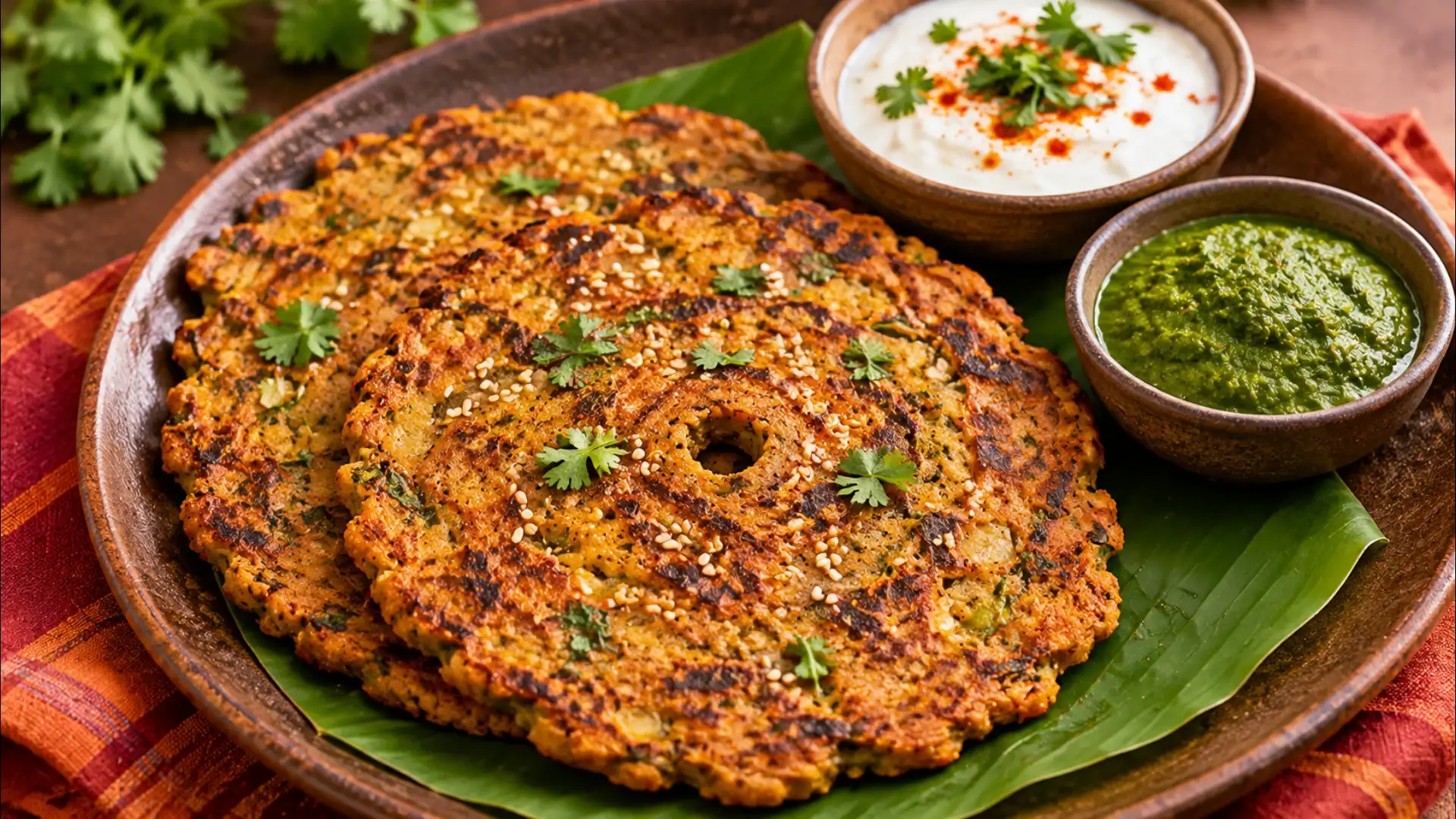
Unlike chapatis, thalipeeth is generally shaped by pressing the dough directly with the fingers. The mixture is too soft and grainy to be rolled easily with a conventional rolling pin.
The finished flatbread is cooked on a tawa until it develops golden patches, with a texture that can be crisp around the edges and soft in the centre. It is often served with yoghurt, white butter or thecha.
Maharashtrian recipes vary in their flour combinations and seasonings. This version uses ready-made bhajani to keep the preparation convenient.
Mix all the ingredients thoroughly before adding water.
Pour in warm water gradually and bring the mixture together. Knead gently until it forms a soft but manageable dough.
The mixture should be moist enough to spread with your fingers but not so sticky that it becomes difficult to shape.
Cover and rest for approximately 10 minutes.
Grease a clean banana leaf, baking parchment suitable for cooking or a suitable reusable shaping sheet. Place one portion in the centre.
Wet your fingers and press the dough outwards to create a round flatbread. Keep the thickness reasonably even so that it cooks properly.
Make three or four small holes across the surface. These allow a little oil to reach the pan-side of the bread during cooking.
Carefully transfer the shaped dough onto the hot surface. Cook for a few minutes until the underside begins developing golden-brown patches.
Drizzle a little oil around the edges and into the holes. Turn the thalipeeth gently and cook the other side.
The finished flatbread should hold together while remaining soft enough in the middle. Avoid using very high heat, as the outside may brown before the centre cooks.
Repeat with the remaining portions.
For a breakfast spread, thalipeeth pairs well with a cup of tea and a small bowl of homemade chutney.
If the mixture becomes difficult to spread, wet your fingers rather than adding large quantities of flour. Too much additional flour can make the cooked flatbread dry.
Thalipeeth is best eaten freshly prepared. The dough can be mixed shortly before cooking, making it a practical option for a homemade breakfast or a simple lunch.
Unlike chapatis, thalipeeth is generally shaped by pressing the dough directly with the fingers. The mixture is too soft and grainy to be rolled easily with a conventional rolling pin.
The finished flatbread is cooked on a tawa until it develops golden patches, with a texture that can be crisp around the edges and soft in the centre. It is often served with yoghurt, white butter or thecha.
Maharashtrian recipes vary in their flour combinations and seasonings. This version uses ready-made bhajani to keep the preparation convenient.
Ingredients for six thalipeeths
- 2 cups bhajani flour
- 1 medium onion, finely chopped
- ½ cup chopped coriander leaves
- 1 green chilli, finely chopped
- 1 teaspoon grated ginger
- 1 teaspoon cumin seeds
- ½ teaspoon turmeric powder
- ½ teaspoon red chilli powder
- 1 tablespoon white sesame seeds
- Salt to taste
- Warm water as required
- Oil for cooking
Prepare the dough
Place the bhajani flour in a large mixing bowl. Add the onion, coriander, green chilli, ginger, cumin, turmeric, chilli powder, sesame seeds and salt.Mix all the ingredients thoroughly before adding water.
Pour in warm water gradually and bring the mixture together. Knead gently until it forms a soft but manageable dough.
The mixture should be moist enough to spread with your fingers but not so sticky that it becomes difficult to shape.
Cover and rest for approximately 10 minutes.
Shape the thalipeeth
Divide the dough into six equal portions.Grease a clean banana leaf, baking parchment suitable for cooking or a suitable reusable shaping sheet. Place one portion in the centre.
Wet your fingers and press the dough outwards to create a round flatbread. Keep the thickness reasonably even so that it cooks properly.
Make three or four small holes across the surface. These allow a little oil to reach the pan-side of the bread during cooking.
You may also like
- "She was protecting me”: Salma Hayek says her teenage daughter blocks questionable Instagram accounts for her; why children are becoming their parents' digital guides
- Wearable Technology Gains Attention as India Focuses on Preventive Healthcare
- Menstrual Hygiene Awareness Improves in India, NFHS-6 Reports Higher Usage
- Health Alert: It's not just BP and cholesterol—this other bodily issue can also lead to a heart attack..
- Can You Choose Your Baby's Gender Through IVF? Myths vs Reality
Cook on the tawa
Heat a tawa over a medium flame and grease it lightly.Carefully transfer the shaped dough onto the hot surface. Cook for a few minutes until the underside begins developing golden-brown patches.
Drizzle a little oil around the edges and into the holes. Turn the thalipeeth gently and cook the other side.
The finished flatbread should hold together while remaining soft enough in the middle. Avoid using very high heat, as the outside may brown before the centre cooks.
Repeat with the remaining portions.
How to serve thalipeeth
Serve it hot with plain yoghurt, white butter or thecha. A simple cucumber salad can also complement the meal.For a breakfast spread, thalipeeth pairs well with a cup of tea and a small bowl of homemade chutney.
Useful preparation tips
Keep the dough covered while shaping the individual portions to prevent it from drying.If the mixture becomes difficult to spread, wet your fingers rather than adding large quantities of flour. Too much additional flour can make the cooked flatbread dry.
Thalipeeth is best eaten freshly prepared. The dough can be mixed shortly before cooking, making it a practical option for a homemade breakfast or a simple lunch.






Loving Newspoint? Download the app now
