
Mahabalipuram Travel Guide: Temples, Sculptures and Coastal Attractions

A visit to Mahabalipuram offers an opportunity to explore India's architectural heritage while enjoying a coastal setting. Also known as Mamallapuram, the town in Tamil Nadu is associated with the Pallava dynasty and is known for its rock-cut monuments, stone sculptures and temples.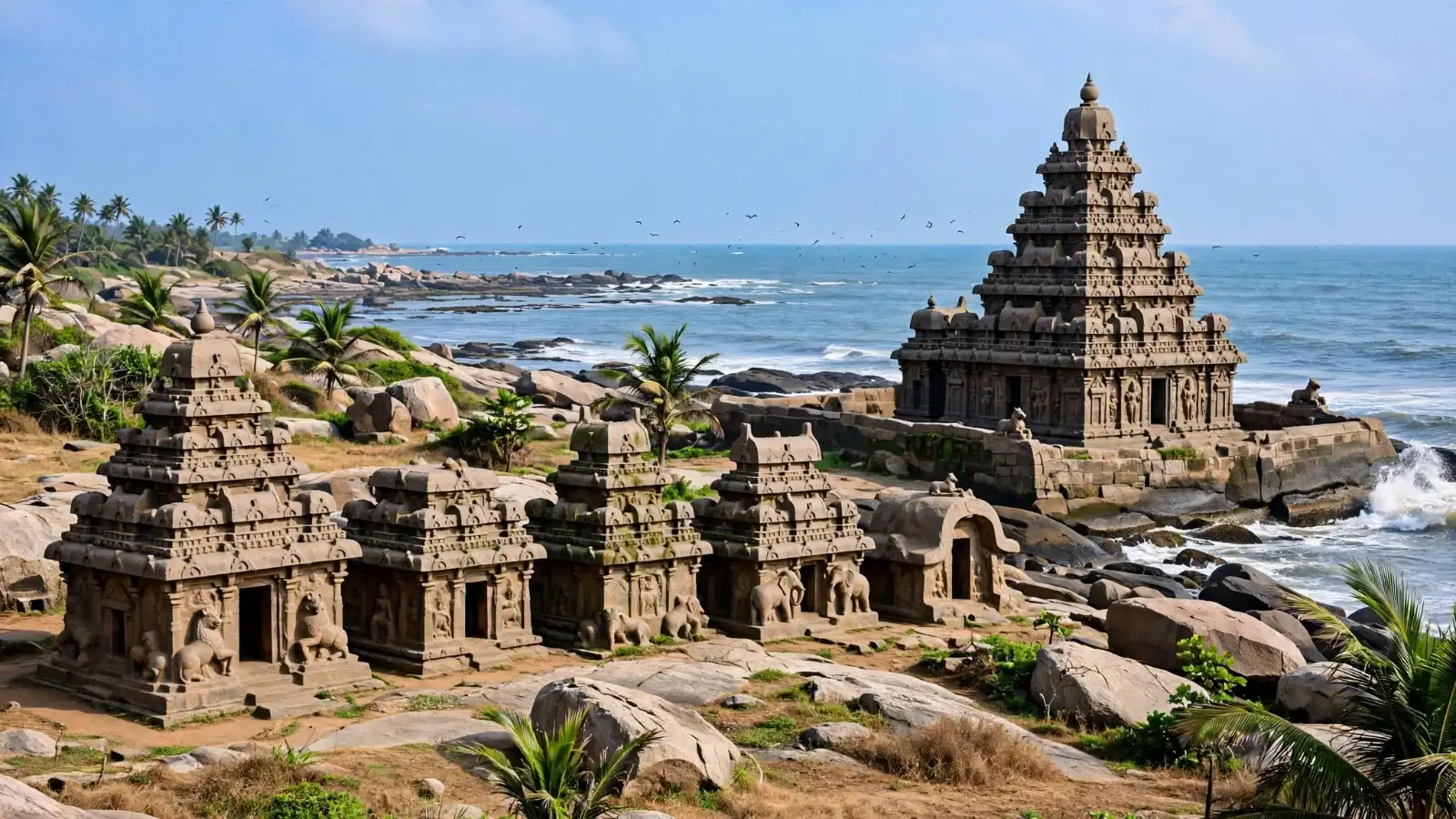
UNESCO recognises the Group of Monuments at Mahabalipuram as a World Heritage Site. The historic complex includes cave sanctuaries, monolithic structures, carved reliefs and structural temples that demonstrate different approaches to stone architecture.
For visitors who enjoy history, photography and leisurely exploration, Mahabalipuram makes an interesting destination for a short break.
The structure reflects Pallava-era architecture and contains shrines associated with Shiva and Vishnu. Its design also demonstrates the development of structural temple architecture in South India.
Allow enough time to appreciate the carvings and architectural details. Rather than rushing through the site, observe the way the towers, stonework and surrounding landscape relate to one another.
Check current entry arrangements and visitor rules before travelling, especially during busy holiday periods.
Although the structures are associated with names from the Mahabharata, their architectural significance lies in the different forms and details displayed by the individual monuments.
The complex offers an opportunity to observe how sculptors worked with large rock surfaces to create different architectural shapes.
Follow the designated visitor routes and avoid climbing on the monuments or touching delicate carvings.
Instead of viewing the work simply as a decorative wall, take time to notice the figures, animals and narrative elements carved into the surface.
A visit with a knowledgeable guide can help explain the cultural and religious themes represented in the artwork.
After sightseeing, take a relaxed walk in permitted public areas and explore local restaurants or shops. Avoid approaching restricted sections of the shore or entering the water where conditions are unsafe.
Tamil vegetarian dishes can also be part of the experience. Look for idli, dosa, sambar, vegetable meals and other familiar regional preparations.
Wear comfortable footwear and carry drinking water during outdoor sightseeing. If you are travelling in warm weather, plan demanding outdoor visits for the more comfortable parts of the day.
Mahabalipuram's appeal lies in the combination of coastal scenery and remarkable stone craftsmanship. A thoughtful visit provides a closer look at the artistic traditions that shaped one of South India's important historic sites.
UNESCO recognises the Group of Monuments at Mahabalipuram as a World Heritage Site. The historic complex includes cave sanctuaries, monolithic structures, carved reliefs and structural temples that demonstrate different approaches to stone architecture.
For visitors who enjoy history, photography and leisurely exploration, Mahabalipuram makes an interesting destination for a short break.
Begin with the Shore Temple
The Shore Temple is among the town's most recognisable landmarks. Its coastal setting makes it especially distinctive, with the temple standing close to the Bay of Bengal.The structure reflects Pallava-era architecture and contains shrines associated with Shiva and Vishnu. Its design also demonstrates the development of structural temple architecture in South India.
Allow enough time to appreciate the carvings and architectural details. Rather than rushing through the site, observe the way the towers, stonework and surrounding landscape relate to one another.
Check current entry arrangements and visitor rules before travelling, especially during busy holiday periods.
Explore the Pancha Rathas
The Pancha Rathas complex contains five distinctive monolithic structures carved from rock. Their forms resemble temple chariots, which explains their collective name.Although the structures are associated with names from the Mahabharata, their architectural significance lies in the different forms and details displayed by the individual monuments.
The complex offers an opportunity to observe how sculptors worked with large rock surfaces to create different architectural shapes.
Follow the designated visitor routes and avoid climbing on the monuments or touching delicate carvings.
Look closely at the open-air sculptures
Mahabalipuram is also known for its large stone reliefs. Arjuna's Penance, often discussed alongside the Descent of the Ganges, is a particularly important example of the town's sculptural tradition.Instead of viewing the work simply as a decorative wall, take time to notice the figures, animals and narrative elements carved into the surface.
A visit with a knowledgeable guide can help explain the cultural and religious themes represented in the artwork.
You may also like
- Shamonda Virus: Shamonda virus spreads in France; how big a threat is it for India?
- Bedwetting In Children: Does your child wet the bed at night? Instead of scolding them, understand these 5 reasons.
- These symptoms are seen due to a deficiency of Vitamin D in the body; identify them like this.
- Early Signs of Termites: Are termites eating your wooden door? Note these 5 early signs to identify them.
- How to get your balcony garden ready before winter sets in
Make time for the coast
The historic monuments are the main attraction, but the coastal setting adds another dimension to the trip.After sightseeing, take a relaxed walk in permitted public areas and explore local restaurants or shops. Avoid approaching restricted sections of the shore or entering the water where conditions are unsafe.
Tamil vegetarian dishes can also be part of the experience. Look for idli, dosa, sambar, vegetable meals and other familiar regional preparations.
Plan a relaxed itinerary
Mahabalipuram is best approached without trying to squeeze every attraction into a few hours. Select the major monuments you most want to see, check access arrangements and allow time for meals and breaks.Wear comfortable footwear and carry drinking water during outdoor sightseeing. If you are travelling in warm weather, plan demanding outdoor visits for the more comfortable parts of the day.
Mahabalipuram's appeal lies in the combination of coastal scenery and remarkable stone craftsmanship. A thoughtful visit provides a closer look at the artistic traditions that shaped one of South India's important historic sites.






Loving Newspoint? Download the app now
