
How to Prepare a Mango Coconut Pudding Without Gelatine

Mango coconut pudding is a refreshing dessert that combines the sweetness of ripe mangoes with the creamy flavour of coconut milk. It is a good choice for anyone looking for a simple homemade treat without gelatine or eggs. The recipe uses cornflour to thicken the mixture, giving the pudding a smooth, custard-like consistency after chilling. You do not need specialist equipment or complicated techniques, making it suitable for beginners. With a few everyday ingredients and some time in the refrigerator, you can prepare individual servings for family meals, summer gatherings or a relaxed weekend dessert.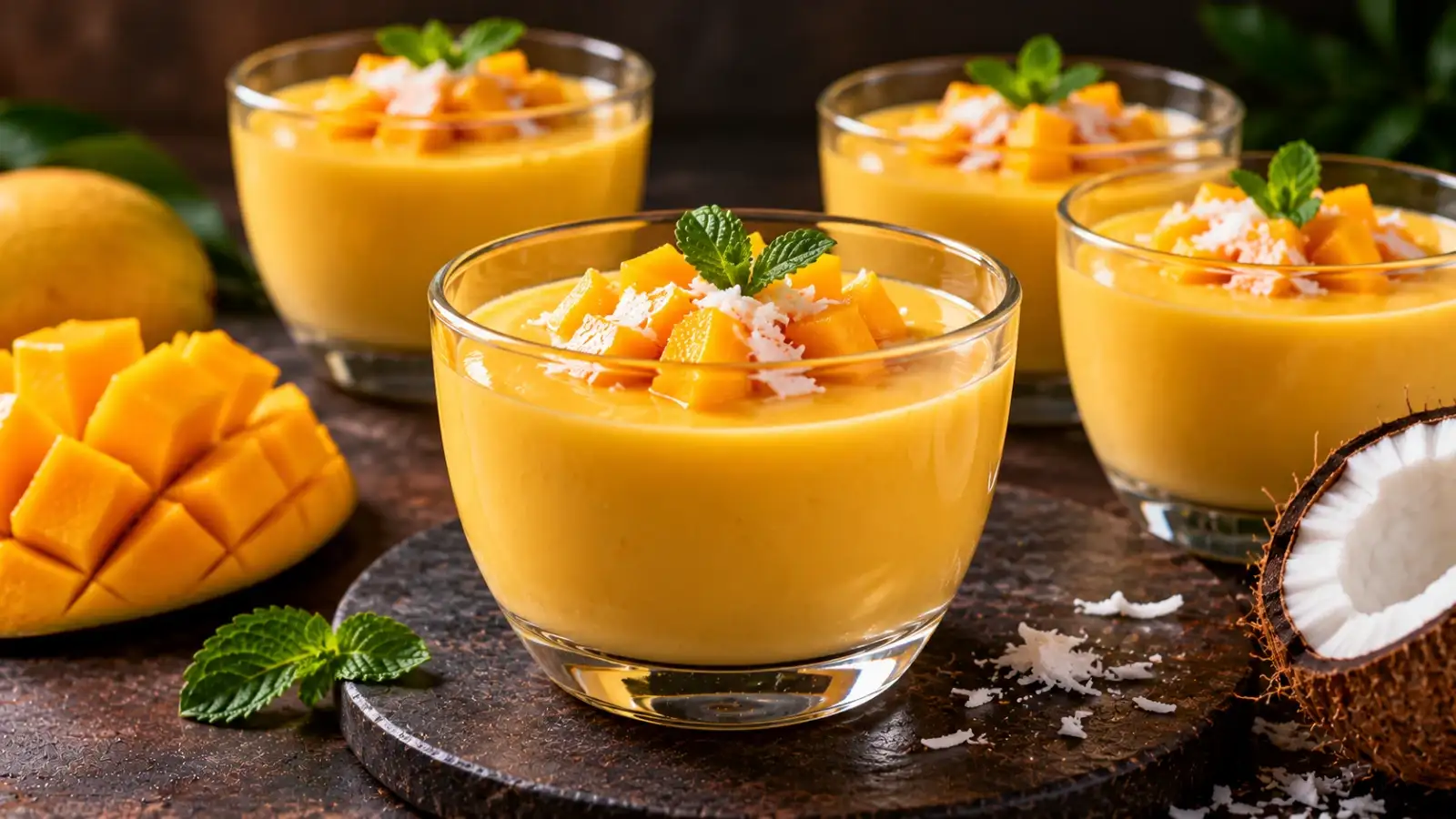
Taste the puree before adding sugar. If the mangoes are particularly sweet, you may need less sugar. Set the puree aside while preparing the coconut mixture.
Mixing cornflour with cool liquid before heating helps prevent lumps from forming in the pudding. Keep this slurry ready for the next step.
Stir until the sugar dissolves. Avoid allowing the coconut milk to boil vigorously, as gentle heating makes it easier to control the texture.
Cook over a low to medium-low flame for approximately 3 to 5 minutes, stirring constantly. The mixture should gradually become thicker and coat the back of a spoon.
Make sure the cornflour is properly cooked. If the mixture remains watery, continue cooking gently for a little longer while stirring.
If you prefer a very smooth pudding, pass the mixture through a fine sieve before pouring it into serving glasses.
Avoid adding the mango puree while the coconut mixture is extremely hot, particularly if you want to preserve its fresh flavour.
The pudding will become thicker as it cools. Since this recipe uses cornflour rather than gelatine, the final texture will be creamy and spoonable rather than firm like jelly.
Serve the pudding chilled for the best flavour and texture.
Do not leave the pudding at room temperature for extended periods, particularly in warm weather. Freezing is not recommended because thawing can affect its smooth texture.
The recipe is flexible, easy to prepare ahead and suitable for serving in individual portions. Whether you make it for a family dinner or a summer get-together, this chilled dessert is a straightforward way to bring together two complementary tropical flavours.
Ingredients for Mango Coconut Pudding
This recipe makes approximately four servings.- 2 medium-sized ripe mangoes
- 400 ml coconut milk
- 3 tablespoons cornflour
- 3 to 4 tablespoons sugar, adjusted to taste
- 1/2 teaspoon vanilla extract, optional
- A small pinch of salt
- Fresh mango cubes or grated coconut for garnish, optional
How to Make Mango Coconut Pudding Without Gelatine
Step 1: Prepare the Mango Puree
Wash, peel and chop the mangoes, removing the stones. Place the flesh in a blender and blend until smooth.Taste the puree before adding sugar. If the mangoes are particularly sweet, you may need less sugar. Set the puree aside while preparing the coconut mixture.
Step 2: Make a Cornflour Slurry
Take around 100 ml of the coconut milk and pour it into a small bowl. Add the cornflour and whisk until no lumps remain.Mixing cornflour with cool liquid before heating helps prevent lumps from forming in the pudding. Keep this slurry ready for the next step.
Step 3: Heat the Coconut Milk
Pour the remaining 300 ml of coconut milk into a saucepan. Add the sugar and a small pinch of salt, then heat gently over a medium-low flame.Stir until the sugar dissolves. Avoid allowing the coconut milk to boil vigorously, as gentle heating makes it easier to control the texture.
Step 4: Thicken the Mixture
Give the cornflour slurry another stir, then slowly pour it into the warm coconut milk while whisking continuously.Cook over a low to medium-low flame for approximately 3 to 5 minutes, stirring constantly. The mixture should gradually become thicker and coat the back of a spoon.
Make sure the cornflour is properly cooked. If the mixture remains watery, continue cooking gently for a little longer while stirring.
Step 5: Add the Mango Puree
Remove the saucepan from the heat and allow the mixture to cool slightly. Add the mango puree and vanilla extract, if using, then whisk until everything is evenly combined.If you prefer a very smooth pudding, pass the mixture through a fine sieve before pouring it into serving glasses.
Avoid adding the mango puree while the coconut mixture is extremely hot, particularly if you want to preserve its fresh flavour.
Step 6: Chill Until Set
Pour the mixture into four small serving bowls or glasses. Allow it to cool towards room temperature, then cover and refrigerate for at least 3 to 4 hours.The pudding will become thicker as it cools. Since this recipe uses cornflour rather than gelatine, the final texture will be creamy and spoonable rather than firm like jelly.
Step 7: Garnish and Serve
Before serving, add a few fresh mango cubes or a light sprinkling of grated coconut. You can also add a little lime zest for a subtle citrus note.Serve the pudding chilled for the best flavour and texture.
Tips for the Best Mango Coconut Pudding
Use Full-Fat Coconut Milk
Full-fat coconut milk gives the pudding a richer, creamier texture. A thinner coconut drink may produce a less substantial result, so check the product label before choosing one.Adjust the Sweetness
Mangoes vary naturally in sweetness. Start with a smaller quantity of sugar, taste the mixture and add more if necessary.Avoid Cornflour Lumps
Always mix cornflour with cool coconut milk before adding it to the heated mixture. Whisk continuously while pouring the slurry into the saucepan.Give It Enough Chilling Time
Do not rush the refrigeration stage. The pudding needs time to cool completely and develop its final consistency.Keep the Texture in Mind
Cornflour thickens the pudding but does not produce the same firm set as gelatine or agar-agar. If you want a dessert that can be unmoulded and sliced, this spoonable version may not be suitable.How to Store Mango Coconut Pudding
Store the pudding in covered containers in the refrigerator and consume it within 2 to 3 days for the best quality. Use clean serving spoons and return leftovers to the refrigerator promptly.Do not leave the pudding at room temperature for extended periods, particularly in warm weather. Freezing is not recommended because thawing can affect its smooth texture.
Why This Mango Coconut Pudding Is Worth Trying
This mango coconut pudding offers a simple way to enjoy seasonal fruit in a creamy dessert without using gelatine or eggs. The mango provides natural sweetness and a fruity flavour, while coconut milk adds richness. Cornflour helps the mixture thicken using an ingredient commonly found in Indian kitchens.The recipe is flexible, easy to prepare ahead and suitable for serving in individual portions. Whether you make it for a family dinner or a summer get-together, this chilled dessert is a straightforward way to bring together two complementary tropical flavours.
Next Story