Why Sitting Cross-Legged on the Floor Is Harder Than It Looks

A child folds onto the floor without thinking. An adult tries the same thing and feels a pull in the outer hip, a tightness behind the knee, a low back that rounds the moment it tries to stay upright. The posture has not changed. The body has.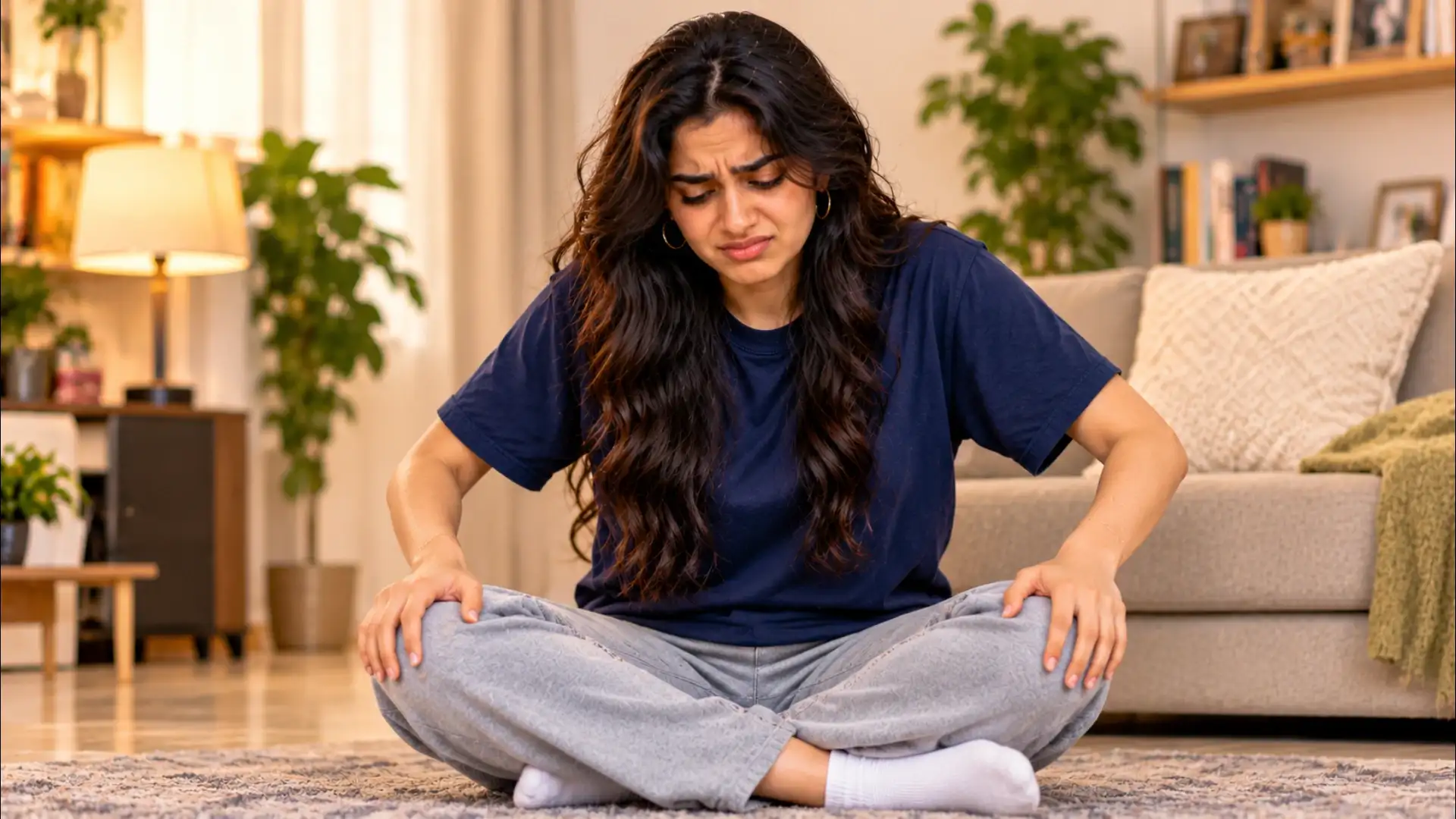
The technical term for what the hips need is external rotation combined with abduction, the thigh bone turning outward in the socket while the leg moves away from the centre of the body. Chairs do the opposite. They hold the hip in a neutral or slightly internally rotated position, the knees pointing forward, the pelvis tipped back. Spend most of the day in a chair and the muscles that produce hip external rotation, the deep six rotators sitting behind the hip joint, gradually lose both strength and range. They are not injured. They are simply undertrained.
The hip flexors, particularly the iliopsoas that runs from the lower spine to the top of the femur, become shortened with prolonged sitting. A shortened iliopsoas resists the forward tilt of the pelvis that upright cross-legged posture requires. This is why someone with tight hip flexors often finds that placing a folded blanket under the sitting bones, raising the pelvis slightly, makes the posture immediately easier. The elevation gives the pelvis the tilt it cannot produce on its own, and the spine suddenly finds its natural curve again.
The shift away from floor-sitting typically accelerates through school years, where chairs become the default for six to eight hours a day, and continues into desk-based work. By the time a person is in their thirties, the hip external rotation range may have narrowed considerably, not because of age itself, but because of the accumulated hours spent in positions that never demanded it. Older adults who have maintained floor-sitting habits throughout their lives often retain the range that younger, chair-bound adults have lost.
This is why the posture is not universally appropriate. Someone with a knee ligament issue or a hip replacement should not push into it. The discomfort that most healthy adults feel is muscular and a matter of range; the discomfort that signals a structural problem is sharper, more localised, and does not ease with time or position adjustment.
The timeline is slow. Connective tissue adapts over weeks and months, not days. Forcing the knees toward the floor before the hips are ready shifts the load onto the knee, which is not designed to absorb it. The body finds the range when the tissues are ready, not when the will demands it.
The floor has not become harder. The body has become less practised at meeting it. That is a distinction worth holding, because one of those things can change.
What the Posture Actually Demands
Cross-legged sitting is not a rest position. It asks three things of the body simultaneously: the hips must rotate outward and open wide enough for both knees to drop toward the floor; the spine must stack vertically without the support of a backrest; and the muscles around the pelvis must hold that position without fatigue. Most people can manage one or two of these. Doing all three together, for more than a few minutes, is where the difficulty lives.The technical term for what the hips need is external rotation combined with abduction, the thigh bone turning outward in the socket while the leg moves away from the centre of the body. Chairs do the opposite. They hold the hip in a neutral or slightly internally rotated position, the knees pointing forward, the pelvis tipped back. Spend most of the day in a chair and the muscles that produce hip external rotation, the deep six rotators sitting behind the hip joint, gradually lose both strength and range. They are not injured. They are simply undertrained.
The Role of the Hip Flexors and the Spine
There is a second layer to the difficulty that most people do not expect. When the hips are tight, the pelvis cannot tilt forward. When the pelvis cannot tilt forward, the lumbar spine rounds backward to compensate. The body is trying to get you low enough to sit, and it borrows the range from wherever it can find it. The result is the characteristic slumped posture, knees up near the chest, lower back curved like a C, that makes cross-legged sitting feel like hard work within two minutes.The hip flexors, particularly the iliopsoas that runs from the lower spine to the top of the femur, become shortened with prolonged sitting. A shortened iliopsoas resists the forward tilt of the pelvis that upright cross-legged posture requires. This is why someone with tight hip flexors often finds that placing a folded blanket under the sitting bones, raising the pelvis slightly, makes the posture immediately easier. The elevation gives the pelvis the tilt it cannot produce on its own, and the spine suddenly finds its natural curve again.
You may also like
- High jewellery maisons are increasingly embracing ornamental stones
- Why Do People Jump Over Burning Sticks in Bihar on Diwali?
- LIC Health Shield Plan 2026: Hospital Cash Benefits and Financial Support for Critical Illnesses and Surgeries
- 'Mogging' is Collins Dictionary's Word of the Year. But what does it mean, and 5 other words that made it to the list?
- Losing Belly Fat Last? Here's Why Your Body Chooses Where Fat Goes First
Why Children Find It Easy and Adults Do Not
Children's hip sockets are shallower and the surrounding connective tissue is more pliable. But the bigger factor is use. A child in an Indian household spends hours on the floor, eating, playing, watching, sleeping. The hip rotators are trained daily without any deliberate effort. The range is maintained because it is used.The shift away from floor-sitting typically accelerates through school years, where chairs become the default for six to eight hours a day, and continues into desk-based work. By the time a person is in their thirties, the hip external rotation range may have narrowed considerably, not because of age itself, but because of the accumulated hours spent in positions that never demanded it. Older adults who have maintained floor-sitting habits throughout their lives often retain the range that younger, chair-bound adults have lost.
What Happens in the Ankles and Knees
The hips take most of the attention, but the ankles and knees carry their own part of the load. In cross-legged sitting, the ankle sits in a position of plantar flexion, pointing slightly downward, while the knee is bent at roughly ninety degrees and rotated. If the ankle lacks flexibility, it creates pressure at the outer edge of the foot. If the knee's supporting structures are tight or the knee has a history of injury, the rotation demanded by the posture can feel uncomfortable or sharp.This is why the posture is not universally appropriate. Someone with a knee ligament issue or a hip replacement should not push into it. The discomfort that most healthy adults feel is muscular and a matter of range; the discomfort that signals a structural problem is sharper, more localised, and does not ease with time or position adjustment.
What Gradually Restores the Range
The muscles and connective tissue that limit the posture respond to consistent, gentle loading over time. Positions that ask the hip to externally rotate, sitting on the floor with the soles of the feet together, lying on the back with one ankle crossed over the opposite knee, or simply spending more time on the floor in any comfortable position, gradually restore the range that chair-sitting has narrowed.The timeline is slow. Connective tissue adapts over weeks and months, not days. Forcing the knees toward the floor before the hips are ready shifts the load onto the knee, which is not designed to absorb it. The body finds the range when the tissues are ready, not when the will demands it.
The floor has not become harder. The body has become less practised at meeting it. That is a distinction worth holding, because one of those things can change.






Loving Newspoint? Download the app now