
Why Indian Homes Are Quietly Embracing Minimalism

Walk into a home in Bengaluru's Indiranagar or a flat in Lucknow's newer residential blocks and you may notice the same thing: one good wooden chair, a single potted plant, walls the colour of unbleached cotton. The shelf has three objects on it, not thirty. The kitchen counter is clear. This is not poverty of imagination. It is a considered choice, and it is spreading.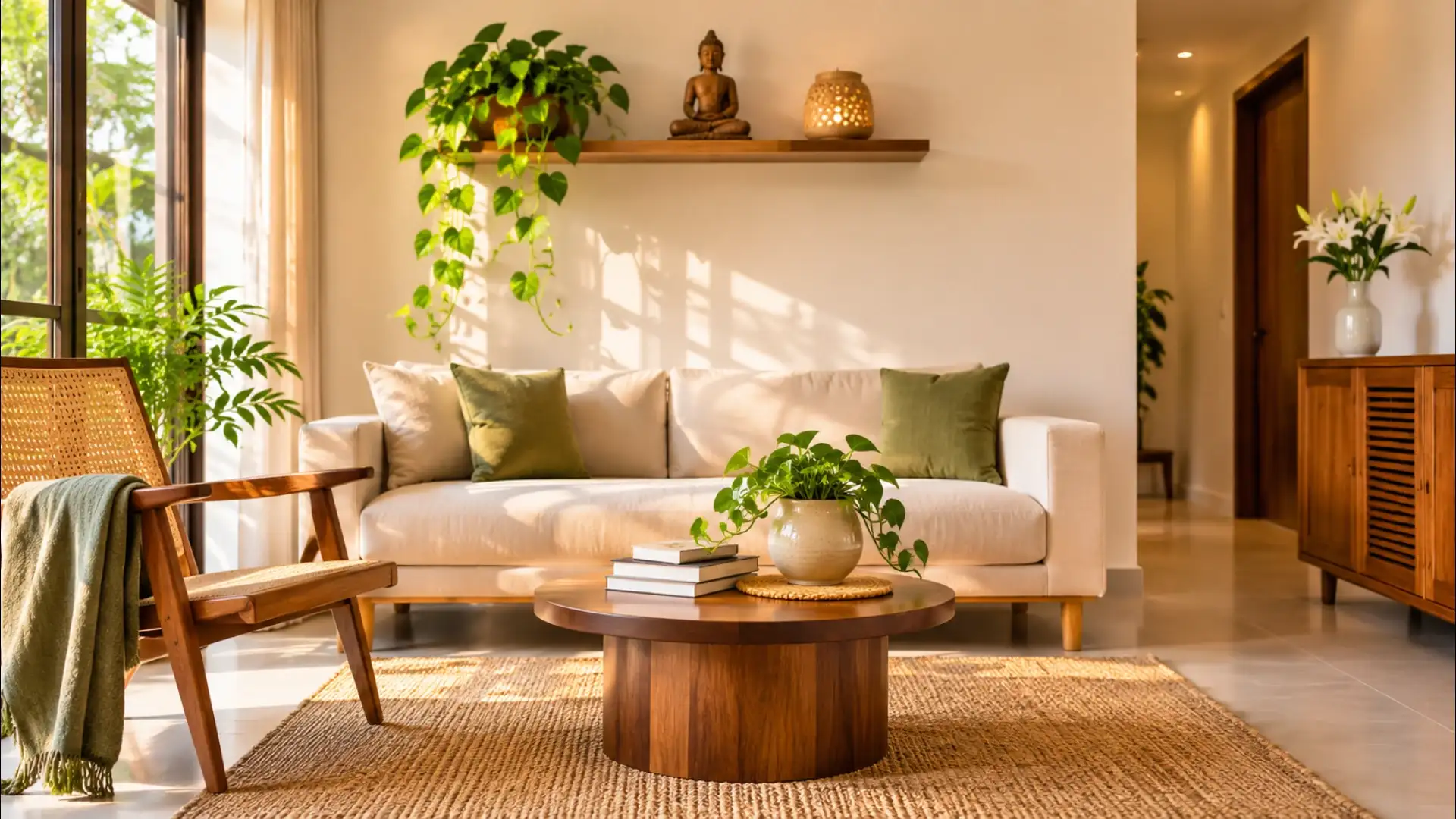
What Minimalism Actually Means in an Indian Home
Minimalism in the Western design tradition means reduction for its own sake, white walls, invisible storage, the aesthetic of absence. The version taking root in Indian homes is different in character. It is closer to what the craft traditions always practised: one beautiful thing made well, placed where it earns its place. A single Channapatna toy on a shelf. A handwoven dhurrie on a floor that has nothing else competing with it. The principle is not emptiness but intention. Each object is there because someone chose it, not because it arrived and was never removed.Why the Shift Is Happening
Three pressures are converging. First, urban apartments are getting smaller. A 600-square-foot flat in any metro cannot hold the accumulated objects of a joint family home without becoming unnavigable. When space is scarce, every object must earn its square footage. Second, cleaning labour is less available or more expensive than it was a generation ago. A home full of decorative objects is a home full of surfaces to dust. Third, and perhaps most significant, a generation that grew up watching its parents collect things is consciously choosing the opposite, not as rejection, but as a different answer to the same question of what a home should feel like.What Stays, What Goes
The minimalist Indian home is not a blank room with a mid-century sofa. The objects that survive the edit tend to be the ones with a story or a making behind them. A Madhubani painting on one wall rather than six prints on four. A brass diya that has been in the family, placed on a clean wooden surface rather than crowded onto a shelf with a dozen other things. Handmade pottery in two or three pieces rather than a full cabinet of ceramics. The craft object holds its place because it carries meaning and visible skill. The mass-produced decorative object, the resin elephant, the artificial flower arrangement, the inspirational wall decal, is the first thing to go. This is not snobbery. It is a re-examination of what a home is actually for.The Materials That Define the Look
Natural materials dominate: unfinished teak and sheesham, terracotta, cane, unglazed stone, raw cotton and linen. Colour is present but restrained, ochre, indigo, and brick used as accents rather than full-wall statements. These are not new materials in Indian interiors. They are the oldest ones, stripped of the additional layers that accumulated over decades of prosperity signalling. A cane chair is not a trend object. It is what Indian homes had before plastic arrived and will have long after the current moment passes. The minimalist turn is, in this sense, partly a return.What This Means for How a Home Feels
A room with fewer things in it is quieter. Not silent, a home with people in it is never silent, but visually quieter, which changes how long a person can stay in it without feeling overstimulated. This matters more than it once did. When work, communication, and entertainment all happen on a screen in the same room, the room itself becomes the one thing that can offer stillness. The home that was once a place to display a family's accumulation is becoming a place to recover from the accumulation happening everywhere else. That is a genuine shift in what a home is asked to do, and the objects inside it are responding accordingly.Next Story