
10 Best Himachal Pradesh Road Trips for Breathtaking Mountain Views

Himachal Pradesh is one of those places where travelling between destinations can be as memorable as reaching them. Roads wind through pine forests, follow rivers through narrow valleys, climb towards high mountain passes and connect villages that seem almost suspended above the landscape.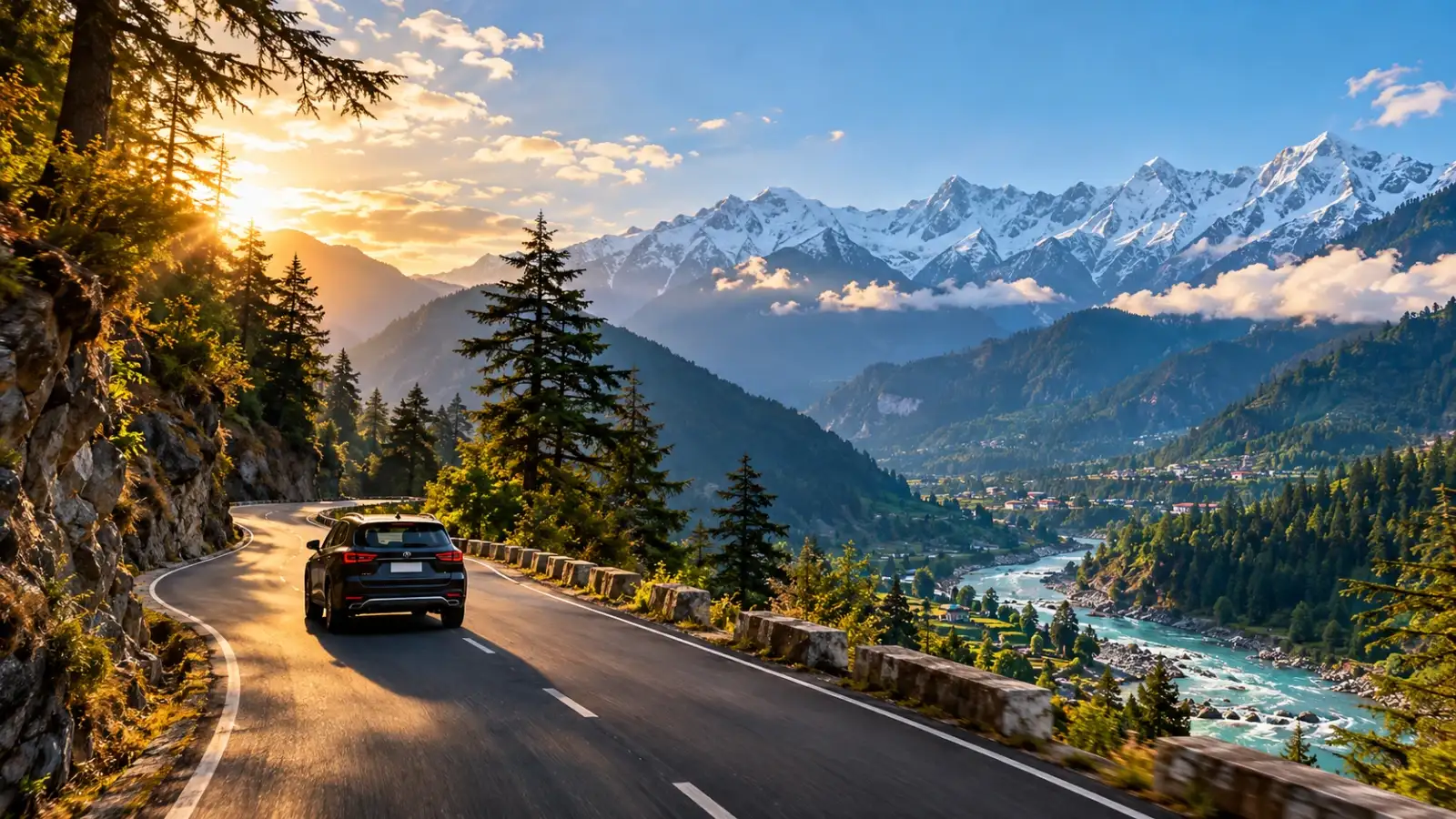
A road trip here can take many forms. You can spend a relaxed weekend driving between colonial hill towns, follow the Sutlej towards the apple-growing regions of Kinnaur or commit to a much longer journey through the cold desert of Spiti. Himachal Tourism notes that an extensive road network connects destinations across the state, although conditions vary considerably with altitude, weather and season.
Some routes are comfortable for relatively inexperienced mountain travellers, while others involve narrow roads, high altitude and long stretches with limited facilities. Here are some of the most rewarding mountain road trips to consider in Himachal Pradesh.
The route heads through the upper Shimla region before continuing into Kinnaur. As the journey progresses, the landscape becomes increasingly dramatic, with steep mountains, deep valleys and roads following sections of the Sutlej and Baspa river systems.
Sangla provides a convenient base for exploring the Baspa Valley. From here, the road continues towards Chitkul, close to the Indo-Tibetan frontier. Traditional villages, orchards, mountain scenery and the Baspa River give this part of Kinnaur a very different atmosphere from Himachal's larger hill stations.
This is not a road trip that should be rushed. Spending several days along the route gives travellers enough time to explore villages and adapt to changing elevations rather than treating Chitkul simply as an endpoint.
Keylong, the administrative centre of Lahaul and Spiti district, sits beside the Bhaga River. The confluence of the Chandra and Bhaga rivers at Tandi is around eight kilometres away. The changing landscape is one of the main reasons to make the journey, with the greener Manali region gradually giving way to the more rugged mountains of Lahaul.
Travellers can use Keylong as a base for exploring nearby monasteries, villages and valleys. The journey is particularly suited to those who want high Himalayan scenery without committing to the much longer and more demanding Spiti circuit.
Kalpa is surrounded by dramatic mountain scenery and is particularly associated with views towards the Kinner Kailash range. Traditional architecture, orchards and nearby villages give travellers plenty of reasons to stay rather than simply driving through.
The journey works best when broken into stages. Stops around Narkanda, Rampur or other settlements along the route can turn a long drive into a slower exploration of the region.
Himachal Tourism prominently features Kalpa among the state's destinations, reflecting Kinnaur's growing appeal to travellers interested in mountain scenery and quieter settlements.
Himachal Tourism describes Spiti as a mountainous cold desert characterised by windswept landscapes, ancient monasteries and high-altitude settlements. Kaza acts as the main base for exploring places including Key Monastery, Kibber, Langza, Hikkim and Komic.
The journey requires considerably more preparation than an ordinary hill station road trip. Himachal Tourism states that regular buses between Manali and Kaza generally operate from July to October and recommends sturdy vehicles for the journey. Seasonal road conditions can change, so travellers should check the latest status immediately before departure.
Altitude is another consideration. Travellers should allow sufficient time for acclimatisation and avoid treating the route like a fast weekend drive.
Dharamshala combines the Kangra Valley landscape with Tibetan cultural influences, while Dalhousie offers a quieter hill station atmosphere surrounded by forested mountains. Travelling between them allows visitors to experience two distinct parts of Himachal on the same journey.
The road trip can be expanded with stops around Kangra, Khajjiar or Chamba depending on available time and road conditions. Rather than covering huge distances each day, travellers can spend several nights exploring the region.
This route is particularly suitable for families and travellers who want mountain scenery without the logistical challenges associated with remote high-altitude regions.
Chamba has a very different character from the more tourist-oriented hill stations. Temples, traditional architecture and the surrounding mountains give the town a strong cultural identity.
The route can also be extended towards other parts of Chamba district, depending on the season and available time. Travellers interested in combining scenery with history and local culture may find this journey more rewarding than a road trip focused purely on famous viewpoints.
A slower itinerary also leaves room for village stops, local food and short walks rather than spending most of the day inside a vehicle.
The journey can be divided across several stops, potentially including Narkanda, Kalpa, Nako and Tabo before reaching Kaza. This gradual progression makes it possible to experience changing landscapes rather than moving directly into Spiti's high-altitude environment.
Himachal Tourism states that road transport towards Kaza through the Shimla and Kinnaur side generally operates from May to October. The tourism department also notes that foreign tourists travelling through the Shimla-Kinnaur route towards Spiti require an Inner Line Permit because parts of the route run close to the international border.
Because of the distances and mountain conditions involved, this route deserves several days rather than a rushed schedule.
Himachal Tourism notes that a roughly 14-kilometre jeepable road branches towards the lake from the Manali-Kaza road at Batal. Seasonal tented accommodation has traditionally operated around the area from June to October, subject to conditions and local rules.
The road itself is part of the adventure. Travellers should expect rough surfaces, remote terrain and very limited facilities compared with mainstream tourist areas.
Chandratal should therefore be approached as a high-altitude journey rather than an ordinary lake excursion. Weather and road conditions need to be checked locally before attempting the drive.
Himachal Tourism places Rohtang around 51 kilometres from Manali. The route climbs steadily through the mountains, passing places such as Kothi and Rahala before reaching the higher reaches of the pass.
Rohtang traditionally provides summer access towards Lahaul and Spiti, but heavy snow affects seasonal accessibility. Himachal Tourism states that the pass generally closes after heavy snowfall in late November and reopens after winter, depending on clearance and weather conditions.
Tourist vehicle access to Rohtang is regulated, and permits are required for petrol and diesel vehicles visiting the pass for tourism purposes. Travellers should check the current official permit and road rules before setting out.
The drive can be extended towards Shoja and Jalori Pass, creating a route that combines rivers, forests and higher mountain landscapes. Small villages and homestays make it possible to turn the journey into a slow road trip rather than a simple point-to-point drive.
Jalori Pass is particularly scenic when accessible, but snow and bad weather can affect the road. Travellers should confirm local conditions before planning to cross the pass, especially outside the main travel season.
This route works particularly well for those who prefer quiet villages, walking trails and forest landscapes over busy markets and heavily developed hill stations.
Driving also gives travellers the flexibility to stop at smaller villages and viewpoints that would otherwise be missed. Himachal Tourism notes that the state is extensively connected by highways and road transport, with interstate services linking it with cities including Delhi and Chandigarh.
However, mountain driving should never be judged purely by distance. A route that appears short on a map can take several hours because of steep gradients, narrow roads, traffic, construction or weather.
For this reason, road trip itineraries in Himachal are generally more enjoyable when daily driving distances are kept realistic.
Spiti Tourism information recommends roughly April to October as a suitable period for visiting the valley, while road access from different directions varies. The Manali side is particularly dependent on seasonal high-pass conditions.
July, August and September have traditionally been important travel months for Kinnaur, Lahaul and Spiti, although monsoon conditions can affect roads elsewhere in Himachal.
Winter creates beautiful landscapes but can bring snow closures and icy roads. During the monsoon, landslides, falling rocks and temporary road closures can disrupt itineraries. Current conditions should always take priority over a fixed travel plan.
Drivers unfamiliar with mountain roads should avoid unnecessarily aggressive driving and overtaking. Distances between fuel stations, workshops and medical facilities can become substantial in remote regions. Himachal Tourism notes that Spiti has limited medical infrastructure compared with larger tourist towns.
Most importantly, do not continue towards a high pass simply because it appears open on an online map. Local authorities, police and official road updates should be checked before travelling through areas affected by snowfall, landslides or severe weather.
A relaxed drive from Dharamshala towards Dalhousie offers forests and hill towns, while Kinnaur introduces deeper valleys and dramatic mountain roads. Continue towards Spiti and the scenery transforms again into an extraordinary high-altitude cold desert.
Whether you choose a short drive around Manali or a multi-day journey through Kinnaur and Spiti, leaving enough time for unplanned stops makes the experience considerably better. In Himachal, the mountain road is often the destination itself.
A road trip here can take many forms. You can spend a relaxed weekend driving between colonial hill towns, follow the Sutlej towards the apple-growing regions of Kinnaur or commit to a much longer journey through the cold desert of Spiti. Himachal Tourism notes that an extensive road network connects destinations across the state, although conditions vary considerably with altitude, weather and season.
Some routes are comfortable for relatively inexperienced mountain travellers, while others involve narrow roads, high altitude and long stretches with limited facilities. Here are some of the most rewarding mountain road trips to consider in Himachal Pradesh.
Shimla to Sangla and Chitkul
For travellers who want to watch Himachal gradually transform from forested hills into rugged Himalayan terrain, the drive from Shimla towards Sangla and Chitkul is one of the most interesting options.The route heads through the upper Shimla region before continuing into Kinnaur. As the journey progresses, the landscape becomes increasingly dramatic, with steep mountains, deep valleys and roads following sections of the Sutlej and Baspa river systems.
Sangla provides a convenient base for exploring the Baspa Valley. From here, the road continues towards Chitkul, close to the Indo-Tibetan frontier. Traditional villages, orchards, mountain scenery and the Baspa River give this part of Kinnaur a very different atmosphere from Himachal's larger hill stations.
This is not a road trip that should be rushed. Spending several days along the route gives travellers enough time to explore villages and adapt to changing elevations rather than treating Chitkul simply as an endpoint.
Manali to Keylong
The journey from Manali into Lahaul is one of Himachal's classic mountain drives. Manali itself sits in the Beas Valley, surrounded by forests and snow-covered peaks, before the road heads towards the higher mountains. Himachal Tourism places Keylong roughly 120 kilometres from Manali.Keylong, the administrative centre of Lahaul and Spiti district, sits beside the Bhaga River. The confluence of the Chandra and Bhaga rivers at Tandi is around eight kilometres away. The changing landscape is one of the main reasons to make the journey, with the greener Manali region gradually giving way to the more rugged mountains of Lahaul.
Travellers can use Keylong as a base for exploring nearby monasteries, villages and valleys. The journey is particularly suited to those who want high Himalayan scenery without committing to the much longer and more demanding Spiti circuit.
Shimla to Kalpa
Kalpa is one of Kinnaur's most scenic mountain settlements and makes an excellent destination for a multi-day road trip from Shimla. The drive gradually moves away from the familiar hill station landscape into the deeper valleys of Kinnaur.Kalpa is surrounded by dramatic mountain scenery and is particularly associated with views towards the Kinner Kailash range. Traditional architecture, orchards and nearby villages give travellers plenty of reasons to stay rather than simply driving through.
The journey works best when broken into stages. Stops around Narkanda, Rampur or other settlements along the route can turn a long drive into a slower exploration of the region.
Himachal Tourism prominently features Kalpa among the state's destinations, reflecting Kinnaur's growing appeal to travellers interested in mountain scenery and quieter settlements.
Manali to Kaza
Few road trips in Himachal have the reputation of the Manali to Kaza route. It crosses a harsh high-altitude landscape before entering Spiti Valley, where mountains, Buddhist monasteries and remote villages dominate the scenery.Himachal Tourism describes Spiti as a mountainous cold desert characterised by windswept landscapes, ancient monasteries and high-altitude settlements. Kaza acts as the main base for exploring places including Key Monastery, Kibber, Langza, Hikkim and Komic.
The journey requires considerably more preparation than an ordinary hill station road trip. Himachal Tourism states that regular buses between Manali and Kaza generally operate from July to October and recommends sturdy vehicles for the journey. Seasonal road conditions can change, so travellers should check the latest status immediately before departure.
Altitude is another consideration. Travellers should allow sufficient time for acclimatisation and avoid treating the route like a fast weekend drive.
Dharamshala to Dalhousie
Not every mountain road trip needs extreme altitude or difficult terrain. The drive between Dharamshala and Dalhousie provides a more relaxed way to experience the western part of Himachal Pradesh.Dharamshala combines the Kangra Valley landscape with Tibetan cultural influences, while Dalhousie offers a quieter hill station atmosphere surrounded by forested mountains. Travelling between them allows visitors to experience two distinct parts of Himachal on the same journey.
The road trip can be expanded with stops around Kangra, Khajjiar or Chamba depending on available time and road conditions. Rather than covering huge distances each day, travellers can spend several nights exploring the region.
This route is particularly suitable for families and travellers who want mountain scenery without the logistical challenges associated with remote high-altitude regions.
Dalhousie to Chamba
The road from Dalhousie towards Chamba is another rewarding drive in western Himachal. As the journey leaves the hill station behind, the landscape opens towards the historic Chamba region.Chamba has a very different character from the more tourist-oriented hill stations. Temples, traditional architecture and the surrounding mountains give the town a strong cultural identity.
The route can also be extended towards other parts of Chamba district, depending on the season and available time. Travellers interested in combining scenery with history and local culture may find this journey more rewarding than a road trip focused purely on famous viewpoints.
A slower itinerary also leaves room for village stops, local food and short walks rather than spending most of the day inside a vehicle.
Shimla to Kaza Through Kinnaur
For travellers with enough time, the Shimla to Kaza journey through Kinnaur is one of the great Himalayan road trips. Instead of approaching Spiti from Manali, this route enters the valley from the south through the Sutlej and Kinnaur regions.The journey can be divided across several stops, potentially including Narkanda, Kalpa, Nako and Tabo before reaching Kaza. This gradual progression makes it possible to experience changing landscapes rather than moving directly into Spiti's high-altitude environment.
Himachal Tourism states that road transport towards Kaza through the Shimla and Kinnaur side generally operates from May to October. The tourism department also notes that foreign tourists travelling through the Shimla-Kinnaur route towards Spiti require an Inner Line Permit because parts of the route run close to the international border.
Because of the distances and mountain conditions involved, this route deserves several days rather than a rushed schedule.
Kaza to Chandratal
Once in Spiti, one of the most memorable extensions is the journey towards Chandratal, or the Lake of the Moon. The high-altitude lake lies north of Kunzum Pass and is known for its distinctive crescent shape and stark mountain setting.Himachal Tourism notes that a roughly 14-kilometre jeepable road branches towards the lake from the Manali-Kaza road at Batal. Seasonal tented accommodation has traditionally operated around the area from June to October, subject to conditions and local rules.
The road itself is part of the adventure. Travellers should expect rough surfaces, remote terrain and very limited facilities compared with mainstream tourist areas.
Chandratal should therefore be approached as a high-altitude journey rather than an ordinary lake excursion. Weather and road conditions need to be checked locally before attempting the drive.
Manali to Rohtang Pass
For travellers who want a shorter mountain drive, the road from Manali towards Rohtang Pass offers dramatic scenery without requiring a multi-day expedition.Himachal Tourism places Rohtang around 51 kilometres from Manali. The route climbs steadily through the mountains, passing places such as Kothi and Rahala before reaching the higher reaches of the pass.
Rohtang traditionally provides summer access towards Lahaul and Spiti, but heavy snow affects seasonal accessibility. Himachal Tourism states that the pass generally closes after heavy snowfall in late November and reopens after winter, depending on clearance and weather conditions.
Tourist vehicle access to Rohtang is regulated, and permits are required for petrol and diesel vehicles visiting the pass for tourism purposes. Travellers should check the current official permit and road rules before setting out.
Tirthan Valley and Jalori Pass
A road trip through Tirthan Valley offers a quieter alternative to Himachal's major tourist routes. The valley is known for forested mountains, riverside villages and access to the wider Great Himalayan region.The drive can be extended towards Shoja and Jalori Pass, creating a route that combines rivers, forests and higher mountain landscapes. Small villages and homestays make it possible to turn the journey into a slow road trip rather than a simple point-to-point drive.
Jalori Pass is particularly scenic when accessible, but snow and bad weather can affect the road. Travellers should confirm local conditions before planning to cross the pass, especially outside the main travel season.
This route works particularly well for those who prefer quiet villages, walking trails and forest landscapes over busy markets and heavily developed hill stations.
Why Road Trips Work So Well in Himachal Pradesh
Himachal's geography changes dramatically over relatively short distances. A journey can begin among pine and deodar forests, follow a river through a deep valley and eventually reach barren high-altitude mountains where the vegetation almost disappears.Driving also gives travellers the flexibility to stop at smaller villages and viewpoints that would otherwise be missed. Himachal Tourism notes that the state is extensively connected by highways and road transport, with interstate services linking it with cities including Delhi and Chandigarh.
However, mountain driving should never be judged purely by distance. A route that appears short on a map can take several hours because of steep gradients, narrow roads, traffic, construction or weather.
For this reason, road trip itineraries in Himachal are generally more enjoyable when daily driving distances are kept realistic.
When Is the Best Time for a Himachal Road Trip ?
There is no single best season because the right time depends heavily on the route. Lower and mid-altitude destinations can be accessible for much of the year, while high-altitude roads operate within much narrower seasonal windows.Spiti Tourism information recommends roughly April to October as a suitable period for visiting the valley, while road access from different directions varies. The Manali side is particularly dependent on seasonal high-pass conditions.
July, August and September have traditionally been important travel months for Kinnaur, Lahaul and Spiti, although monsoon conditions can affect roads elsewhere in Himachal.
Winter creates beautiful landscapes but can bring snow closures and icy roads. During the monsoon, landslides, falling rocks and temporary road closures can disrupt itineraries. Current conditions should always take priority over a fixed travel plan.
Prepare for Mountain Roads
A Himachal road trip requires more preparation than an ordinary highway drive. Fuel should be topped up before entering remote areas, particularly on longer routes towards Lahaul, Spiti and Kinnaur. Carrying drinking water, basic food, warm clothing and essential medicines is also sensible.Drivers unfamiliar with mountain roads should avoid unnecessarily aggressive driving and overtaking. Distances between fuel stations, workshops and medical facilities can become substantial in remote regions. Himachal Tourism notes that Spiti has limited medical infrastructure compared with larger tourist towns.
Most importantly, do not continue towards a high pass simply because it appears open on an online map. Local authorities, police and official road updates should be checked before travelling through areas affected by snowfall, landslides or severe weather.
The Journey Is the Main Attraction
The best mountain road trips in Himachal Pradesh are not necessarily about reaching a famous destination as quickly as possible. The real appeal lies in watching the landscape change kilometre by kilometre.A relaxed drive from Dharamshala towards Dalhousie offers forests and hill towns, while Kinnaur introduces deeper valleys and dramatic mountain roads. Continue towards Spiti and the scenery transforms again into an extraordinary high-altitude cold desert.
Whether you choose a short drive around Manali or a multi-day journey through Kinnaur and Spiti, leaving enough time for unplanned stops makes the experience considerably better. In Himachal, the mountain road is often the destination itself.
Next Story