
Mumbai's Ganesh Visarjan Cleanup Drives: How Travellers Can Join the Beach Restoration Effort


What Happens to Mumbai's Beaches After VisarjanBy 6 AM on the morning after Ganesh Visarjan, Juhu, Versova, Girgaon Chowpatty, and Dadar Chowpatty look like the inside of a collapsed mandap. Flowers, coconut shells, thermocol decorations, broken plaster idols, and garlands pile up at the waterline. The BMC sends trucks. But the real clearing, the careful, sorted, item-by-item work, is done by volunteer groups who have been running these cleanup drives for over a decade.
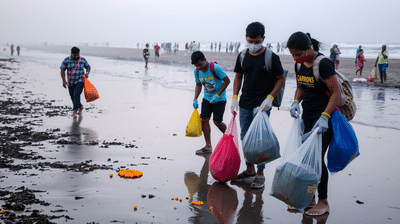 The scale surprises most first-timers. Versova beach alone sees upward of 5,000 kilograms of waste collected in the 24 hours following the main immersion night. Afroz Shah, the lawyer who started the Versova beach cleanup in 2015 and turned it into one of the largest beach restoration projects in the world, has documented how post-festival debris compounds the baseline plastic load the beach already carries. The Visarjan cleanup drives are not a feel-good add-on to the festival. They are, for many regulars, the most important part of it.
Which Drives Are Open to Travellers and Where to Find ThemThree organisations run drives that explicitly welcome first-timers and out-of-city visitors: the Afroz Shah Foundation at Versova, the Mumbai Coastal Cleanup collective at Juhu and Dadar Chowpatty, and the Swachh Sagar Surakshit Sagar network, which coordinates across multiple beaches simultaneously. All three post assembly points and timing on Instagram in the 48 hours before and after the main Visarjan night, which falls on Anant Chaturdashi, the fourteenth day of Bhadrapada Shukla Paksha, roughly late August to mid-September depending on the year.
Juhu and Versova are the most accessible for travellers staying in the western suburbs. Dadar Chowpatty is better placed for those in central Mumbai. Assembly times are typically between 6 AM and 7 AM. The drives run for three to four hours. Registration is usually a WhatsApp message or an Instagram DM, no formal signup, no fee.
What You Will Actually Be DoingThe work is sorted into three categories: wet waste (flowers, leaves, organic offerings), dry waste (plastic bags, thermocol, synthetic garlands), and idol fragments. Plaster of Paris idols, which are non-biodegradable despite what some vendors claim, are collected separately and handed to BMC contractors. Eco-friendly clay idols dissolve in water, so the debris from those sites is lighter.
Volunteers are given gloves and collection bags on arrival. Some drives provide colour-coded bags for segregation; others ask you to sort on the spot into BMC bins stationed along the beach. The pace is steady, not frantic. Groups work in lines from the waterline back to the promenade. Coordinators walk the line and redirect where the load is heaviest.
Expect wet sand, the smell of marigolds going off in the heat, and the particular fatigue of bending repeatedly for two hours. Wear closed shoes. Bring a water bottle. Sunscreen at 6 AM sounds excessive until it isn't.
The Etiquette That MattersA few things that experienced volunteers will not tell you directly but will notice. Arrive on time, the drives work on a coordinated sweep system and late arrivals disrupt the line. Do not photograph other volunteers without asking, especially the local residents who come every year and do not want to be documented as a backdrop for someone's travel content. If you are posting about the drive, tag the organising group, not just the beach and the festival.
Bring your own reusable water bottle and refuse the single-use plastic cups some well-meaning bystanders hand out. The irony of generating plastic waste at a cleanup is not lost on the regulars, and it marks you as someone who hasn't thought it through. The drives are multilingual, Marathi, Hindi, and English all run simultaneously, so language is not a barrier, but a basic greeting in Marathi goes a long way with the locals who have been doing this since before it was photogenic.
Why This Is Worth Building a Trip AroundGanesh Chaturthi draws millions of visitors to Mumbai for the processions, the pandals, the energy of immersion night. The cleanup the next morning draws almost no one who isn't already committed to it. That gap is the point. Joining a drive puts you on the beach at the hour when the city is doing its quietest, least performative work, not celebrating, not mourning, just cleaning up after itself with the same seriousness it brought to the celebration.
Coastal restoration is slow. Versova took years of weekly cleanups before olive ridley turtles returned to nest on the beach in 2018, the first time in decades. A single post-Visarjan drive does not restore a coastline. But it connects a traveller to the ongoing, unglamorous effort that actually determines what Mumbai's beaches look like for the next generation, and that is a more specific thing to bring home than a photograph of the procession.
The festival and the cleanup are the same gesture made in two directions: one releases, the other retrieves. Mumbai does both, and the city's relationship with its coast only makes sense when you've seen both ends of it.
What You Will Actually Be DoingThe work is sorted into three categories: wet waste (flowers, leaves, organic offerings), dry waste (plastic bags, thermocol, synthetic garlands), and idol fragments. Plaster of Paris idols, which are non-biodegradable despite what some vendors claim, are collected separately and handed to BMC contractors. Eco-friendly clay idols dissolve in water, so the debris from those sites is lighter.
Expect wet sand, the smell of marigolds going off in the heat, and the particular fatigue of bending repeatedly for two hours. Wear closed shoes. Bring a water bottle. Sunscreen at 6 AM sounds excessive until it isn't.
Next Story