
One Snack, Many Names: How Pani Puri Wins Hearts Across India

Pani Puri Around India: 8 Regional Variations You Must Try at Least Once
Few Indian street foods inspire as much excitement as pani puri. The combination of a crisp, hollow puri, spicy water and a flavourful filling makes it a favourite across generations. However, travel from one state to another and you may discover that the same beloved snack has a different name, taste and style of preparation. It is called golgappa in much of North India, puchka in Bengal and pani puri in Maharashtra, among other regional names. Although the basic idea remains similar, local ingredients, spice blends and fillings give each version its own identity.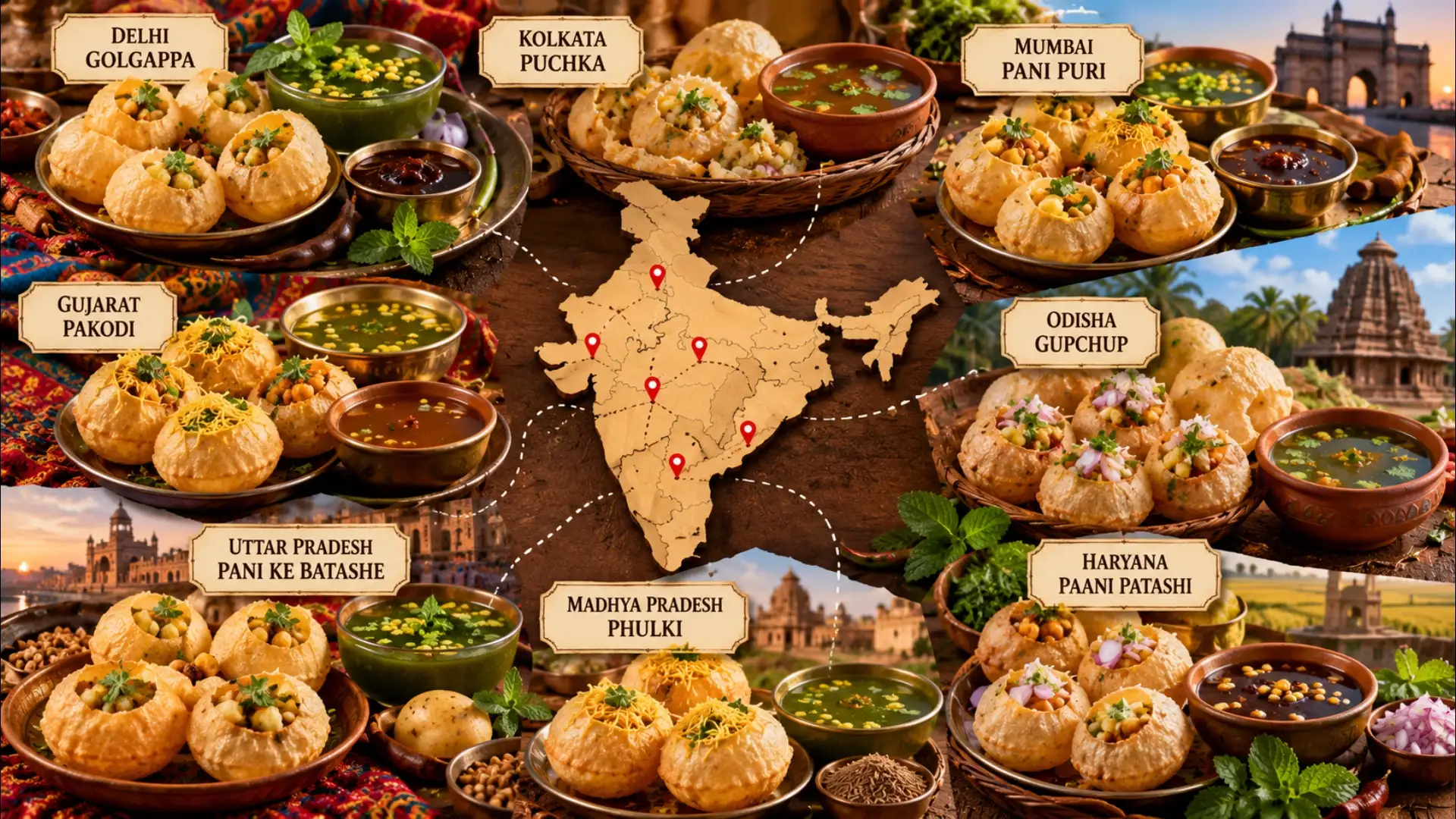
1. Delhi's Spicy Golgappa
In Delhi and neighbouring parts of North India, pani puri is widely known as golgappa. The typical serving features crisp shells filled with spiced potatoes or chickpeas, accompanied by tangy tamarind chutney and mint-based water.
Many vendors offer a combination of spicy, sour and sweet flavours, allowing customers to choose their preferred level of heat. For many Delhiites, eating golgappe is as much about the lively street-side experience as the taste itself.
2. Kolkata's Tangy Puchka
In Kolkata and other parts of West Bengal, the snack is known as puchka or phuchka. This version is often associated with a tangier, more intensely spiced filling made from mashed potatoes, green chillies and roasted spices.The tamarind-forward water gives it a distinctive flavour. Compared with some North Indian versions, traditional Bengali puchka often places greater emphasis on the potato mixture and its sharp,sour seasoning.
3. Mumbai's Classic Pani Puri
In Mumbai and across Maharashtra, the name pani puri is widely used. Vendors commonly serve crisp puris with potato, chickpea or ragda filling and offer spicy mint water alongside a sweeter tamarind preparation.The balance of sweet, tangy and spicy flavours makes this style particularly appealing to people who enjoy contrasting tastes in a single bite.
4. Gujarat's Flavourful Pani Puri
Gujarat has its own street-food traditions, and pani puri can feature sweeter chutneys alongside spicy, mint-based water. The precise recipe varies by city and vendor.In some parts of the state, the snack is also known locally as pakodi or phulki. These names are not used uniformly across Gujarat, so the terminology may change from one area to another.
5. Uttar Pradesh's Pani Ke Batashe
In parts of Uttar Pradesh, the snack is called pani ke batashe or pani ke patashe. Padaka is another local name associated particularly with Aligarh.The basic ingredients remain familiar, but the flavour of the water and the choice of filling can vary. Tamarind, mint, black salt and roasted spices are commonly used to create a sharp, tangy taste.
6. Odisha's Famous Gupchup
In Odisha, pani puri is widely known as gupchup. It is also called by this name in parts of neighbouring regions.The crisp shell is filled with a spiced mixture, while the accompanying water provides a tangy, refreshing finish. Depending on the vendor, the filling may include potatoes, chickpeas or other seasoned ingredients.
You may also like
- Psychology says people who are talkative one-on-one but almost silent in groups may not be shy in the way others assume
- Mastering Red Lipstick: Essential Styling Tips
- From homemaker to Mrs Universe 2026 first runner-up: A look at Priya Munjal's inspiring journey
- Nutritious Sargi Ideas for Karwa Chauth Celebration
- Essential Travel Tips for Asthma Sufferers During Winter Pollution
The name itself is part of the snack's regional identity, making gupchup instantly recognisable to many people from Odisha.
7. Madhya Pradesh's Phulki
In some parts of Madhya Pradesh, the snack is known as phulki. Its preparation can resemble the versions found elsewhere, with crisp puris, seasoned fillings and flavoured water.The exact style differs from place to place, as vendors adjust the spice level and filling to local preferences. It is another example of how a familiar street food develops distinct regional identities.
8. Haryana's Paani Patashi
In parts of Haryana, the snack is known as paani patashi or patashi. Similar names are also used in some neighbouring areas.The combination of crisp puris, spiced filling and tangy water remains central to the dish. However, individual vendors may offer different levels of sweetness, sourness and chilli heat, making each local version slightly different.
Why Does Pani Puri Taste Different Across India?
The differences come down to local preferences and ingredients. Some regions favour sour tamarind water, while others prefer a stronger mint flavour or a sweeter finish. Potato, chickpeas and white-pea ragda can all be used as fillings, depending on the local style.Even the puri itself can vary in size, colour and texture. These small changes transform a common street snack into several regional favourites.
Whether you call it golgappa, puchka, gupchup, phulki or pani puri, the appeal remains the same: a crisp shell, a burst of spicy water and a combination of flavours that keeps people coming back for another bite.






Loving Newspoint? Download the app now
