
One thing worth knowing today about your brain: You can confidently remember something that never actually happened because...


Have you ever been absolutely sure you remember a conversation, a childhood incident or something you saw- only to discover later that it did not happen quite the way you remembered it? It is an uncomfortable thought, but science has a good explanation for it.
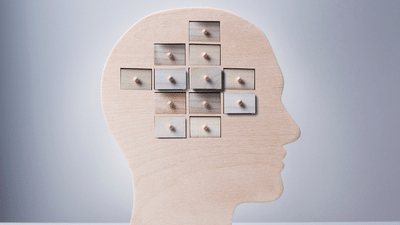
The brain does not store memories like video tapesWhen you remember an event, your brain is not simply pressing "play" on a perfectly preserved recording. It brings together different pieces of information- what happened, where it happened, what you felt and what you later learned about it.
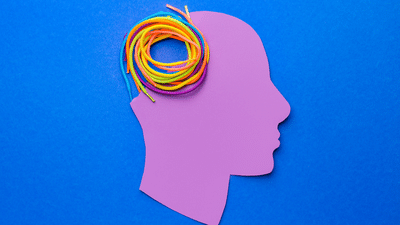
One important concept in memory research is source monitoring : the brain's ability to work out where a particular piece of information came from. Researchers have found that these sources can sometimes become confused.
A review of source-memory research published in Psychological Bulletin explains that remembering an event involves not only retrieving information, but also determining its source. When that process goes wrong, information generated internally or encountered elsewhere can be mistakenly attributed to an actual experience.
Interestingly, scientists can create false memories in the labOne of the classic demonstrations came from psychologists Henry Roediger and Kathleen McDermott in 1995. Participants were shown lists of related words. In one example, they saw words such as "bed", "rest" and "awake", all associated with another word- "sleep"- which was deliberately left out. Yet participants frequently recalled "sleep" as though they had actually seen it.
The researchers called this a powerful illusion of memory: people could remember something that had never been presented to them.
The finding is important because the participants were not simply guessing randomly. Their brains had picked up the relationship between the words and, during recall, the strongly associated missing word could feel like part of the original experience.
Similarly, someone else can sometimes change your memoryNot just science labs, a false memory can be easily developed after an actual event. This is where the misinformation effect comes in. Decades of research by psychologist Elizabeth Loftus and others has shown that information presented after an event can influence what people subsequently remember about it.
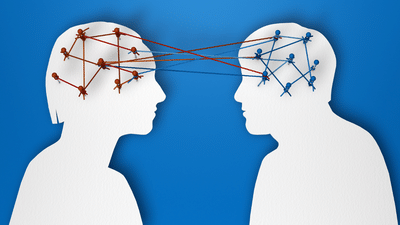
For example, imagine watching a car accident and later being told that the car had a broken headlight. If there was no broken headlight, that information may nevertheless influence your later recollection. Loftus' research on misinformation demonstrated that misleading information introduced after an event can lead people to report details that were not part of the original event.
More recent brain-imaging research has provided another piece of the puzzle. A 2023 study published in Nature Communications found that representations of post-event misinformation in the hippocampus could predict later false memories. The researchers reported that misinformation and original information can compete during retrieval, with activity in the lateral prefrontal cortex involved when false memories arise.
Why can a false memory feel so real?
Research published in NeuroImage in 2022examined the neural basis of confidence in false memories. The researchers found that confidence in false memories could be related to the brain reinstating the broader semantic "gist" of previously stored information, particularly in the prefrontal cortex. In simpler terms, your brain can have a strong sense of familiarity or meaning attached to something that did not actually happen.
That feeling of certainty can therefore be genuine- even when the memory itself is inaccurate.
So, can you trust your memories?Yes, but with some humility. For everyday life, memory is enormously useful. But when the details really matter, particularly in situations involving eyewitness accounts, disputes or important personal events, independent evidence can be valuable.
A photograph, message, diary entry or another person's account may sometimes reveal that what felt like a crystal-clear memory was slightly different from what actually happened.
And that may be the most surprising thing about memory: you do not have to be lying to remember something incorrectly.
Your brain can create a memory that feels completely real- because, from your brain's perspective, remembering is less like replaying a recording and more like rebuilding a story.
The brain does not store memories like video tapesWhen you remember an event, your brain is not simply pressing "play" on a perfectly preserved recording. It brings together different pieces of information- what happened, where it happened, what you felt and what you later learned about it.
One important concept in memory research is source monitoring : the brain's ability to work out where a particular piece of information came from. Researchers have found that these sources can sometimes become confused.
A review of source-memory research published in Psychological Bulletin explains that remembering an event involves not only retrieving information, but also determining its source. When that process goes wrong, information generated internally or encountered elsewhere can be mistakenly attributed to an actual experience.
Interestingly, scientists can create false memories in the labOne of the classic demonstrations came from psychologists Henry Roediger and Kathleen McDermott in 1995. Participants were shown lists of related words. In one example, they saw words such as "bed", "rest" and "awake", all associated with another word- "sleep"- which was deliberately left out. Yet participants frequently recalled "sleep" as though they had actually seen it.
The researchers called this a powerful illusion of memory: people could remember something that had never been presented to them.
The finding is important because the participants were not simply guessing randomly. Their brains had picked up the relationship between the words and, during recall, the strongly associated missing word could feel like part of the original experience.
Similarly, someone else can sometimes change your memoryNot just science labs, a false memory can be easily developed after an actual event. This is where the misinformation effect comes in. Decades of research by psychologist Elizabeth Loftus and others has shown that information presented after an event can influence what people subsequently remember about it.
For example, imagine watching a car accident and later being told that the car had a broken headlight. If there was no broken headlight, that information may nevertheless influence your later recollection. Loftus' research on misinformation demonstrated that misleading information introduced after an event can lead people to report details that were not part of the original event.
More recent brain-imaging research has provided another piece of the puzzle. A 2023 study published in Nature Communications found that representations of post-event misinformation in the hippocampus could predict later false memories. The researchers reported that misinformation and original information can compete during retrieval, with activity in the lateral prefrontal cortex involved when false memories arise.
Why can a false memory feel so real?
Research published in NeuroImage in 2022examined the neural basis of confidence in false memories. The researchers found that confidence in false memories could be related to the brain reinstating the broader semantic "gist" of previously stored information, particularly in the prefrontal cortex. In simpler terms, your brain can have a strong sense of familiarity or meaning attached to something that did not actually happen.
That feeling of certainty can therefore be genuine- even when the memory itself is inaccurate.
So, can you trust your memories?Yes, but with some humility. For everyday life, memory is enormously useful. But when the details really matter, particularly in situations involving eyewitness accounts, disputes or important personal events, independent evidence can be valuable.
A photograph, message, diary entry or another person's account may sometimes reveal that what felt like a crystal-clear memory was slightly different from what actually happened.
And that may be the most surprising thing about memory: you do not have to be lying to remember something incorrectly.
Your brain can create a memory that feels completely real- because, from your brain's perspective, remembering is less like replaying a recording and more like rebuilding a story.
Next Story