
Preserving Ancient Flavours: Places in India Where People Still Follow Centuries-Old Food Traditions

In an era dominated by high-speed blenders, microwave ovens, and instant delivery mobile apps, the modern dining table has evolved rapidly. Kitchen convenience often takes priority over slow, methodical food preparation. However, tucked away in historic temple towns, remote valley villages, and desert outposts are vibrant communities that steadfastly refuse to abandon their ancestral culinary roots. Across these remarkable regions, recipes are not written down in digital manuals but are passed through centuries of oral memory, seasonal practice, and communal devotion.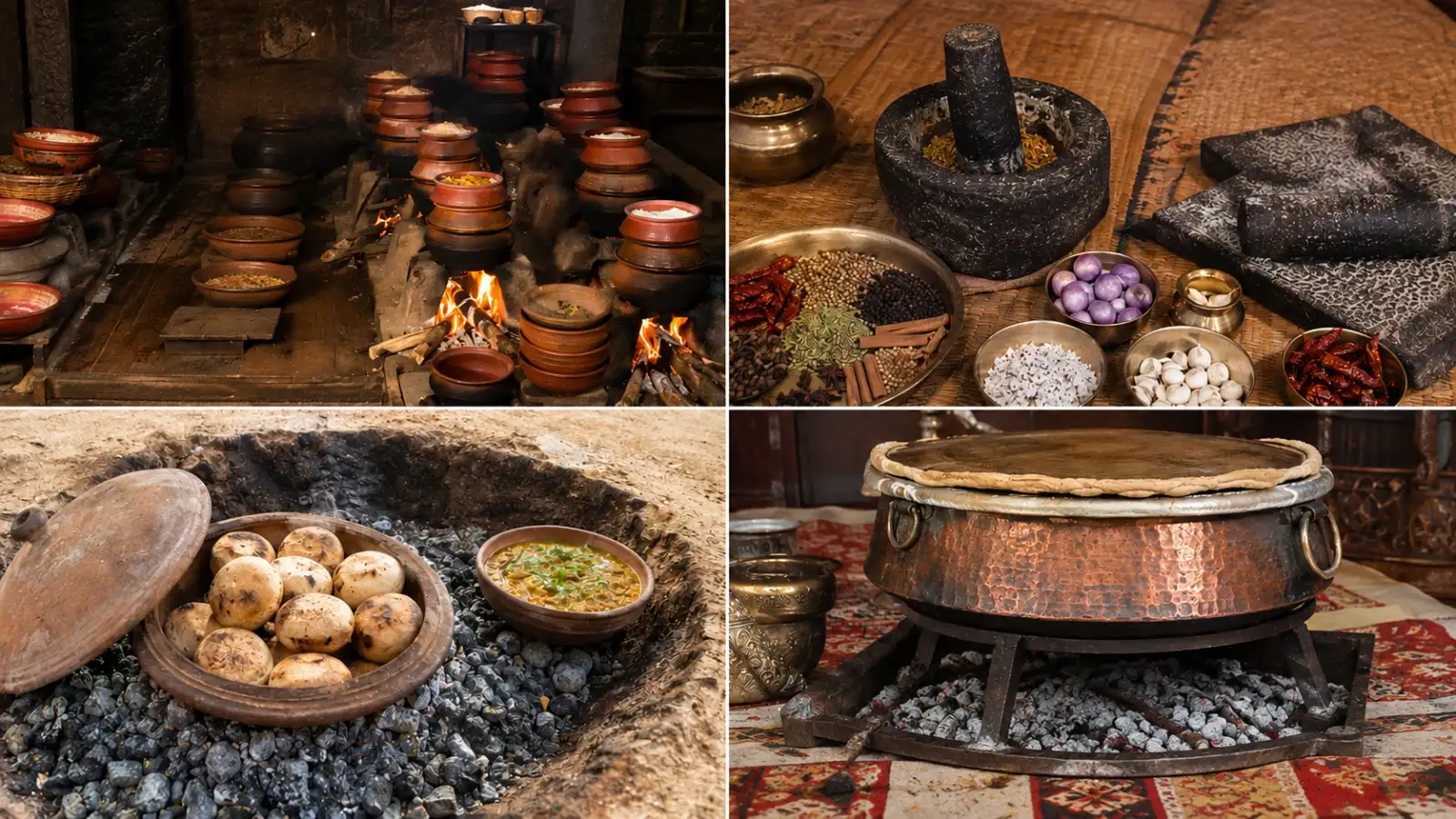
Cooking methods rely on natural heat sources like clay chulhas, subterranean earth pits, and heavy bronze cauldrons, preserving flavours that processed appliances simply cannot replicate. Exploring places in India where people still follow centuries-old food traditions offers a fascinating glimpse into living cultural heritage, sustainable cooking, and authentic natural taste.
Electricity, steel pots, and modern gas stoves are strictly prohibited inside the holy cooking quarters. Instead, cooks use simple earthenware clay pots stacked directly on top of wood-fired earthen hearths.
The culinary process relies on a unique physical phenomenon where heat and steam travel upward, mysteriously cooking the top pot first. Local spring water, indigenous lentils, unrefined jaggery, and seasonal vegetables are transformed without using modern foreign ingredients like green chillies, tomatoes, or refined potatoes. This ancient, slow-cooked feast feeds thousands of pilgrims daily, serving as a powerful living monument to ancient Indian culinary science.
Electric mixer-grinders are largely avoided for authentic festive preparations. Instead, home cooks use flat granite slabs called sil batta and heavy stone mortars to crush whole spices, fresh coconut, and ginger-garlic pastes.
This slow grinding process prevents heat buildup, preserving volatile aromatic oils that modern blades destroy. Meals are simmered in heavy soapstone vessels known as kal chatti, which retain heat evenly and impart a unique mineral richness to tang-infused curries. Served on fresh, biodegradable banana leaves, Chettinad food remains an enduring masterclass in sustainable, authentic cooking.
This low, steady radiant heat bakes the dough slowly, infusing it with a delicate, natural smoky aroma while preserving its inner moisture. Similarly, traditional desert hunters and nomadic shepherds perfected the art of khad cooking, where heavily spiced meats wrapped in leaves and cloth are sealed inside an underground earth pit surrounded by burning charcoal. The pit is covered with soil, allowing the food to tenderize quietly in its own natural steam for hours. These ancient desert survival techniques remain wildly popular today, offering an authentic taste of historic Rajasthani hospitality.
The food is cooked exclusively over charcoal fires inside large nickel-plated copper pots called deghs. The lids are tightly sealed with wet flour dough, utilizing the ancient dum pukht technique where food cooks slowly in its trapped steam and natural juices. No artificial food colorings or modern shortcuts are ever permitted. Instead, vibrant red hues are derived naturally from dried cockscomb flowers, while warm aromas come from saffron soaked in mountain water.
Cooking methods rely on natural heat sources like clay chulhas, subterranean earth pits, and heavy bronze cauldrons, preserving flavours that processed appliances simply cannot replicate. Exploring places in India where people still follow centuries-old food traditions offers a fascinating glimpse into living cultural heritage, sustainable cooking, and authentic natural taste.
Puri in Odisha and the sacred wood-fired Mahaprasad kitchen
The ancient seaside city of Puri in Odisha is home to the world-famous Jagannath Temple, which houses one of the largest and oldest working traditional kitchens on the planet. Here, hundreds of hereditary cooks prepare the sacred Mahaprasad every single day using methods virtually unchanged for over eight centuries.Electricity, steel pots, and modern gas stoves are strictly prohibited inside the holy cooking quarters. Instead, cooks use simple earthenware clay pots stacked directly on top of wood-fired earthen hearths.
The culinary process relies on a unique physical phenomenon where heat and steam travel upward, mysteriously cooking the top pot first. Local spring water, indigenous lentils, unrefined jaggery, and seasonal vegetables are transformed without using modern foreign ingredients like green chillies, tomatoes, or refined potatoes. This ancient, slow-cooked feast feeds thousands of pilgrims daily, serving as a powerful living monument to ancient Indian culinary science.
You may also like
- You probably know your credit score, but do you know your physical fitness index?
- 7 small everyday habits that are ageing your skin faster than time
- Samsung Health's new score tells you what your heart has been trying to say
- BTS stills from a photo session on campus
- Say Goodbye to Daily Statins? Breakthrough Gene Therapy 'VERVE-102' Cuts Bad Cholesterol by 62% With Just One IV Injection
The Chettinad region of Tamil Nadu and stone-ground spice heritage
Deep in the sun-drenched interiors of Tamil Nadu, the historic villages of Chettinad preserve a rich culinary identity that stretches back through generations of seafaring merchant communities. While Chettinad cuisine is famous worldwide for its bold, complex flavours, local households and traditional cooks still cling firmly to manual preparation tools.Electric mixer-grinders are largely avoided for authentic festive preparations. Instead, home cooks use flat granite slabs called sil batta and heavy stone mortars to crush whole spices, fresh coconut, and ginger-garlic pastes.
This slow grinding process prevents heat buildup, preserving volatile aromatic oils that modern blades destroy. Meals are simmered in heavy soapstone vessels known as kal chatti, which retain heat evenly and impart a unique mineral richness to tang-infused curries. Served on fresh, biodegradable banana leaves, Chettinad food remains an enduring masterclass in sustainable, authentic cooking.
The Thar Desert of Rajasthan and underground slow pit cooking
In the dry desert landscapes of western Rajasthan, local communities developed ingenious cooking techniques designed to survive harsh climatic conditions, scarce water supplies, and extreme temperatures. One of the most famous enduring traditions is the preparation of baati, a dense wheat bread roll slow-baked directly over glowing dried cow dung cakes or buried under hot desert sand coals.This low, steady radiant heat bakes the dough slowly, infusing it with a delicate, natural smoky aroma while preserving its inner moisture. Similarly, traditional desert hunters and nomadic shepherds perfected the art of khad cooking, where heavily spiced meats wrapped in leaves and cloth are sealed inside an underground earth pit surrounded by burning charcoal. The pit is covered with soil, allowing the food to tenderize quietly in its own natural steam for hours. These ancient desert survival techniques remain wildly popular today, offering an authentic taste of historic Rajasthani hospitality.
Kashmir and the regal slow-steamed art of Wazwan
In the cool, scenic valleys of Jammu and Kashmir, the royal culinary art known as Wazwan has been carefully preserved by master chefs called Wazas for centuries. This elaborate thirty-six-course banquet is far more than a feast; it is a sacred culinary ritual rooted in medieval Persian and Central Asian influences. Preparation begins long before dawn, as experienced Wazas use heavy wooden mallets to hand-pound fresh meat on smooth stone slabs for hours until it achieves a silky, velvet-like consistency.The food is cooked exclusively over charcoal fires inside large nickel-plated copper pots called deghs. The lids are tightly sealed with wet flour dough, utilizing the ancient dum pukht technique where food cooks slowly in its trapped steam and natural juices. No artificial food colorings or modern shortcuts are ever permitted. Instead, vibrant red hues are derived naturally from dried cockscomb flowers, while warm aromas come from saffron soaked in mountain water.
Rediscovering wisdom in ancient culinary roots
Visiting places in India where people still follow centuries-old food traditions reminds us that true flavour requires patience, respect for nature, and time-tested craftsmanship. By preserving these slow, mindful cooking practices, local communities keep the subcontinent's rich cultural heart beating strongly.





Loving Newspoint? Download the app now
