
10 Places on Earth That Look Like They Belong on Another World

Earth is familiar because we see the same kinds of landscapes every day. Yet scattered across the planet are places where the usual rules of scenery seem to disappear. The ground can turn bright red, water can become intensely turquoise, enormous salt plains can merge with the horizon and strange rock formations can look as though they were designed for a science-fiction film.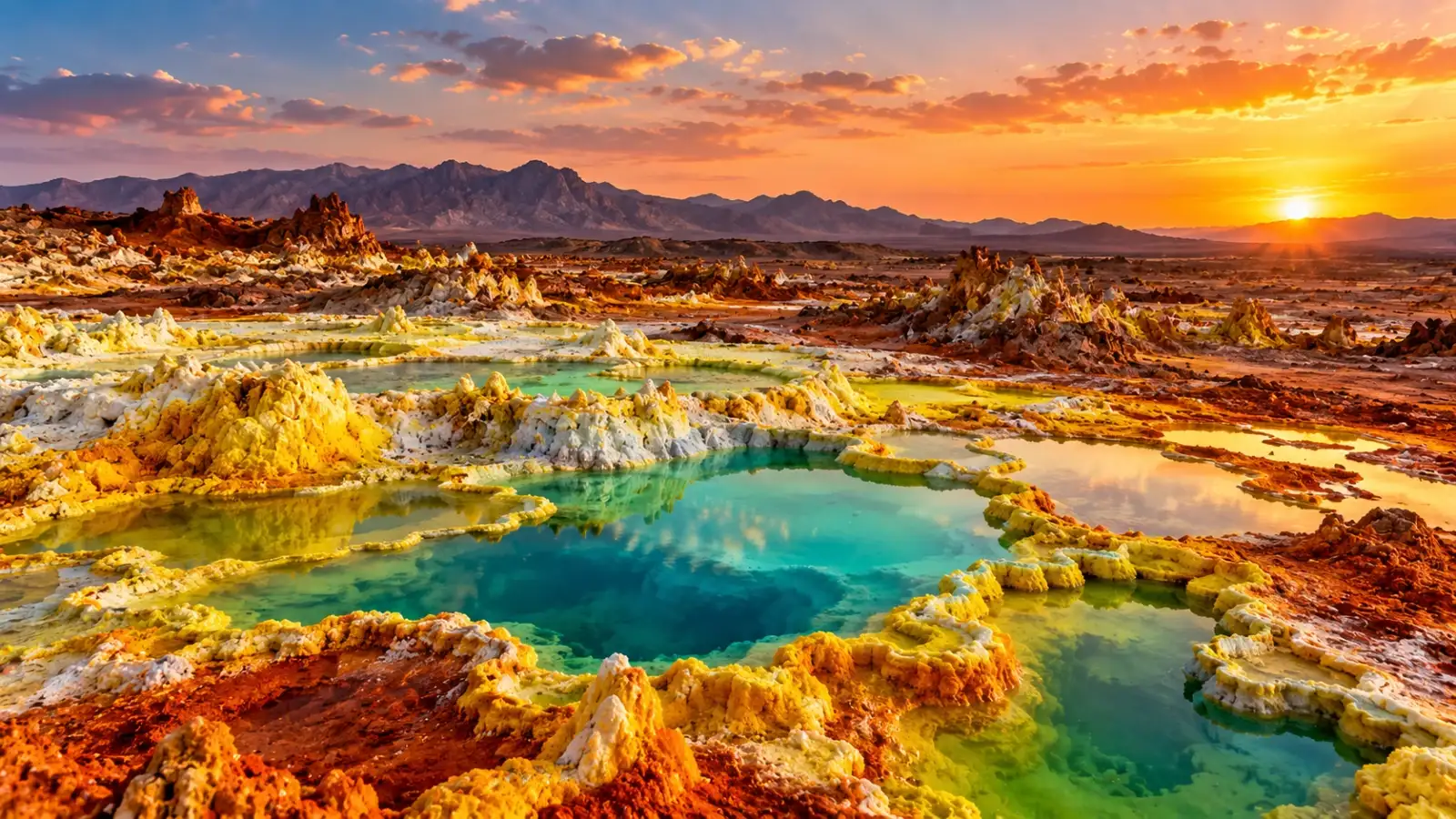
These landscapes are not artificial sets. They have been created by volcanic activity, mineral deposits, extreme climates, erosion, tectonic movement and millions of years of geological change.
Some resemble Mars, others look like the Moon, while a few appear so unusual that it is difficult to associate them with Earth at all. From the coloured geothermal pools of Ethiopia to the giant salt flats of Bolivia, these destinations reveal just how strange our own planet can become.
UNESCO states that 37 per cent of Socotra's plant species, 90 per cent of its reptile species and 95 per cent of its land snail species are endemic to the archipelago. Its unusual dragon blood trees, with umbrella-shaped crowns and red resin, are among the landscape's most recognisable features.
The island's appearance is not limited to unusual trees. Rocky mountains, white sand dunes, turquoise water and deep valleys create dramatic contrasts across a relatively compact area. Some parts of the island look almost like a biological experiment carried out on another planet.
Socotra's long geographical isolation is one reason its biodiversity became so distinctive. Instead of seeing a landscape that resembles another planet because of barren rock, visitors encounter something arguably stranger, an ecosystem that evolved along a very different path from most of the world.
During the dry season, the landscape becomes an almost endless expanse of geometric salt patterns. The horizon can appear so flat that it becomes difficult to judge distance or scale.
Then the landscape changes during periods of rain. A thin layer of water can cover parts of the salt flat and create a huge reflective surface, making the boundary between sky and ground almost disappear. The resulting effect is one of the most surreal natural scenes on Earth.
The experience becomes even stranger around Incahuasi Island, a rocky outcrop rising from the salt plain and covered with giant cacti. The combination of brilliant white salt, enormous cactus plants and distant mountains creates a landscape that seems to belong to a completely different planet.
Ethiopia's official tourism information describes the Danakil as one of the world's lowest-lying regions and notes that large parts sit below sea level. It also highlights the area's extreme heat, active volcanoes and the unusual colours of Dallol's mineral-rich landscape.
Dallol is particularly strange. Yellow, green, orange and white mineral formations surround hot springs and salt deposits, producing colours that seem almost artificial. Elsewhere in the region, Erta Ale is known for its volcanic activity and lava lake.
The Danakil is not simply beautiful in a conventional sense. It is visually dramatic because geological forces are so obvious here. The landscape gives visitors a rare glimpse of a planet still being shaped by heat, tectonic movement and volcanic processes.
The formations can resemble frozen waves, arches, cliffs and enormous sculptures. Walking among them can feel more like exploring a distant planetary surface than travelling through the American Southwest.
The landscape is also significant for its human history. Petroglyphs found in the area provide evidence of Indigenous peoples who lived in and travelled through the region long before modern tourism.
The combination of ancient rock, desert vegetation and brilliant red formations makes the Valley of Fire one of those places where the Earth looks unusually unfamiliar.
UNESCO recognises the Göreme National Park and Rock Sites of Cappadocia for their distinctive geological formations and the remarkable churches and settlements carved into the rock.
The landscape looks especially unusual from above. Hundreds of rock formations rise from broad valleys, while historic settlements are hidden inside cliffs and underground spaces.
What makes Cappadocia genuinely different is the combination of geology and human adaptation. The strange shapes were created naturally, but people transformed many of them into homes, churches, monasteries and other spaces.
It is therefore both a geological wonder and a cultural landscape, showing how humans can turn an apparently inhospitable environment into a place to live.
Some formations are only a short distance high, while others rise several metres above the surrounding landscape. Their shapes vary considerably, with some appearing narrow and pointed while others look broad and irregular.
The mystery of how individual pinnacles formed adds to their appeal. They are associated with limestone deposits and the long process of erosion and weathering that gradually exposed the formations.
Walking between the pillars creates an unusual sense of scale. There are no enormous mountains or deep canyons here. Instead, the strange shapes are repeated across the desert floor, creating a landscape that looks more like an alien cemetery than a conventional Australian desert.
Instead of solid rock formations, the hills appear almost fluid. Curving layers create patterns that resemble waves, folds or enormous brushstrokes across the landscape.
Their colours change depending on the weather and position of the sun. Damp conditions can deepen certain shades, while changing light can make the hills appear dramatically different within a few hours.
The landscape also has considerable scientific importance because the surrounding fossil beds preserve evidence of ancient environments and species.
The Painted Hills are a reminder that a landscape does not need volcanoes or glaciers to appear alien. Sometimes layers of ordinary geological material, given enough time, can produce something extraordinary.
The terrain can look astonishingly barren. Mountains rise around wide valleys while glaciers and frozen lakes occupy parts of the landscape. The absence of the vast continuous snow cover associated with much of Antarctica makes the region feel unexpectedly unfamiliar.
NASA and scientific researchers have long used the Dry Valleys as an analogue for Mars because of their cold, dry conditions and unusual geology.
Yet the environment is not completely lifeless. Microorganisms have adapted to the extreme conditions, particularly around protected areas beneath rocks and within unusual aquatic environments.
The Dry Valleys demonstrate how close Earth can sometimes come to resembling another planet without actually leaving our own.
The unusual colours are linked to the weathering of volcanic material and the presence of different minerals. Rather than being arranged in perfectly straight bands, the colours blend and curve across the landscape, giving the ground an almost surreal appearance.
The surrounding tropical environment makes the scene even more unusual. Lush green vegetation grows around an exposed patch of multicoloured earth, creating a dramatic contrast between tropical island life and an almost desert-like geological formation.
It is a useful reminder that otherworldly landscapes do not always exist in extreme climates. Sometimes they appear in places surrounded by forests, waterfalls and tropical vegetation.
The river's reddish and orange tones contrast strongly with the surrounding landscape, producing scenes that can resemble photographs of Mars.
The area has been associated with mining for thousands of years, making it an unusual meeting point between natural geology and human industrial history. The landscape visible today is therefore not simply the result of natural processes.
The Rio Tinto region has also attracted scientific interest because its acidic, mineral-rich conditions provide an opportunity to study organisms capable of surviving in extreme environments. That makes the landscape interesting not only visually but scientifically.
Salar de Uyuni creates a horizon where sky and ground can merge. Socotra contains species found nowhere else. The Danakil exposes the effects of extreme tectonic and volcanic activity, while the Dry Valleys show what an Earth landscape can look like under exceptionally cold and dry conditions.
Even places such as Cappadocia and Rio Tinto demonstrate that the boundary between natural landscape and human history can produce something visually extraordinary.
You do not need a spacecraft to experience scenery that looks extraterrestrial. Earth itself contains enough volcanic craters, mineral landscapes, salt plains, unusual ecosystems and geological formations to make the planet feel unfamiliar.
Sometimes the most convincing alien landscapes are the ones that have been here all along.
These landscapes are not artificial sets. They have been created by volcanic activity, mineral deposits, extreme climates, erosion, tectonic movement and millions of years of geological change.
Some resemble Mars, others look like the Moon, while a few appear so unusual that it is difficult to associate them with Earth at all. From the coloured geothermal pools of Ethiopia to the giant salt flats of Bolivia, these destinations reveal just how strange our own planet can become.
Socotra , Yemen Looks Like a Lost Alien Ecosystem
Socotra is one of the clearest examples of a place that seems to belong to another world. The remote archipelago sits in the north-west Indian Ocean near the Gulf of Aden and has developed an extraordinary collection of plants and animals found nowhere else.UNESCO states that 37 per cent of Socotra's plant species, 90 per cent of its reptile species and 95 per cent of its land snail species are endemic to the archipelago. Its unusual dragon blood trees, with umbrella-shaped crowns and red resin, are among the landscape's most recognisable features.
The island's appearance is not limited to unusual trees. Rocky mountains, white sand dunes, turquoise water and deep valleys create dramatic contrasts across a relatively compact area. Some parts of the island look almost like a biological experiment carried out on another planet.
Socotra's long geographical isolation is one reason its biodiversity became so distinctive. Instead of seeing a landscape that resembles another planet because of barren rock, visitors encounter something arguably stranger, an ecosystem that evolved along a very different path from most of the world.
Salar de Uyuni , Bolivia Turns the Ground Into a Giant Mirror
The Salar de Uyuni is one of those landscapes that can make photographs look edited even when they are completely real. Covering roughly 10,582 square kilometres, the enormous salt flat spreads across Bolivia's high-altitude Altiplano. Bolivia's official tourism information places it at an average elevation of about 3,663 metres.During the dry season, the landscape becomes an almost endless expanse of geometric salt patterns. The horizon can appear so flat that it becomes difficult to judge distance or scale.
Then the landscape changes during periods of rain. A thin layer of water can cover parts of the salt flat and create a huge reflective surface, making the boundary between sky and ground almost disappear. The resulting effect is one of the most surreal natural scenes on Earth.
The experience becomes even stranger around Incahuasi Island, a rocky outcrop rising from the salt plain and covered with giant cacti. The combination of brilliant white salt, enormous cactus plants and distant mountains creates a landscape that seems to belong to a completely different planet.
The Danakil Depression , Ethiopia Looks Like Earth's Own Alien Laboratory
Few places on Earth look as extreme as the Danakil Depression in northern Ethiopia. The region sits near the meeting point of three tectonic plates and contains salt flats, volcanic landscapes, geothermal activity and intensely coloured mineral formations.Ethiopia's official tourism information describes the Danakil as one of the world's lowest-lying regions and notes that large parts sit below sea level. It also highlights the area's extreme heat, active volcanoes and the unusual colours of Dallol's mineral-rich landscape.
Dallol is particularly strange. Yellow, green, orange and white mineral formations surround hot springs and salt deposits, producing colours that seem almost artificial. Elsewhere in the region, Erta Ale is known for its volcanic activity and lava lake.
The Danakil is not simply beautiful in a conventional sense. It is visually dramatic because geological forces are so obvious here. The landscape gives visitors a rare glimpse of a planet still being shaped by heat, tectonic movement and volcanic processes.
The Valley of Fire, USA Looks Like Mars in Red and Orange
Nevada's Valley of Fire State Park is known for its vivid red sandstone formations, many of which have been sculpted by wind and erosion into unusual shapes. The intense colours become particularly striking when sunlight hits the rock at low angles.The formations can resemble frozen waves, arches, cliffs and enormous sculptures. Walking among them can feel more like exploring a distant planetary surface than travelling through the American Southwest.
The landscape is also significant for its human history. Petroglyphs found in the area provide evidence of Indigenous peoples who lived in and travelled through the region long before modern tourism.
The combination of ancient rock, desert vegetation and brilliant red formations makes the Valley of Fire one of those places where the Earth looks unusually unfamiliar.
Cappadocia , Türkiye Has a Landscape Built From Volcanic Rock
Cappadocia is famous for its hot-air balloons, but the landscape beneath them is even more extraordinary. The central Anatolian region is filled with volcanic tuff that has been shaped by erosion into pinnacles, valleys and formations commonly known as fairy chimneys.UNESCO recognises the Göreme National Park and Rock Sites of Cappadocia for their distinctive geological formations and the remarkable churches and settlements carved into the rock.
The landscape looks especially unusual from above. Hundreds of rock formations rise from broad valleys, while historic settlements are hidden inside cliffs and underground spaces.
What makes Cappadocia genuinely different is the combination of geology and human adaptation. The strange shapes were created naturally, but people transformed many of them into homes, churches, monasteries and other spaces.
It is therefore both a geological wonder and a cultural landscape, showing how humans can turn an apparently inhospitable environment into a place to live.
The Pinnacles, Australia Look Like a Forest of Stone
Inside Western Australia's Nambung National Park stands one of the country's strangest landscapes, the Pinnacles Desert. Thousands of limestone pillars rise from the sandy ground, creating the impression of a huge stone forest.Some formations are only a short distance high, while others rise several metres above the surrounding landscape. Their shapes vary considerably, with some appearing narrow and pointed while others look broad and irregular.
The mystery of how individual pinnacles formed adds to their appeal. They are associated with limestone deposits and the long process of erosion and weathering that gradually exposed the formations.
Walking between the pillars creates an unusual sense of scale. There are no enormous mountains or deep canyons here. Instead, the strange shapes are repeated across the desert floor, creating a landscape that looks more like an alien cemetery than a conventional Australian desert.
The Painted Hills, USA Look Like Waves Frozen in the Ground
Oregon's Painted Hills are part of the John Day Fossil Beds and are famous for their layers of red, gold, black and yellow earth. The colours were created by different minerals and changing environmental conditions over geological time.Instead of solid rock formations, the hills appear almost fluid. Curving layers create patterns that resemble waves, folds or enormous brushstrokes across the landscape.
Their colours change depending on the weather and position of the sun. Damp conditions can deepen certain shades, while changing light can make the hills appear dramatically different within a few hours.
The landscape also has considerable scientific importance because the surrounding fossil beds preserve evidence of ancient environments and species.
The Painted Hills are a reminder that a landscape does not need volcanoes or glaciers to appear alien. Sometimes layers of ordinary geological material, given enough time, can produce something extraordinary.
The Dry Valleys, Antarctica Are Earth Without the Usual Antarctic Snow
Antarctica is generally imagined as a continent covered in ice, but the McMurdo Dry Valleys present a very different image. These valleys are among the driest environments on Earth, with extremely limited precipitation and landscapes dominated by exposed rock, gravel and ice.The terrain can look astonishingly barren. Mountains rise around wide valleys while glaciers and frozen lakes occupy parts of the landscape. The absence of the vast continuous snow cover associated with much of Antarctica makes the region feel unexpectedly unfamiliar.
NASA and scientific researchers have long used the Dry Valleys as an analogue for Mars because of their cold, dry conditions and unusual geology.
Yet the environment is not completely lifeless. Microorganisms have adapted to the extreme conditions, particularly around protected areas beneath rocks and within unusual aquatic environments.
The Dry Valleys demonstrate how close Earth can sometimes come to resembling another planet without actually leaving our own.
The Seven Coloured Earth, Mauritius Looks Like a Painted Landscape
In the village of Chamarel in Mauritius, a relatively small area of land contains rolling dunes displaying shades of red, brown, violet, green and yellow.The unusual colours are linked to the weathering of volcanic material and the presence of different minerals. Rather than being arranged in perfectly straight bands, the colours blend and curve across the landscape, giving the ground an almost surreal appearance.
The surrounding tropical environment makes the scene even more unusual. Lush green vegetation grows around an exposed patch of multicoloured earth, creating a dramatic contrast between tropical island life and an almost desert-like geological formation.
It is a useful reminder that otherworldly landscapes do not always exist in extreme climates. Sometimes they appear in places surrounded by forests, waterfalls and tropical vegetation.
Rio Tinto, Spain Runs Red Through an Ancient Mining Landscape
The Rio Tinto region of Andalucía is famous for its intensely reddish landscape and mineral-rich river. The unusual colour is connected with the area's geology and long history of mining.The river's reddish and orange tones contrast strongly with the surrounding landscape, producing scenes that can resemble photographs of Mars.
You may also like
- AI mural inspired by Banksy sparks backlash in Bristol: Artists spot wrong landmarks and a bizarre version of the famous Mild Mild West as debate over AI art grows
- 4 Hacks to keep your kitchen free from flies and bugs
- Throwing away egg shells? Reuse these shells in these easy ways
- Psychology says children behave differently with each parent for a reason; what it may reveal about their emotional comfort
- Today's Birthday : 27th September 2026
The area has been associated with mining for thousands of years, making it an unusual meeting point between natural geology and human industrial history. The landscape visible today is therefore not simply the result of natural processes.
The Rio Tinto region has also attracted scientific interest because its acidic, mineral-rich conditions provide an opportunity to study organisms capable of surviving in extreme environments. That makes the landscape interesting not only visually but scientifically.
Earth Can Look Stranger Than Science Fiction
The most fascinating thing about these destinations is that none of them needs to be artificially enhanced to look extraordinary. Their colours, formations and ecosystems are the results of natural processes that have unfolded over thousands, millions or even billions of years.Salar de Uyuni creates a horizon where sky and ground can merge. Socotra contains species found nowhere else. The Danakil exposes the effects of extreme tectonic and volcanic activity, while the Dry Valleys show what an Earth landscape can look like under exceptionally cold and dry conditions.
Even places such as Cappadocia and Rio Tinto demonstrate that the boundary between natural landscape and human history can produce something visually extraordinary.
You do not need a spacecraft to experience scenery that looks extraterrestrial. Earth itself contains enough volcanic craters, mineral landscapes, salt plains, unusual ecosystems and geological formations to make the planet feel unfamiliar.
Sometimes the most convincing alien landscapes are the ones that have been here all along.






Loving Newspoint? Download the app now
