
Bikaner Travel Guide: 8 Historic Places to Explore in Rajasthan's Desert City

Bikaner is a historic city in north-western Rajasthan, known for its sandstone architecture, royal heritage and desert surroundings. While Junagarh Fort is among its best-known attractions, the city has several other places that reveal its architectural and cultural history.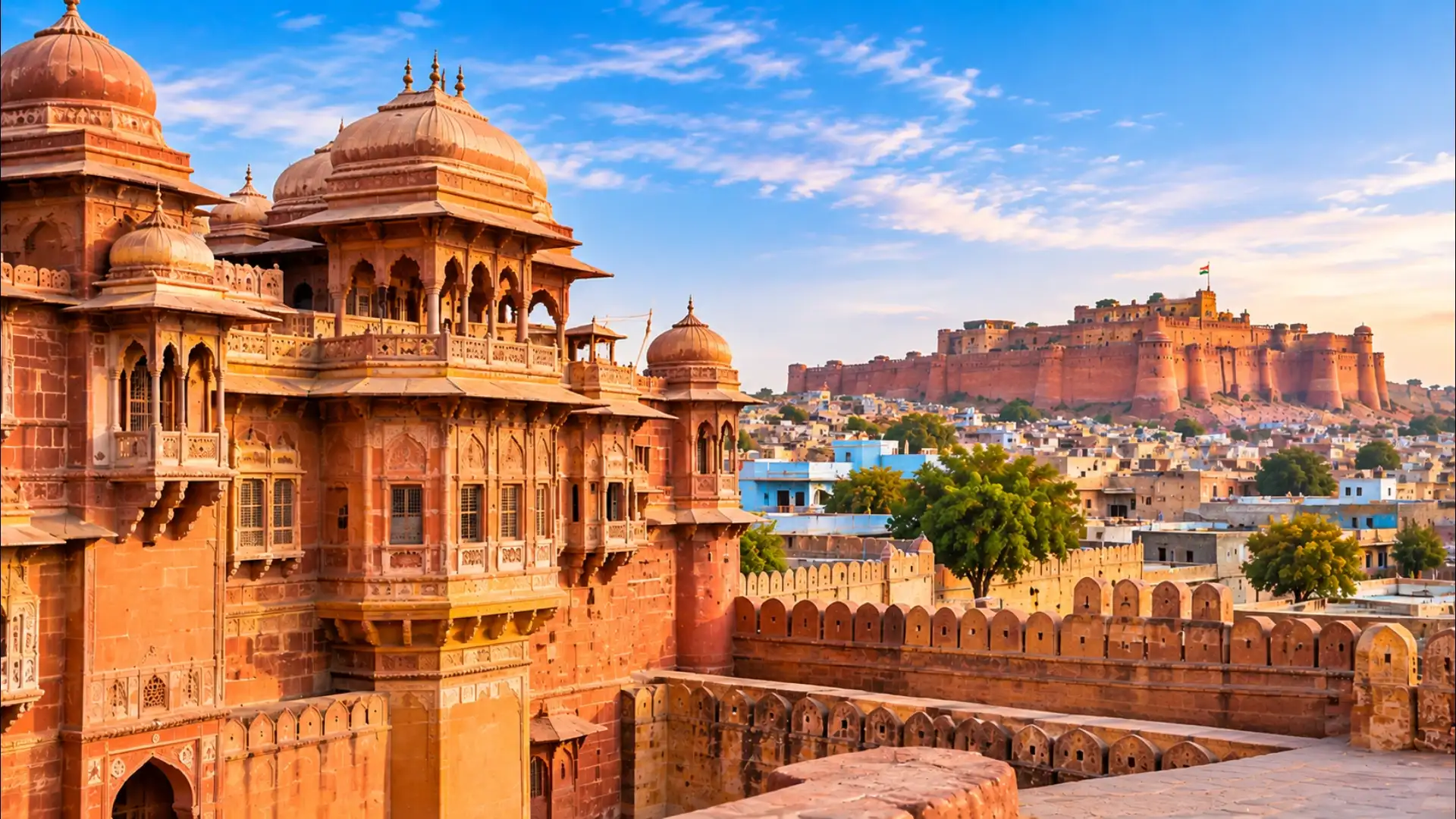
From ornate havelis to old temples and royal residences, Bikaner offers plenty to explore beyond a quick sightseeing stop. Here are eight attractions to consider when planning a visit.
Unlike many forts in Rajasthan that stand on hilltops, Junagarh Fort is located on the plains. Its complex includes courtyards, palaces, balconies and decorative windows.
The combination of red sandstone and marble gives the structure a distinctive appearance. Visitors can explore its palace rooms and learn about the history of the Bikaner royal family.
Built using red Dulmera sandstone, these grand residences feature carved balconies, ornate entrances, decorative windows and detailed façades. Their designs reflect a mixture of regional, Mughal and European influences.
A walk through the surrounding lanes offers an opportunity to appreciate the craftsmanship and scale of these historic homes.
The temple is known for its decorative murals, intricate mirror work and painted interiors. Its detailed designs make it particularly interesting for visitors who appreciate traditional Indian architecture.
As it remains a place of worship, visitors should dress appropriately and follow local customs.
The palace was built in red sandstone and designed by British architect Sir Swinton Jacob. Its architectural style combines Rajput, Mughal and European elements.
Some sections of the palace have been adapted for hospitality and museum purposes. Check current visitor access before planning a visit.
It was originally used as a royal retreat and hunting lodge. Its lakeside location and surrounding landscape offer a different experience from the busy city centre.
The temple is associated with Karni Mata, whom devotees revere as a form of Goddess Durga. It is particularly known for the kabas, or rats, that move freely within the temple complex.
The religious significance of the animals comes from local devotional beliefs and legends. Visitors should respect the customs followed inside the temple and avoid disturbing the animals.
The area is associated with species such as nilgai, chinkara and blackbuck, along with birdlife that visits the region during the cooler season.
Wildlife sightings are never guaranteed. Visitors should check current access arrangements and follow local conservation rules.
Its collections include archaeological objects, paintings, pottery, coins, textiles and other historical material. A museum visit can add context to the architecture and royal sites explored elsewhere in the city.
Check current opening hours, photography rules and access arrangements for palaces, museums and religious sites before travelling.
From ornate havelis to old temples and royal residences, Bikaner offers plenty to explore beyond a quick sightseeing stop. Here are eight attractions to consider when planning a visit.
1. Explore Junagarh Fort
Junagarh Fort is one of Bikaner's most important historic landmarks. It was constructed in 1588 during the rule of Raja Rai Singh, a general in Emperor Akbar's service.Unlike many forts in Rajasthan that stand on hilltops, Junagarh Fort is located on the plains. Its complex includes courtyards, palaces, balconies and decorative windows.
The combination of red sandstone and marble gives the structure a distinctive appearance. Visitors can explore its palace rooms and learn about the history of the Bikaner royal family.
2. Admire the Rampuria Havelis
The Rampuria Havelis are among the most recognisable examples of Bikaner's traditional urban architecture.Built using red Dulmera sandstone, these grand residences feature carved balconies, ornate entrances, decorative windows and detailed façades. Their designs reflect a mixture of regional, Mughal and European influences.
A walk through the surrounding lanes offers an opportunity to appreciate the craftsmanship and scale of these historic homes.
3. Visit Bhandasar Jain Temple
Bhandasar Jain Temple is a 15th-century religious landmark dedicated to Sumatinath, the fifth Jain Tirthankara.The temple is known for its decorative murals, intricate mirror work and painted interiors. Its detailed designs make it particularly interesting for visitors who appreciate traditional Indian architecture.
As it remains a place of worship, visitors should dress appropriately and follow local customs.
4. Discover Lalgarh Palace
Lalgarh Palace was commissioned by Maharaja Ganga Singh in memory of his father, Maharaja Lal Singh.The palace was built in red sandstone and designed by British architect Sir Swinton Jacob. Its architectural style combines Rajput, Mughal and European elements.
Some sections of the palace have been adapted for hospitality and museum purposes. Check current visitor access before planning a visit.
5. Visit Gajner Palace and Lake
Gajner Palace stands beside Gajner Lake, around 30 kilometres from Bikaner. The palace was founded by Maharaja Gaj Singh and later completed during the reign of Maharaja Ganga Singh.It was originally used as a royal retreat and hunting lodge. Its lakeside location and surrounding landscape offer a different experience from the busy city centre.
6. Explore the Karni Mata Temple at Deshnok
Located around 30 kilometres from Bikaner, the Karni Mata Temple is one of Rajasthan's distinctive pilgrimage sites.The temple is associated with Karni Mata, whom devotees revere as a form of Goddess Durga. It is particularly known for the kabas, or rats, that move freely within the temple complex.
The religious significance of the animals comes from local devotional beliefs and legends. Visitors should respect the customs followed inside the temple and avoid disturbing the animals.
You may also like
- Jensen Huang and his iconic leather jacket: What psychology says about older men and dressing like a youngster
- Shifting House With a Cat: How to Move Without Breaking Their World
- Top Bridal Hairstyle Inspirations for 2026 Weddings
- Hiring an Elephant for a Baraat: What Indian Wildlife Law Actually Allows
- Coming of age in a polycrisis: Why young adults are faring worse than their parents in India
7. Spend time at Gajner Wildlife Sanctuary
The Gajner Wildlife Sanctuary offers a different perspective on the landscape surrounding Bikaner.The area is associated with species such as nilgai, chinkara and blackbuck, along with birdlife that visits the region during the cooler season.
Wildlife sightings are never guaranteed. Visitors should check current access arrangements and follow local conservation rules.
8. Visit the Ganga Government Museum
The Ganga Government Museum is useful for understanding the wider history of Rajasthan and the Bikaner region.Its collections include archaeological objects, paintings, pottery, coins, textiles and other historical material. A museum visit can add context to the architecture and royal sites explored elsewhere in the city.
Planning your visit
Bikaner can be explored over two or three days, depending on how much time you want to spend at the heritage sites. The cooler part of the year is generally more comfortable for outdoor sightseeing.Check current opening hours, photography rules and access arrangements for palaces, museums and religious sites before travelling.






Loving Newspoint? Download the app now
