
Hampi in Three Days: A Slow Travel Guide to Karnataka's Historic Landscape

Hampi is a destination where historic monuments and dramatic natural scenery come together. Located in Karnataka, the former capital of the Vijayanagara Empire is known for its temple complexes, royal structures, stone pathways and enormous granite boulders.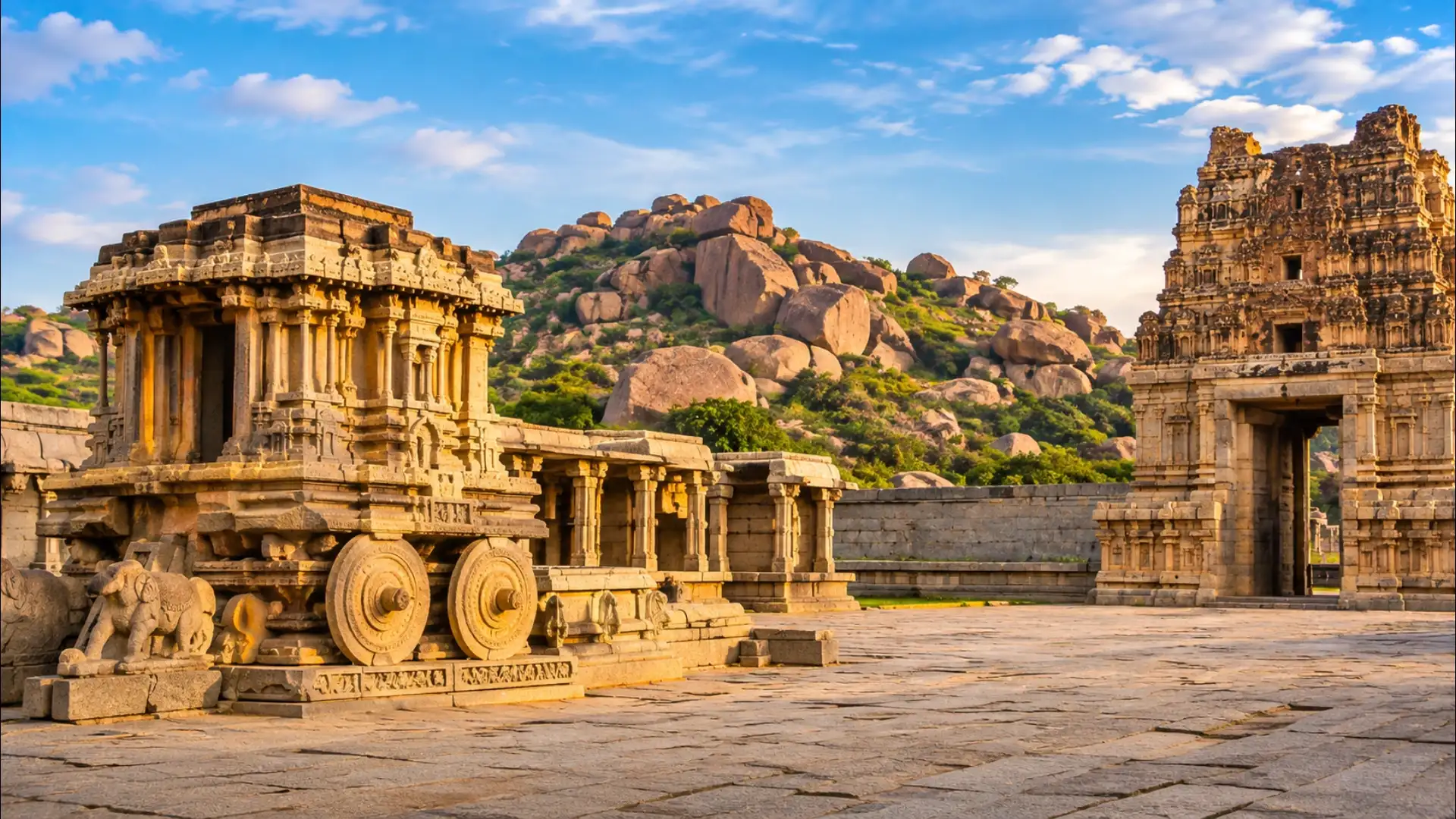
The site was inscribed on the UNESCO World Heritage List in 1986. Its surviving monuments provide an insight into the architecture, religious life and urban planning of the Vijayanagara period.
A three-day visit offers enough time to explore different parts of the historic landscape without rushing from one monument to another.
After visiting the temple, explore the nearby Hampi Bazaar area. The remains of the historic market street offer a glimpse into the commercial activity that once surrounded the temple.
Continue towards Hemakuta Hill, which has several small shrines and provides views of the surrounding boulder landscape. The route also includes monolithic sculptures such as Sasivekalu Ganesha and Kadalekalu Ganesha.
Later, visit the Lakshmi Narasimha sculpture and the nearby Badavilinga shrine. These landmarks can be explored as part of a walking route through the sacred centre.
The Mahanavami Dibba is a large ceremonial platform associated with royal celebrations. Its carved panels offer details of processions, animals and courtly scenes.
The Lotus Mahal is another important structure. Its distinctive design combines architectural features that are often described as a blend of different building traditions.
The Elephant Stables are also worth visiting. The long building contains a series of chambers with domed roofs and is among the more recognisable structures in the royal area.
The stone chariot is a shrine dedicated to Garuda, the traditional vehicle of Lord Vishnu. Its detailed stonework makes it a popular subject for visitors and photographers.
The temple complex also includes the famous musical pillars. Their design has long attracted attention, but visitors should not strike or tap them. Such actions can damage historic structures and are inappropriate at a protected monument.
UNESCO describes the temple complex as containing associated buildings, a ceremonial tank, market streets and other features that reflect the scale of the historic settlement.
The surrounding landscape is also suitable for quiet walks and photography. Visitors should use authorised access points and follow local instructions.
Wear comfortable footwear, carry drinking water and plan outdoor visits around the weather. Follow monument rules and avoid climbing on fragile structures.
Hampi is best experienced at a measured pace, allowing its historic spaces and natural setting to be appreciated together.
The site was inscribed on the UNESCO World Heritage List in 1986. Its surviving monuments provide an insight into the architecture, religious life and urban planning of the Vijayanagara period.
A three-day visit offers enough time to explore different parts of the historic landscape without rushing from one monument to another.
Day 1: Explore the sacred centre
Begin the first day around Virupaksha Temple, one of Hampi's best-known religious landmarks. The temple remains an active place of worship and is an important part of the town's cultural identity.After visiting the temple, explore the nearby Hampi Bazaar area. The remains of the historic market street offer a glimpse into the commercial activity that once surrounded the temple.
Continue towards Hemakuta Hill, which has several small shrines and provides views of the surrounding boulder landscape. The route also includes monolithic sculptures such as Sasivekalu Ganesha and Kadalekalu Ganesha.
Later, visit the Lakshmi Narasimha sculpture and the nearby Badavilinga shrine. These landmarks can be explored as part of a walking route through the sacred centre.
Day 2: Discover the royal enclosure
Spend the second day exploring the royal centre, where the remains of palaces, ceremonial platforms and public structures reflect the administrative and royal life of the Vijayanagara Empire.The Mahanavami Dibba is a large ceremonial platform associated with royal celebrations. Its carved panels offer details of processions, animals and courtly scenes.
The Lotus Mahal is another important structure. Its distinctive design combines architectural features that are often described as a blend of different building traditions.
The Elephant Stables are also worth visiting. The long building contains a series of chambers with domed roofs and is among the more recognisable structures in the royal area.
Day 3: Visit the Vittala Temple complex
The Vijaya Vittala Temple complex is one of Hampi's most celebrated architectural sites. It is particularly known for the stone chariot in its courtyard and its elaborately carved pillared halls.The stone chariot is a shrine dedicated to Garuda, the traditional vehicle of Lord Vishnu. Its detailed stonework makes it a popular subject for visitors and photographers.
The temple complex also includes the famous musical pillars. Their design has long attracted attention, but visitors should not strike or tap them. Such actions can damage historic structures and are inappropriate at a protected monument.
You may also like
- Hans Christian Andersen reportedly feared being buried alive and carried a note saying he was not dead when he went to sleep: The strange bedtime precaution of the Danish storyteller behind 'The Little Mermaid'
- In 2025, Pune student Swasti Patil won bronze at the European Girls' Olympiad in Informatics; a year later, she became the first Indian to win gold at the competition while studying outside formal school
- Meet Sumira Tiwari, who dreams of flying the Rafale and secured 11th rank in the NDA; one of only two women selected for the Indian Air Force's flying branch, she was inspired by wearing her father's helmet and boots
- Samay Raina to Gaurav Kapoor: 6 comedians coming to Hyderabad
- 15 Amazing Benefits of Coconut Oil for Skin and Hair
UNESCO describes the temple complex as containing associated buildings, a ceremonial tank, market streets and other features that reflect the scale of the historic settlement.
Explore the river landscape
If time permits, consider a visit to the Tungabhadra River area. Coracle rides are offered in parts of the region, subject to local operating conditions and water levels.The surrounding landscape is also suitable for quiet walks and photography. Visitors should use authorised access points and follow local instructions.
When to visit and what to remember
Karnataka Tourism recommends October to February as a suitable period to explore Hampi. November is therefore a convenient month for travellers seeking a relatively comfortable sightseeing experience.Wear comfortable footwear, carry drinking water and plan outdoor visits around the weather. Follow monument rules and avoid climbing on fragile structures.
Hampi is best experienced at a measured pace, allowing its historic spaces and natural setting to be appreciated together.






Loving Newspoint? Download the app now
