Places Where the Night Sky Looks Completely Different

Travelling thousands of kilometres can change more than the language, food and scenery. It can completely transform the night sky. Move from the Northern Hemisphere to the Southern Hemisphere and familiar constellations disappear while new ones rise above the horizon. The Milky Way also changes its orientation, and celestial objects that are difficult or impossible to see from northern locations become prominent. For travellers interested in astronomy, crossing the equator can feel like stepping into a different version of the same universe.
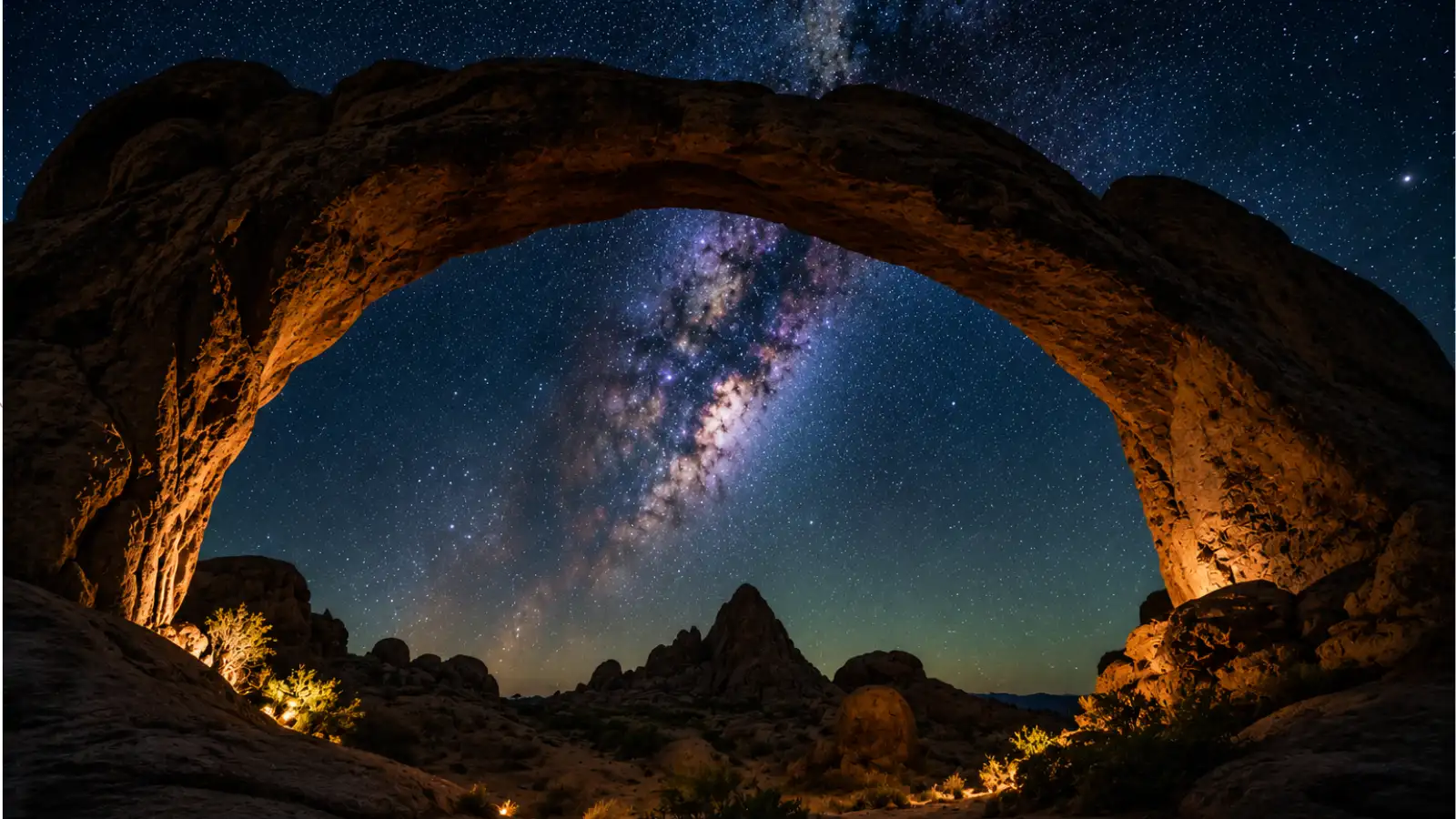
Hero Image


The Southern Sky Is a Different Experience

One of the most dramatic changes comes when travelling south of the equator. The Southern Hemisphere offers views of constellations such as the Southern Cross and Centaurus, while northern observers are familiar with Polaris and the Big Dipper.

Some stars are visible from both hemispheres, but their position in the sky changes dramatically depending on latitude.


New Zealand's Advantage

The Aoraki Mackenzie International Dark Sky Reserve is particularly impressive because its dark skies combine with southern latitude. The reserve's 4,367 square kilometres include Aoraki/Mount Cook National Park, Lake Tekapo and the Mackenzie Basin. Its skies are rated Bortle Class 2.

On a clear night, visitors can see the Milky Way alongside southern constellations that many European travellers have never encountered.


Namibia Offers Another Perspective

Namibia's southern location and extremely low light pollution make the Milky Way exceptionally prominent. In NamibRand, trained guides introduce visitors to constellations, planets and other celestial objects during dedicated night-sky experiences.

The experience is particularly striking because the desert provides almost no visual clutter around the horizon.

Why Latitude Matters

The Earth's rotation means the stars appear to move across the sky in different patterns depending on where you stand. At the equator, the celestial poles sit close to the horizon. As you travel towards either pole, the corresponding celestial pole rises higher.

This is why experienced stargazers often choose destinations not simply for darkness but also for latitude.


The Unexpected Benefit of Travelling South

For many travellers, the greatest surprise is realising how incomplete their usual view of the universe has been. A person who has spent a lifetime in Britain or North America may recognise familiar northern constellations but have little relationship with the southern sky.

Travel changes that instantly.

In the end, one of the best reasons to travel may be hiding above us. You do not always need to visit another planet to see an unfamiliar universe. Sometimes crossing an ocean is enough.