
10 Naturally Formed Crystal Caves Around the World That Look Like Hidden Treasure Rooms

Beneath the Earth's surface, nature creates remarkable landscapes that remain hidden from everyday view. Among the most fascinating are crystal caves, where mineral deposits, underground water and geological processes combine to form sparkling walls, unusual formations and impressive mineral structures. Some contain enormous gypsum crystals, while others feature delicate calcite formations and colourful mineral deposits. These underground environments develop over thousands or even millions of years, depending on the geological conditions. From Mexico's giant crystal chamber to Iceland's volcanic landscapes, several destinations offer a glimpse into this hidden world. Here are ten fascinating places associated with naturally formed crystal caves .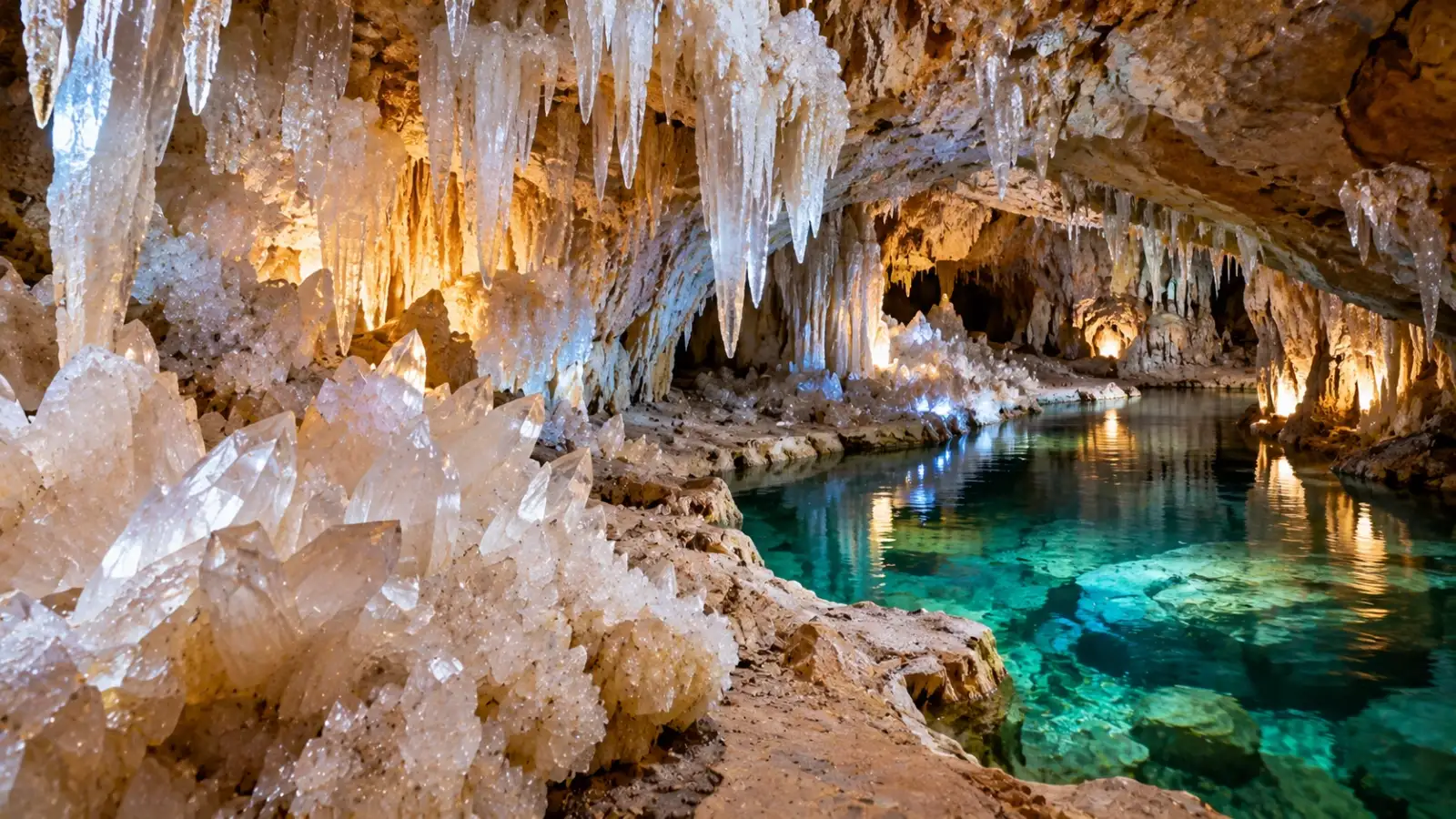
The cave developed within a mineral-rich environment where warm groundwater helped gypsum crystals grow over extremely long periods. The result is a chamber filled with giant transparent and translucent crystal structures.
However, the cave has extremely high temperatures and humidity levels, making it dangerous for ordinary visitors. Access is restricted, and it is primarily studied by researchers.
The geode developed inside an abandoned mine and contains impressive crystal surfaces that reflect light beautifully. Unlike many underground mineral formations, its crystals are unusually clear and well preserved.
The site has been adapted for guided visits, allowing visitors to explore this geological wonder while following conservation and safety rules.
Visitors can see stalactites hanging from the ceiling, stalagmites rising from the ground and mineral formations surrounding the water. The clear lake creates reflections that make the underground environment appear especially striking.
The cave is open to visitors through organised access, making it one of the more accessible underground natural attractions in this list.
The cave has developed over a long period through the action of water dissolving limestone. Stalactites, stalagmites and other mineral structures can be seen throughout its chambers.
Its unusual formations and lighting have made it a popular destination for visitors interested in geology and natural caves.
The cave contains frozen waterfalls, ice walls and sculpted formations created by water entering through openings and freezing under suitable conditions. Seasonal temperature changes influence the appearance of the ice.
Its dramatic underground chambers make it one of Europe's most impressive natural cave attractions.
The cave developed as groundwater gradually dissolved limestone and deposited minerals inside underground chambers. Over time, these deposits created a variety of shapes and textures.
Visitors can explore designated sections through guided tours, offering an opportunity to understand how underground mineral formations develop.
Although the caves are not primarily known for giant crystal deposits, they contain mineral formations created through natural processes over long periods.
Their scale, underground river and dramatic chambers have earned them UNESCO World Heritage recognition.
Inside, visitors can see stalactites, stalagmites and other mineral formations. The most famous attraction is the glowworm display, where tiny organisms produce a natural blue-green light across the cave ceiling.
Although the glowworms are not crystals, the combination of underground geology and natural illumination makes the experience particularly unusual.
The cave's geological history includes the slow movement of water through limestone, creating tunnels and chambers over millions of years. Some sections feature gypsum deposits and other mineral structures.
Visitors can explore selected routes through guided tours, which explain the cave's geology, history and underground ecosystem.
The cave remained relatively unknown outside its discovery group until the 1970s. Its protected environment has helped preserve delicate formations that might otherwise have been damaged by uncontrolled access.
Guided tours allow visitors to explore selected chambers while strict conservation measures protect the cave's natural features.
Naturally formed crystal caves and mineral-rich underground chambers reveal a fascinating side of the Earth's geological history. From the enormous gypsum crystals of Naica and Pulpí to the colourful calcite formations of Wisconsin and Arizona, each destination offers a different example of how minerals develop beneath the surface. Some caves are accessible through guided tours, while others remain restricted for scientific research and conservation. Exploring these places provides a better understanding of the slow geological processes that create some of nature's most extraordinary underground landscapes.
1. Naica Crystal Cave , Mexico
The Cave of Crystals in Naica, located in Chihuahua, Mexico, is one of the most extraordinary geological discoveries in the world. It contains enormous gypsum crystals, some of which measure several metres in length.The cave developed within a mineral-rich environment where warm groundwater helped gypsum crystals grow over extremely long periods. The result is a chamber filled with giant transparent and translucent crystal structures.
However, the cave has extremely high temperatures and humidity levels, making it dangerous for ordinary visitors. Access is restricted, and it is primarily studied by researchers.
2. Cave of the Crystals at Pulpí, Spain
Located in Almería, southeastern Spain, the Geode of Pulpí is another remarkable natural crystal formation. Discovered in 1999, this underground chamber is lined with large, transparent gypsum crystals.The geode developed inside an abandoned mine and contains impressive crystal surfaces that reflect light beautifully. Unlike many underground mineral formations, its crystals are unusually clear and well preserved.
The site has been adapted for guided visits, allowing visitors to explore this geological wonder while following conservation and safety rules.
3. Crystal Cave, Bermuda
Crystal Cave in Bermuda is famous for its clear underground lake and beautiful mineral formations. It is part of a limestone cave system formed through the gradual action of groundwater.Visitors can see stalactites hanging from the ceiling, stalagmites rising from the ground and mineral formations surrounding the water. The clear lake creates reflections that make the underground environment appear especially striking.
The cave is open to visitors through organised access, making it one of the more accessible underground natural attractions in this list.
4. Reed Flute Cave, China
Reed Flute Cave in Guilin, Guangxi, is a limestone cave known for its colourful mineral formations and impressive underground chambers. Although it is not a giant crystal cave like Naica, its calcite deposits and illuminated rock formations create a fascinating underground landscape.The cave has developed over a long period through the action of water dissolving limestone. Stalactites, stalagmites and other mineral structures can be seen throughout its chambers.
Its unusual formations and lighting have made it a popular destination for visitors interested in geology and natural caves.
5. Eisriesenwelt Ice Cave, Austria
Located in the Tennengebirge mountains near Werfen, Austria, Eisriesenwelt is the world's largest known ice cave system. It is famous for its enormous natural ice formations rather than mineral crystals.The cave contains frozen waterfalls, ice walls and sculpted formations created by water entering through openings and freezing under suitable conditions. Seasonal temperature changes influence the appearance of the ice.
Its dramatic underground chambers make it one of Europe's most impressive natural cave attractions.
6. Cave of the Mounds, USA
Cave of the Mounds is located near Blue Mounds in Wisconsin and is known for its colourful mineral formations. The limestone cave contains calcite crystals, stalactites, stalagmites and other geological structures.The cave developed as groundwater gradually dissolved limestone and deposited minerals inside underground chambers. Over time, these deposits created a variety of shapes and textures.
Visitors can explore designated sections through guided tours, offering an opportunity to understand how underground mineral formations develop.
7. Škocjan Caves, Slovenia
The Škocjan Caves in southwestern Slovenia are among Europe's most remarkable underground landscapes. Formed by the Reka River cutting through limestone, the cave system contains enormous chambers, underground passages and impressive rock formations.Although the caves are not primarily known for giant crystal deposits, they contain mineral formations created through natural processes over long periods.
Their scale, underground river and dramatic chambers have earned them UNESCO World Heritage recognition.
8. Waitomo Glowworm Caves, New Zealand
The Waitomo region of New Zealand is famous for its underground cave systems, particularly the Glowworm Caves. These caves developed in limestone through the gradual action of water.Inside, visitors can see stalactites, stalagmites and other mineral formations. The most famous attraction is the glowworm display, where tiny organisms produce a natural blue-green light across the cave ceiling.
Although the glowworms are not crystals, the combination of underground geology and natural illumination makes the experience particularly unusual.
9. Mammoth Cave, USA
Located in Kentucky, Mammoth Cave is the world's longest known cave system. It contains extensive limestone passages, underground chambers and a variety of mineral formations.The cave's geological history includes the slow movement of water through limestone, creating tunnels and chambers over millions of years. Some sections feature gypsum deposits and other mineral structures.
Visitors can explore selected routes through guided tours, which explain the cave's geology, history and underground ecosystem.
10. Kartchner Caverns, USA
Kartchner Caverns State Park in Arizona is known for its beautifully preserved limestone cave formations. The underground chambers contain stalactites, stalagmites, soda straws and other mineral structures formed through the slow deposition of calcite.The cave remained relatively unknown outside its discovery group until the 1970s. Its protected environment has helped preserve delicate formations that might otherwise have been damaged by uncontrolled access.
Guided tours allow visitors to explore selected chambers while strict conservation measures protect the cave's natural features.
Naturally formed crystal caves and mineral-rich underground chambers reveal a fascinating side of the Earth's geological history. From the enormous gypsum crystals of Naica and Pulpí to the colourful calcite formations of Wisconsin and Arizona, each destination offers a different example of how minerals develop beneath the surface. Some caves are accessible through guided tours, while others remain restricted for scientific research and conservation. Exploring these places provides a better understanding of the slow geological processes that create some of nature's most extraordinary underground landscapes.
Next Story