
From Yarn to Saree: Exploring Telangana's Pochampally Weaving Tradition

Some textiles are instantly recognisable because of their patterns, while others stand out because of the skill required to produce them. Pochampally Ikat combines both qualities. Associated with Telangana, the weaving tradition is known for colourful geometric designs created through a specialised process involving dyed yarn.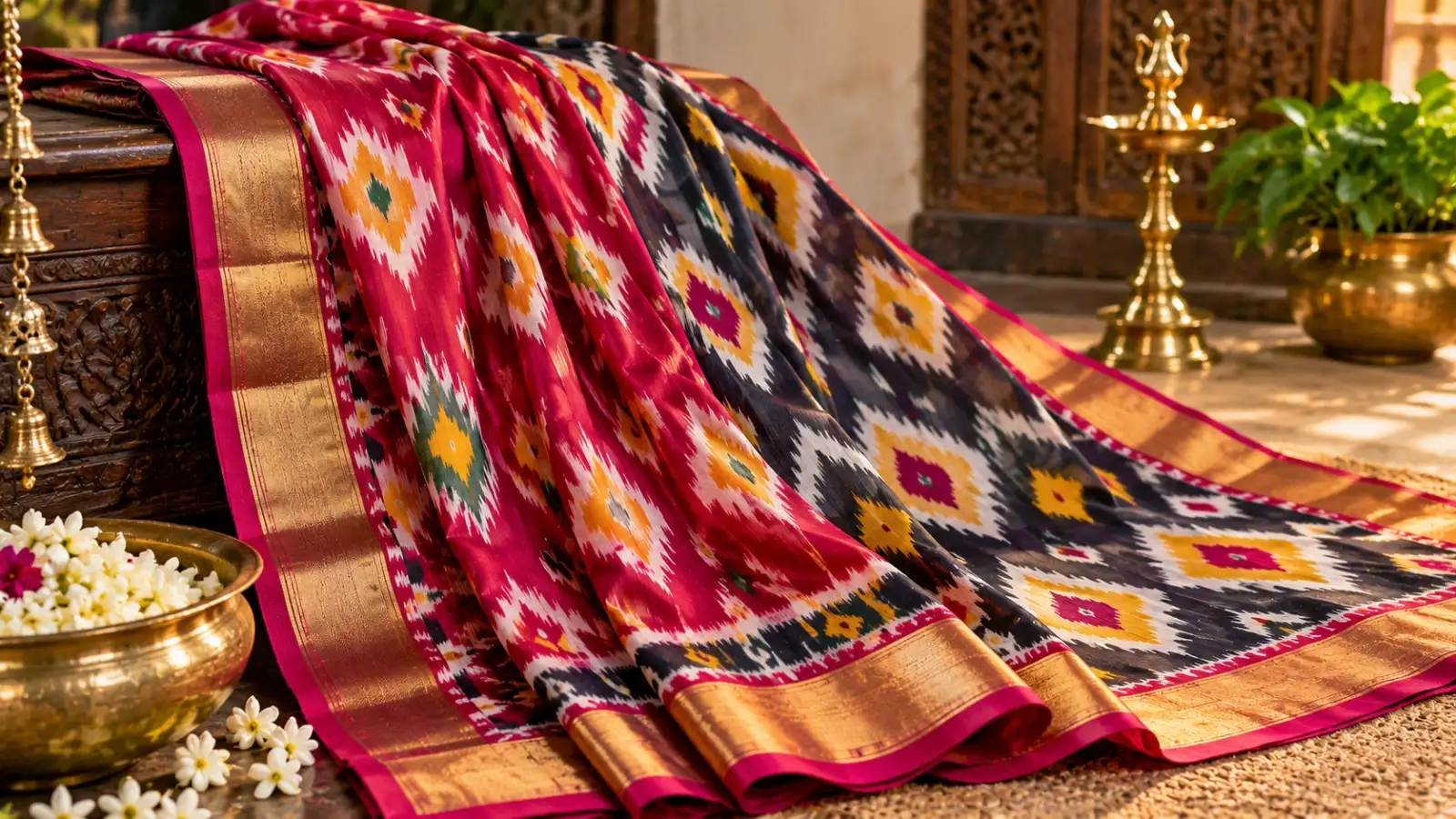
The craft is used to produce sarees and other textiles, including fabrics for clothing and home furnishings. Its patterns often feature repeated shapes arranged in carefully planned grids.
Telangana Tourism describes Pochampally textiles as products of a traditional double-Ikat process in which both warp and weft yarns are tie-dyed to create the intended designs.
This requires careful planning because the design must be considered before the fabric itself takes shape.
In double Ikat, both the lengthwise warp threads and the crosswise weft threads are dyed according to the pattern. Aligning the two sets of yarns requires considerable precision.
Small variations in alignment can affect the finished design, which is one reason the technique requires specialised weaving skills.
Some designs also incorporate floral and animal-inspired patterns. Colour combinations vary, allowing the textiles to suit different preferences, from bold festive styles to more understated everyday designs.
The placement of borders and the arrangement of motifs can change the overall appearance of a saree.
When viewing a piece, look at how the pattern develops across the fabric rather than focusing only on the colour palette.
Pochampally textiles can be made using different fibres, including cotton and silk. Check the product label and ask the seller about the actual composition rather than assuming every saree is pure silk.
Examine the fabric for weaving irregularities, loose threads and inconsistencies that may affect its finish. Some variations can be characteristic of handloom production, so ask the seller to explain them instead of judging every difference as a defect.
Ask whether the saree was woven using the traditional technique and whether any information about the weaver or place of production is available.
In October 2026, Hyderabad Mail reported that QR-code authentication tags were being introduced on a pilot basis for selected Pochampally handloom products. The system is intended to provide details about the product and its weaver. Buyers should check whether a particular item is covered by the initiative rather than assuming all products carry a tag.
Follow the care instructions provided with the product. Different fibres and dyes may require different washing and storage methods.
Pochampally Ikat demonstrates how textile design depends on both visual creativity and technical skill. Understanding the process makes it easier to appreciate the work behind the finished fabric and choose pieces with greater confidence.
The craft is used to produce sarees and other textiles, including fabrics for clothing and home furnishings. Its patterns often feature repeated shapes arranged in carefully planned grids.
Telangana Tourism describes Pochampally textiles as products of a traditional double-Ikat process in which both warp and weft yarns are tie-dyed to create the intended designs.
What is Ikat weaving?
Ikat is a textile technique in which sections of yarn are tied and dyed before the fabric is woven. The positioning of the dyed sections determines how the colours form patterns when the threads are arranged on the loom.This requires careful planning because the design must be considered before the fabric itself takes shape.
In double Ikat, both the lengthwise warp threads and the crosswise weft threads are dyed according to the pattern. Aligning the two sets of yarns requires considerable precision.
Small variations in alignment can affect the finished design, which is one reason the technique requires specialised weaving skills.
Patterns that define Pochampally
Pochampally textiles are widely associated with geometric motifs, including diamonds and repeated shapes arranged across the fabric.Some designs also incorporate floral and animal-inspired patterns. Colour combinations vary, allowing the textiles to suit different preferences, from bold festive styles to more understated everyday designs.
The placement of borders and the arrangement of motifs can change the overall appearance of a saree.
When viewing a piece, look at how the pattern develops across the fabric rather than focusing only on the colour palette.
How to choose a saree
Consider the occasion, preferred fabric and amount you want to spend.Pochampally textiles can be made using different fibres, including cotton and silk. Check the product label and ask the seller about the actual composition rather than assuming every saree is pure silk.
Examine the fabric for weaving irregularities, loose threads and inconsistencies that may affect its finish. Some variations can be characteristic of handloom production, so ask the seller to explain them instead of judging every difference as a defect.
Ask whether the saree was woven using the traditional technique and whether any information about the weaver or place of production is available.
Why provenance matters
Pochampally Ikat has a geographical indication, which links the protected product name to its recognised geographical origin and production tradition.In October 2026, Hyderabad Mail reported that QR-code authentication tags were being introduced on a pilot basis for selected Pochampally handloom products. The system is intended to provide details about the product and its weaver. Buyers should check whether a particular item is covered by the initiative rather than assuming all products carry a tag.
Styling Pochampally textiles
A patterned saree can be paired with a plain blouse to let the weave remain the main feature. Smaller Ikat accessories, such as scarves or cushion covers, can introduce the design into everyday clothing or home décor.Follow the care instructions provided with the product. Different fibres and dyes may require different washing and storage methods.
Pochampally Ikat demonstrates how textile design depends on both visual creativity and technical skill. Understanding the process makes it easier to appreciate the work behind the finished fabric and choose pieces with greater confidence.
Next Story