
Poha vs Paratha vs Oats: What Indian Breakfasts Do to Your Energy by 11 AM

Breakfast is often treated as a simple choice between whatever is quick, familiar or available in the kitchen. But the difference between a plate of poha, a paratha or a bowl of oats can become noticeable a few hours later. By 11 AM, one person may feel comfortably full and focused while another is already reaching for biscuits or another cup of tea. The food itself matters, but so does what goes into the meal alongside it. Fibre, protein, fat, portion size and the way a carbohydrate-rich food is prepared can all influence how satisfying and steady a breakfast feels.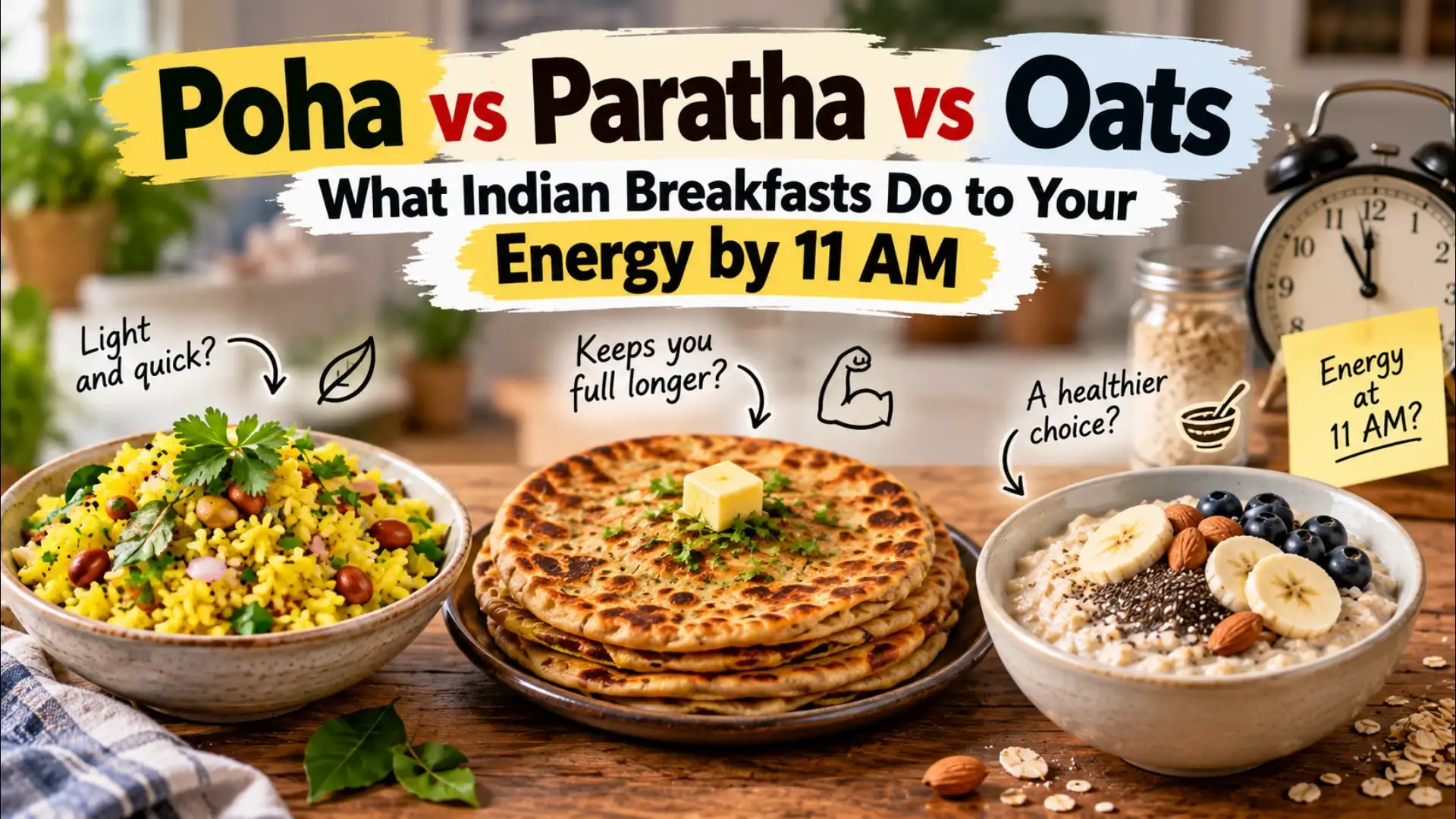
The difference comes from what is added to it. Peanuts, peas, sprouts, vegetables or a side of curd can make the meal more substantial. Peanuts also add fat and protein, while vegetables increase fibre and volume without making the dish excessively heavy.
That matters because a breakfast made almost entirely from refined or quickly digested carbohydrates may leave some people hungry sooner. The goal is not to avoid carbohydrates but to avoid making them the only major component of the meal.
A vegetable or paneer-stuffed paratha paired with curd is a different proposition from a large plain paratha served with pickle. The accompanying foods change the nutritional balance considerably.
This is why labelling paratha as simply ‘good’ or ‘bad’ misses the point. Portion size, filling, cooking fat and what accompanies it all matter.
A bowl of oats cooked with milk, nuts, seeds and fruit is therefore very different from instant oats loaded with sugar. Oats also have an advantage when it comes to building a balanced breakfast. They can easily be combined with milk or curd for protein, nuts and seeds for fats, and fruit for fibre.
The chai is worth fixing too. Two spoons of sugar on a near-empty stomach after a fast-digesting breakfast makes the mid-morning dip sharper rather than gentler. The honest ranking is that a well-built poha beats a badly built bowl of oats, and a paratha with curd beats both.
Poha: Light, Familiar and Easy to Adapt
Poha has a reputation for being a light breakfast, and that description is not entirely wrong. Flattened rice is primarily a carbohydrate source, so a basic bowl of poha may not keep everyone satisfied until lunch.The difference comes from what is added to it. Peanuts, peas, sprouts, vegetables or a side of curd can make the meal more substantial. Peanuts also add fat and protein, while vegetables increase fibre and volume without making the dish excessively heavy.
That matters because a breakfast made almost entirely from refined or quickly digested carbohydrates may leave some people hungry sooner. The goal is not to avoid carbohydrates but to avoid making them the only major component of the meal.
Paratha: More Staying Power, But Preparation Matters
A paratha can be a much heavier breakfast, particularly when it is generously brushed with oil or ghee and eaten with a rich potato filling. The added fat can slow digestion and may make the meal feel satisfying for longer, but a large, oily paratha can also leave someone feeling sluggish rather than energetic.You may also like
- Essential Hindi Terms for Travelers in India
- Essential Travel Tips for Hartalika Teej Celebrations
- Fifth Disease Explained: What Parents Need to Know
- American flight attendant reveals why you should never eat off airplane's tray tables: “Why do people do this?”
- Smartphone Overuse Causes Sharp Decline in Teenagers' Math and Science Scores
A vegetable or paneer-stuffed paratha paired with curd is a different proposition from a large plain paratha served with pickle. The accompanying foods change the nutritional balance considerably.
This is why labelling paratha as simply ‘good’ or ‘bad’ misses the point. Portion size, filling, cooking fat and what accompanies it all matter.
Oats: Not Every Bowl Is Automatically Better
Oats are frequently marketed as the perfect breakfast, but the word ‘oats’ covers a surprisingly wide range of foods. Less processed oats generally retain more of their original structure, and research suggests that intact or thicker oats can produce a gentler post-meal glucose response than more highly processed forms.A bowl of oats cooked with milk, nuts, seeds and fruit is therefore very different from instant oats loaded with sugar. Oats also have an advantage when it comes to building a balanced breakfast. They can easily be combined with milk or curd for protein, nuts and seeds for fats, and fruit for fibre.
The problem all three share
Every one of these breakfasts is carbohydrate first and protein last. The 11 AM slump follows the shape of the meal rather than the identity of the grain. Curd, eggs, paneer bhurji, sprouts, a fistful of peanuts, and a glass of milk: any of these change the curve, and eating the protein and vegetables before the starch flattens the spike further.The chai is worth fixing too. Two spoons of sugar on a near-empty stomach after a fast-digesting breakfast makes the mid-morning dip sharper rather than gentler. The honest ranking is that a well-built poha beats a badly built bowl of oats, and a paratha with curd beats both.






Loving Newspoint? Download the app now
