
Preparing The Heart For Krishn


Every year, Janmashtami is celebrated with great joy and devotion across the world. Temples are beautifully decorated, devotional songs fill the air, and millions gather to commemorate the appearance of Krishn . Yet Janmashtami is much more than a celebration. Every aspect of Krishn’s appearance carries a profound spiritual message, inviting us to discover its relevance in our own lives.
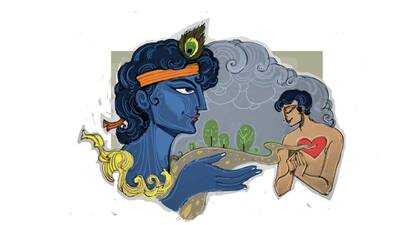
Why does Krishn descend? Gita explains that he appears to protect his devotees, curb influence of the wicked, and re-establish principles of dharm. Yet our acharyas explain that the deeper reason is love. Krishn descends to relish loving exchanges with his devotees and to attract the conditioned souls back to their forgotten relationship with him. The circumstances surrounding Krishn’s appearance are rich with symbolism.
Krishn appears not in a magnificent palace but in a dark prison at midnight. The darkness represents ignorance — the soul’s forgetfulness of its eternal identity as Krishn’s servant. The prison represents the conditioned heart, confined by fear, attachments, ego, and mistaken search for happiness outside Krishn.
Before Krishn appears, Kams kills the first six sons of Devaki. These are understood to represent the six inner enemies—lust, anger, greed, illusion, pride, and envy. Spiritual life is not merely about inviting God into our lives but about removing what obstructs his presence. Only then does Balaram, Krishn’s elder brother and the original spiritual master, appear first, teaching us that the mercy of Guru prepares the heart for Krishn.
When Krishn appears, everything changes. The prison doors open, Vasudev’s shackles fall away, and guards fall asleep. These miracles reflect what happens within us when Krishn awakens our spiritual consciousness . The prison of material conditioning no longer confines us, chains of attachment begin to loosen, and the restless mind gradually loses its grip. What seems impossible through our own efforts becomes possible through divine grace .
Vasudev’s journey across the Yamuna completes this spiritual allegory. The turbulent river represents life’s inevitable challenges. Vasudev’s only concern was to safely carry Krishn. Because Krishn remained at the centre, the river made way. Spiritual life is not about controlling every circumstance but about keeping Krishn at the centre of our consciousness. Difficulties may remain, but they no longer prevent us from moving closer to him.
As Vasudev carries the infant Krishn through the storm, Anant Sesha spreads his hoods above him like a royal umbrella. This reminds us that whenever we sincerely carry Krishn within our hearts, we are never alone. Spiritual life does not promise freedom from adversity, but it assures us of divine protection and guidance. Looking back, many of us can recognise moments when unexpected help arrived or strength appeared beyond our own capacity. What often seems like coincidence may simply be grace working quietly behind the scenes.
Krishn first reveals himself to Devaki and Vasudev in his majestic four armed form and then becomes a helpless infant in Gokul, where he is loved as a son, a friend, and the beloved of his devotees. In doing so, Krishn reveals one of spirituality’s deepest truths: God is not only infinite but also intimate. His majesty inspires reverence, but His sweetness invites love.
The most remarkable aspect of Janmashtami is that Krishn’s appearance is not confined to history. It invites each of us to ask a deeply personal question: ‘Has Krishna appeared in my heart?’ The Bhakti tradition teaches that there is no difference between Krishn and his holy name. Whenever we sincerely chant, hear about him, or serve him, we invite him into our hearts.
Janmashtami then becomes more than an annual festival; it becomes a daily practice of preparing the heart for Krishn. The real success of Janmashtami is measured not by how grandly we celebrate one day, but by how deeply we remember him every day thereafter.
Authored by: Radhanath Swami
(The author is spiritual guru, ISKCON )
Why does Krishn descend? Gita explains that he appears to protect his devotees, curb influence of the wicked, and re-establish principles of dharm. Yet our acharyas explain that the deeper reason is love. Krishn descends to relish loving exchanges with his devotees and to attract the conditioned souls back to their forgotten relationship with him. The circumstances surrounding Krishn’s appearance are rich with symbolism.
Krishn appears not in a magnificent palace but in a dark prison at midnight. The darkness represents ignorance — the soul’s forgetfulness of its eternal identity as Krishn’s servant. The prison represents the conditioned heart, confined by fear, attachments, ego, and mistaken search for happiness outside Krishn.
Before Krishn appears, Kams kills the first six sons of Devaki. These are understood to represent the six inner enemies—lust, anger, greed, illusion, pride, and envy. Spiritual life is not merely about inviting God into our lives but about removing what obstructs his presence. Only then does Balaram, Krishn’s elder brother and the original spiritual master, appear first, teaching us that the mercy of Guru prepares the heart for Krishn.
When Krishn appears, everything changes. The prison doors open, Vasudev’s shackles fall away, and guards fall asleep. These miracles reflect what happens within us when Krishn awakens our spiritual consciousness . The prison of material conditioning no longer confines us, chains of attachment begin to loosen, and the restless mind gradually loses its grip. What seems impossible through our own efforts becomes possible through divine grace .
Vasudev’s journey across the Yamuna completes this spiritual allegory. The turbulent river represents life’s inevitable challenges. Vasudev’s only concern was to safely carry Krishn. Because Krishn remained at the centre, the river made way. Spiritual life is not about controlling every circumstance but about keeping Krishn at the centre of our consciousness. Difficulties may remain, but they no longer prevent us from moving closer to him.
As Vasudev carries the infant Krishn through the storm, Anant Sesha spreads his hoods above him like a royal umbrella. This reminds us that whenever we sincerely carry Krishn within our hearts, we are never alone. Spiritual life does not promise freedom from adversity, but it assures us of divine protection and guidance. Looking back, many of us can recognise moments when unexpected help arrived or strength appeared beyond our own capacity. What often seems like coincidence may simply be grace working quietly behind the scenes.
Krishn first reveals himself to Devaki and Vasudev in his majestic four armed form and then becomes a helpless infant in Gokul, where he is loved as a son, a friend, and the beloved of his devotees. In doing so, Krishn reveals one of spirituality’s deepest truths: God is not only infinite but also intimate. His majesty inspires reverence, but His sweetness invites love.
The most remarkable aspect of Janmashtami is that Krishn’s appearance is not confined to history. It invites each of us to ask a deeply personal question: ‘Has Krishna appeared in my heart?’ The Bhakti tradition teaches that there is no difference between Krishn and his holy name. Whenever we sincerely chant, hear about him, or serve him, we invite him into our hearts.
Janmashtami then becomes more than an annual festival; it becomes a daily practice of preparing the heart for Krishn. The real success of Janmashtami is measured not by how grandly we celebrate one day, but by how deeply we remember him every day thereafter.
Authored by: Radhanath Swami
(The author is spiritual guru, ISKCON )
Next Story