
How to Make Crispy Ragi Dosa at Home With Finger Millet Flour

Ragi dosa is a delicious South Indian breakfast made with finger millet flour, a grain known for its earthy flavour and versatility. It offers a different take on the traditional dosa, with a nutty taste and a crisp texture that pairs well with coconut chutney or sambar. The best part is that you do not need to soak lentils or wait overnight for fermentation to enjoy this version. With a few everyday ingredients, a thin batter and the right cooking technique, you can prepare golden, crunchy ragi dosas at home. This simple recipe is suitable for busy mornings and light meals.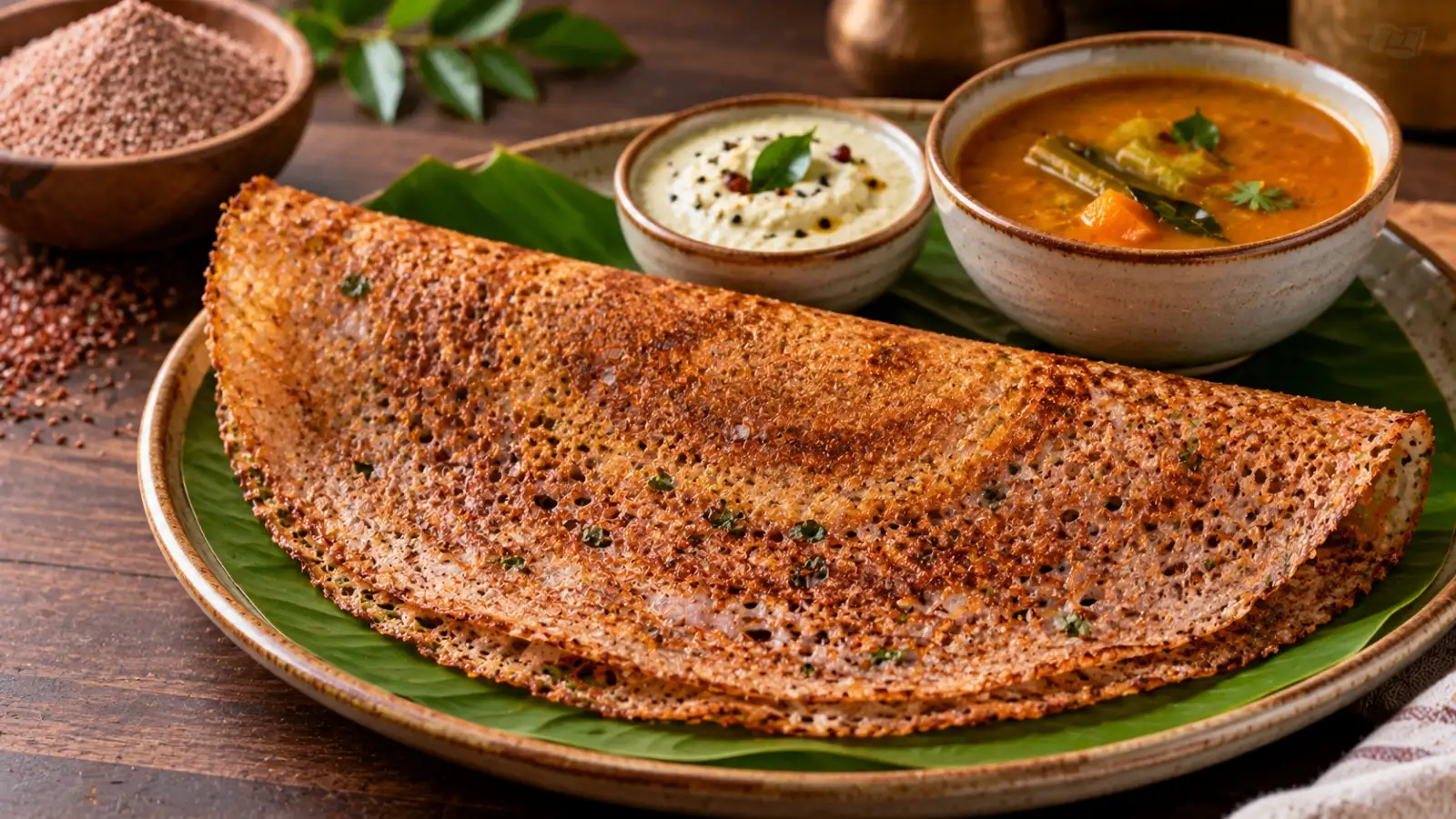
Preparation time: 10 minutes
Cooking time: 20 minutes
Ingredients:
Unlike a traditional fermented dosa batter, this instant ragi dosa batter should not be thick enough to spread like a pancake. A thinner consistency helps create a delicate, crisp layer.
Before cooking, stir the batter again. If it has thickened, add a little water to restore its pourable consistency.
If the tawa is too cold, the dosa may turn soft and stick to the surface. If it is excessively hot, the batter may set too quickly and become difficult to spread.
Small holes and uneven edges are normal for this style of dosa. Avoid pouring too much batter in one place, as a thick layer takes longer to become crisp.
Cook for a little longer if you prefer a crunchier finish. Flip it carefully if you want both sides browned, and cook the other side for another minute or two.
For a simple meal, serve the dosa with fresh coconut chutney and a cup of tea. You can also add finely chopped vegetables to the batter for variation, although extra moisture may affect the final texture.
Ragi, or finger millet, contributes dietary fibre and minerals, including calcium. However, the nutritional value of the finished dish depends on the ingredients, quantities and accompaniments used. Ragi dosa can be part of a varied diet, but it is not automatically suitable for every dietary need.
For the crispiest results, cook each dosa fresh and avoid stacking several hot dosas tightly on top of one another.
Ingredients for Crispy Ragi Dosa
Serves: 2 to 3 peoplePreparation time: 10 minutes
Cooking time: 20 minutes
Ingredients:
- 1 cup ragi flour, also called finger millet or nachni flour
- ¼ cup rice flour
- 2 tablespoons semolina, optional for extra crispness
- 1 small onion, finely chopped
- 1 green chilli, finely chopped
- 1 teaspoon cumin seeds
- ½ teaspoon grated ginger
- 6 to 8 curry leaves, finely chopped
- 2 tablespoons chopped fresh coriander
- Salt to taste
- 2 to 2½ cups water, or as needed
- 2 to 3 tablespoons oil for cooking
How to Prepare the Ragi Dosa Batter
Step 1: Mix the Dry Ingredients
Take a large mixing bowl and add the ragi flour, rice flour and semolina, if using. Mix them thoroughly to distribute the ingredients evenly. Rice flour helps give the dosa a crisper finish, while semolina can add extra texture.Step 2: Add the Herbs and Spices
Add the chopped onion, green chilli, grated ginger, cumin seeds, curry leaves, coriander and salt. Stir everything together so the flavourings are evenly distributed throughout the flour mixture.Step 3: Make a Smooth, Thin Batter
Pour in the water gradually while whisking continuously to prevent lumps. The batter should be thin and pourable, similar to thin buttermilk. Add a little more water if it feels too thick.Unlike a traditional fermented dosa batter, this instant ragi dosa batter should not be thick enough to spread like a pancake. A thinner consistency helps create a delicate, crisp layer.
Step 4: Rest the Batter
Leave the batter aside for 15 to 20 minutes. This allows the semolina to absorb some moisture and gives the ingredients time to combine.Before cooking, stir the batter again. If it has thickened, add a little water to restore its pourable consistency.
How to Cook Ragi Dosa for a Crisp Texture
Step 5: Heat the Tawa Properly
Place a flat iron or non-stick tawa over medium-high heat. Allow it to heat evenly before adding the batter. A few drops of water should sizzle and evaporate quickly when the pan is ready.If the tawa is too cold, the dosa may turn soft and stick to the surface. If it is excessively hot, the batter may set too quickly and become difficult to spread.
Step 6: Pour the Batter Thinly
Stir the batter well, as the flour and other ingredients can settle at the bottom. Pour a ladleful onto the hot tawa, beginning around the outer area and moving towards the centre. Alternatively, gently spread it into a thin circle if your batter consistency allows.Small holes and uneven edges are normal for this style of dosa. Avoid pouring too much batter in one place, as a thick layer takes longer to become crisp.
Step 7: Add Oil and Cook Until Golden
Drizzle a little oil around the edges and over the surface. Allow the dosa to cook without disturbing it until the edges begin to lift and the underside turns golden brown.Cook for a little longer if you prefer a crunchier finish. Flip it carefully if you want both sides browned, and cook the other side for another minute or two.
Step 8: Serve Immediately
Transfer the cooked dosa to a plate and serve while hot. Repeat with the remaining batter, making sure the tawa returns to the right temperature before cooking each new dosa.Tips for Making Crispy Ragi Dosa Every Time
- Keep the batter thin. A thick batter usually produces a heavier, softer dosa.
- Use rice flour for additional crispness and semolina if you prefer a slightly textured finish.
- Stir the batter before each dosa to prevent the ingredients from settling.
- Allow the tawa to heat properly, but avoid overheating it.
- Do not keep flipping the dosa repeatedly. Let the underside cook until it releases naturally.
- Use only enough oil to help the edges crisp and prevent sticking.
- Serve immediately because steam can soften the dosa if it is stacked while hot.
What to Serve With Ragi Dosa
Ragi dosa tastes particularly good with coconut chutney, tomato chutney or coriander chutney. A bowl of vegetable sambar also makes it a more substantial breakfast.For a simple meal, serve the dosa with fresh coconut chutney and a cup of tea. You can also add finely chopped vegetables to the batter for variation, although extra moisture may affect the final texture.
Is Ragi Dosa Different From Regular Dosa?
Yes. Traditional dosa is commonly made from a fermented batter of rice and urad dal, while this quick version uses ragi flour as its main ingredient and does not require overnight fermentation.Ragi, or finger millet, contributes dietary fibre and minerals, including calcium. However, the nutritional value of the finished dish depends on the ingredients, quantities and accompaniments used. Ragi dosa can be part of a varied diet, but it is not automatically suitable for every dietary need.
How to Store Leftover Batter
If you have leftover batter, transfer it to a clean, covered container and refrigerate promptly. Use it within about 24 hours for the best texture, and check its smell and appearance before cooking. Stir well and add water if needed because the flour may absorb moisture during storage.For the crispiest results, cook each dosa fresh and avoid stacking several hot dosas tightly on top of one another.
Next Story