
Why Rainforest Animals Are Darker: Gloger’s Rule Explained

Rainforest ecosystems are among the most biologically diverse places on Earth, yet one pattern stands out clearly. Many rainforest animals are noticeably darker in colour compared to species living in drier or colder environments. This observation is not random. It is explained by an ecological principle known as Gloger’s Rule , which connects climate conditions to animal pigmentation.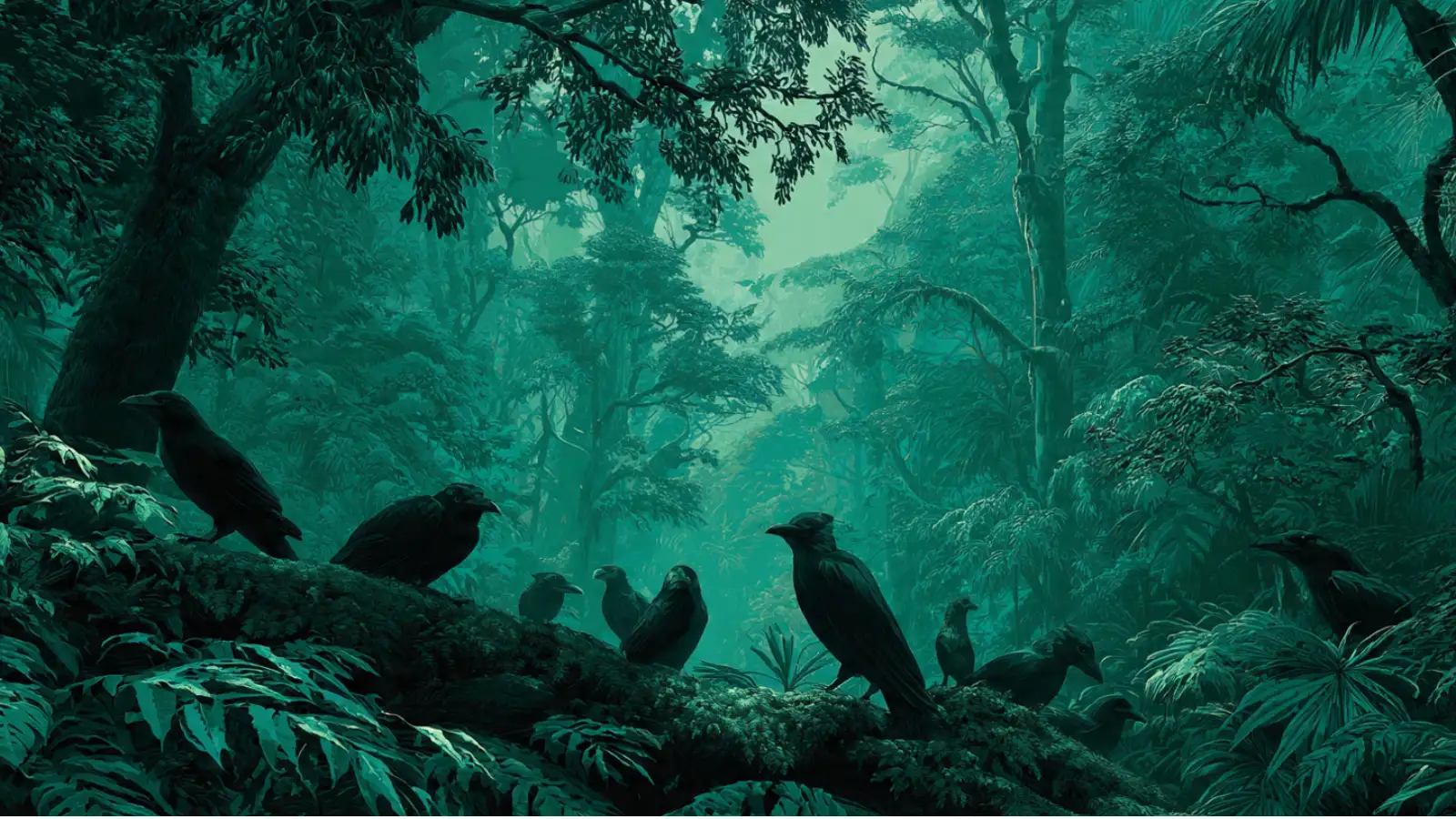
Gloger’s Rule states that animals living in warm and humid environments, such as tropical rainforests, tend to develop darker pigmentation. This is mainly due to higher levels of melanin, the natural pigment responsible for darker skin, feathers, and fur. Melanin in animals provides multiple survival benefits, especially in environments with intense biological activity and moisture.
Read More: Why Animals Play Dead To Survive In The Wild
One key reason for darker coloration is protection. In humid rainforest environments, bacteria, fungi, and parasites thrive. Higher melanin levels offer increased resistance against these microorganisms, helping animals stay healthier in damp conditions. This makes melanin pigmentation animals more resilient in tropical ecosystems where infection risks are higher.
Another important factor is camouflage. Dense rainforest habitats have low and filtered light due to thick canopy cover. Darker colouring helps rainforest wildlife blend into shadows, bark, and foliage. This improves their ability to avoid predators or sneak up on prey. In this way, rainforest animals darker colour becomes a survival advantage shaped by natural selection.
Humidity also plays a direct role in shaping appearance. In moist environments, lighter pigments may degrade more easily, while darker pigmentation remains stable. Over thousands of years, this subtle difference contributes to the evolution of darker species in tropical regions. This is why ecological adaptation in tropical forests often leads to more richly pigmented animals.
Birds, mammals, and even insects show patterns consistent with Gloger’s Rule. For example, many tropical bird species display deep browns, blacks, or rich chestnut tones compared to their relatives in temperate regions. Similarly, rainforest mammals often have darker fur that supports both camouflage and microbial protection.
However, Gloger’s Rule is not absolute. Evolution is complex, and exceptions exist depending on diet, behaviour, and specific habitat pressures. Still, the general trend remains one of the most widely observed ecological patterns in biology.
The reason rainforest animals are darker lies in a combination of climate, survival needs, and evolutionary pressure. Gloger’s Rule provides a powerful explanation for how humidity and environmental conditions influence animal pigmentation. From protection against microbes to improved camouflage, darker coloration is a finely tuned adaptation that helps species thrive in the rich and competitive world of tropical rainforests.
Gloger’s Rule states that animals living in warm and humid environments, such as tropical rainforests, tend to develop darker pigmentation. This is mainly due to higher levels of melanin, the natural pigment responsible for darker skin, feathers, and fur. Melanin in animals provides multiple survival benefits, especially in environments with intense biological activity and moisture.
Read More: Why Animals Play Dead To Survive In The Wild
One key reason for darker coloration is protection. In humid rainforest environments, bacteria, fungi, and parasites thrive. Higher melanin levels offer increased resistance against these microorganisms, helping animals stay healthier in damp conditions. This makes melanin pigmentation animals more resilient in tropical ecosystems where infection risks are higher.
Another important factor is camouflage. Dense rainforest habitats have low and filtered light due to thick canopy cover. Darker colouring helps rainforest wildlife blend into shadows, bark, and foliage. This improves their ability to avoid predators or sneak up on prey. In this way, rainforest animals darker colour becomes a survival advantage shaped by natural selection.
Humidity also plays a direct role in shaping appearance. In moist environments, lighter pigments may degrade more easily, while darker pigmentation remains stable. Over thousands of years, this subtle difference contributes to the evolution of darker species in tropical regions. This is why ecological adaptation in tropical forests often leads to more richly pigmented animals.
Birds, mammals, and even insects show patterns consistent with Gloger’s Rule. For example, many tropical bird species display deep browns, blacks, or rich chestnut tones compared to their relatives in temperate regions. Similarly, rainforest mammals often have darker fur that supports both camouflage and microbial protection.
However, Gloger’s Rule is not absolute. Evolution is complex, and exceptions exist depending on diet, behaviour, and specific habitat pressures. Still, the general trend remains one of the most widely observed ecological patterns in biology.
The reason rainforest animals are darker lies in a combination of climate, survival needs, and evolutionary pressure. Gloger’s Rule provides a powerful explanation for how humidity and environmental conditions influence animal pigmentation. From protection against microbes to improved camouflage, darker coloration is a finely tuned adaptation that helps species thrive in the rich and competitive world of tropical rainforests.
Next Story