
Rajapalayam, Mudhol and Chippiparai: What India's Native Sighthounds Were Bred to Do


India's three great sighthounds share a body plan so efficient it has barely changed in centuries: a deep chest for lung capacity, a tucked abdomen, long legs built for stride length, and eyes set wide enough to give them a field of vision close to 270 degrees. They were not bred for obedience or companionship first. They were bred to spot, chase, and bring down prey before a human could close the distance on foot. Understanding what each breed was asked to do is the fastest way to understand what living with one actually requires.
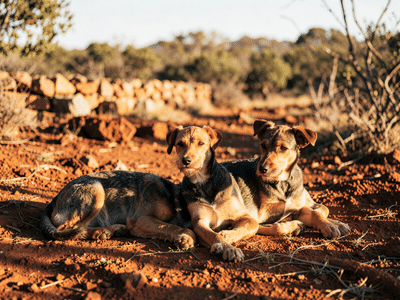
The Rajapalayam: A Boar Hunter from Tamil Nadu's Palayam CourtsThe Rajapalayam takes its name from the town of Rajapalayam in the Virudhunagar district of Tamil Nadu, where the Nayakar rulers bred it specifically for wild boar hunting. Boar hunting is not a task for a tentative dog. A wild boar can weigh over 100 kilograms, carries tusks capable of opening a dog's flank, and does not flee in a straight line. The Rajapalayam was bred to close ground fast, engage at close quarters, and hold until the hunter arrived. This required a dog with genuine physical courage and a high pain threshold, not traits that soften with house training.
The breed is almost entirely white, with a pink nose and golden eyes, a combination that made it visually striking at court but also practically useful in low-light hunts, where a pale dog is easier to track through scrub. The coat is short and single-layered, suited to Tamil Nadu's heat. One documented biological trait distinguishes the Rajapalayam from most sighthounds: it tends toward a single-owner bond so exclusive that rehoming adult dogs is genuinely difficult. Breeders and the Kennel Club of India both note this temperament as a defining characteristic, not a flaw to be trained out.
The Indian Army has trialled Rajapalayams for border patrol in Kashmir, drawn by the breed's stamina, alertness, and low maintenance needs in difficult terrain. The breed is listed on the endangered list of Indian dog breeds, and the Indian government has issued commemorative postage stamps featuring it, a formal acknowledgment that the breed is a piece of living heritage.
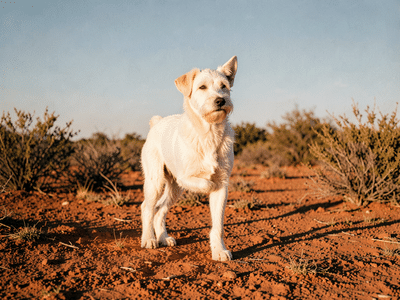 An alert Rajapalayam dog breed India stands on dry red earth during golden hour, its long shadow stretching.
The Mudhol Hound: The Deccan Plateau's Working SighthoundThe Mudhol Hound, also called the Caravan Hound or Pashmi when it carries a feathered coat variant, comes from the Mudhol taluk in Karnataka's Bagalkot district. The terrain it was bred for is flat, open, and dry, the kind of ground where a running dog can be seen from a long distance and where prey has nowhere to hide except speed. Mudhols were used by nomadic communities and by the former princely state of Mudhol, whose ruler gifted a pair to King George V in the early twentieth century, giving the breed one of its few documented entries into colonial-era records.
The Mudhol's skull is long and narrow, its muzzle tapered, and its ears pendant and mobile, a shape that reduces wind resistance and keeps the ear canal relatively protected during a flat-out run. Its gallop is the double-suspension gallop used by all sighthounds, where all four feet leave the ground twice per stride cycle: once when the legs are fully extended and once when they are fully tucked. At full speed, a Mudhol covers ground in a way that looks physically improbable. Studies on sighthound locomotion have measured this gait type as among the most mechanically efficient in the mammalian world.
Because the breed was used by communities that could not afford to feed a dog that did not work, the Mudhol is lean to a degree that alarms people unfamiliar with sighthounds. Visible hip bones and a pronounced tuck are normal for the breed at a healthy weight. Overfeeding a Mudhol to make it look less thin is one of the most common welfare mistakes owners make.
The Chippiparai: A Royal Guard Dog from the Banks of VaigaiThe Chippiparai takes its name from a town near Madurai in Tamil Nadu, close to the Vaigai river. It was kept by the royalty of Virudhunagar and Tirunelveli districts and was historically not sold, only gifted, which kept the breed within a narrow social stratum and slowed its spread. Where the Rajapalayam was a boar hunter and the Mudhol a coursing dog for open ground, the Chippiparai combined hunting with a territorial guarding role. It was expected to hunt small game, hare and deer, and to patrol the perimeters of estates.
The breed is lighter-boned than the Rajapalayam and comes in a wider colour range: silver-grey, fawn, reddish-brown, and black with tan points. The skin sits close to the muscle with almost no subcutaneous fat, which makes the breed's musculature visible in a way that is startling the first time you see a fit dog run. The Chippiparai's guarding instinct means it is more alert to strangers than the Mudhol and more territorial than either of the other two, a trait that requires consistent early socialisation if the dog is to live in a neighbourhood with foot traffic.
Like the other two breeds, the Chippiparai has low grooming needs, handles heat well, and has a robust immune profile compared to many imported breeds, likely a result of centuries of natural selection rather than closed studbook breeding. The breed is recognised by the Kennel Club of India.
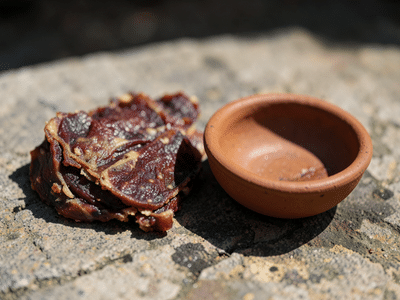 I present raw game meat and water, reminiscent of sustenance for native Indian dog breeds.
What Sighthound Biology Means for an OwnerAll three breeds share physiological traits that follow directly from their hunting function. Sighthounds as a group have a higher red blood cell to plasma ratio than other dogs, a biological adaptation for oxygen delivery during a sprint, which means standard blood panels can read as abnormal when they are not. Any vet unfamiliar with sighthound haematology should be told the breed before interpreting results.
Sighthounds also metabolise anaesthesia differently from other dogs because they carry very little body fat, and fat is where many anaesthetic agents are stored and slowly released. Barbiturate-based anaesthetics carry documented risk in sighthound breeds; a vet performing any procedure requiring sedation should be informed of the breed in advance. This is not a theoretical concern, it is a documented veterinary consideration for the entire sighthound family, including greyhounds, salukis, and their Indian relatives.
Exercise needs for all three breeds follow the same pattern: short, intense bursts rather than long sustained activity. A Rajapalayam, Mudhol, or Chippiparai does not need to run for two hours. It needs to sprint, recover, and rest. A large securely fenced space matters more than daily distance. The recall of a dog that has spotted something moving 400 metres away is, for practical purposes, non-existent until the chase is over.
India's three native sighthounds are not beginner dogs, and they are not dogs for small apartments. But they are dogs whose every characteristic has a direct explanation in what they were asked to do for centuries, and that history makes them, for the right owner, among the most coherent and honest animals you can share a home with.
The Rajapalayam: A Boar Hunter from Tamil Nadu's Palayam CourtsThe Rajapalayam takes its name from the town of Rajapalayam in the Virudhunagar district of Tamil Nadu, where the Nayakar rulers bred it specifically for wild boar hunting. Boar hunting is not a task for a tentative dog. A wild boar can weigh over 100 kilograms, carries tusks capable of opening a dog's flank, and does not flee in a straight line. The Rajapalayam was bred to close ground fast, engage at close quarters, and hold until the hunter arrived. This required a dog with genuine physical courage and a high pain threshold, not traits that soften with house training.
The breed is almost entirely white, with a pink nose and golden eyes, a combination that made it visually striking at court but also practically useful in low-light hunts, where a pale dog is easier to track through scrub. The coat is short and single-layered, suited to Tamil Nadu's heat. One documented biological trait distinguishes the Rajapalayam from most sighthounds: it tends toward a single-owner bond so exclusive that rehoming adult dogs is genuinely difficult. Breeders and the Kennel Club of India both note this temperament as a defining characteristic, not a flaw to be trained out.
The Indian Army has trialled Rajapalayams for border patrol in Kashmir, drawn by the breed's stamina, alertness, and low maintenance needs in difficult terrain. The breed is listed on the endangered list of Indian dog breeds, and the Indian government has issued commemorative postage stamps featuring it, a formal acknowledgment that the breed is a piece of living heritage.
The Mudhol Hound: The Deccan Plateau's Working SighthoundThe Mudhol Hound, also called the Caravan Hound or Pashmi when it carries a feathered coat variant, comes from the Mudhol taluk in Karnataka's Bagalkot district. The terrain it was bred for is flat, open, and dry, the kind of ground where a running dog can be seen from a long distance and where prey has nowhere to hide except speed. Mudhols were used by nomadic communities and by the former princely state of Mudhol, whose ruler gifted a pair to King George V in the early twentieth century, giving the breed one of its few documented entries into colonial-era records.
The Mudhol's skull is long and narrow, its muzzle tapered, and its ears pendant and mobile, a shape that reduces wind resistance and keeps the ear canal relatively protected during a flat-out run. Its gallop is the double-suspension gallop used by all sighthounds, where all four feet leave the ground twice per stride cycle: once when the legs are fully extended and once when they are fully tucked. At full speed, a Mudhol covers ground in a way that looks physically improbable. Studies on sighthound locomotion have measured this gait type as among the most mechanically efficient in the mammalian world.
Because the breed was used by communities that could not afford to feed a dog that did not work, the Mudhol is lean to a degree that alarms people unfamiliar with sighthounds. Visible hip bones and a pronounced tuck are normal for the breed at a healthy weight. Overfeeding a Mudhol to make it look less thin is one of the most common welfare mistakes owners make.
The Chippiparai: A Royal Guard Dog from the Banks of VaigaiThe Chippiparai takes its name from a town near Madurai in Tamil Nadu, close to the Vaigai river. It was kept by the royalty of Virudhunagar and Tirunelveli districts and was historically not sold, only gifted, which kept the breed within a narrow social stratum and slowed its spread. Where the Rajapalayam was a boar hunter and the Mudhol a coursing dog for open ground, the Chippiparai combined hunting with a territorial guarding role. It was expected to hunt small game, hare and deer, and to patrol the perimeters of estates.
The breed is lighter-boned than the Rajapalayam and comes in a wider colour range: silver-grey, fawn, reddish-brown, and black with tan points. The skin sits close to the muscle with almost no subcutaneous fat, which makes the breed's musculature visible in a way that is startling the first time you see a fit dog run. The Chippiparai's guarding instinct means it is more alert to strangers than the Mudhol and more territorial than either of the other two, a trait that requires consistent early socialisation if the dog is to live in a neighbourhood with foot traffic.
Like the other two breeds, the Chippiparai has low grooming needs, handles heat well, and has a robust immune profile compared to many imported breeds, likely a result of centuries of natural selection rather than closed studbook breeding. The breed is recognised by the Kennel Club of India.
Sighthounds also metabolise anaesthesia differently from other dogs because they carry very little body fat, and fat is where many anaesthetic agents are stored and slowly released. Barbiturate-based anaesthetics carry documented risk in sighthound breeds; a vet performing any procedure requiring sedation should be informed of the breed in advance. This is not a theoretical concern, it is a documented veterinary consideration for the entire sighthound family, including greyhounds, salukis, and their Indian relatives.
Exercise needs for all three breeds follow the same pattern: short, intense bursts rather than long sustained activity. A Rajapalayam, Mudhol, or Chippiparai does not need to run for two hours. It needs to sprint, recover, and rest. A large securely fenced space matters more than daily distance. The recall of a dog that has spotted something moving 400 metres away is, for practical purposes, non-existent until the chase is over.
India's three native sighthounds are not beginner dogs, and they are not dogs for small apartments. But they are dogs whose every characteristic has a direct explanation in what they were asked to do for centuries, and that history makes them, for the right owner, among the most coherent and honest animals you can share a home with.
Next Story