
Rare Indian Animals Found Nowhere Else in the World

India is famous for tigers, elephants and one-horned rhinoceroses, but some of its most fascinating animals are far less familiar. Scattered across its mountains, forests, grasslands and islands are species that evolved in isolation or became adapted to very specific environments. These animals are known as endemic species because their natural distribution is restricted to a particular geographical area. Some are found only in India, while others occur only within small parts of the country. Their existence is a reminder that India's wildlife story is much bigger than its best-known national parks.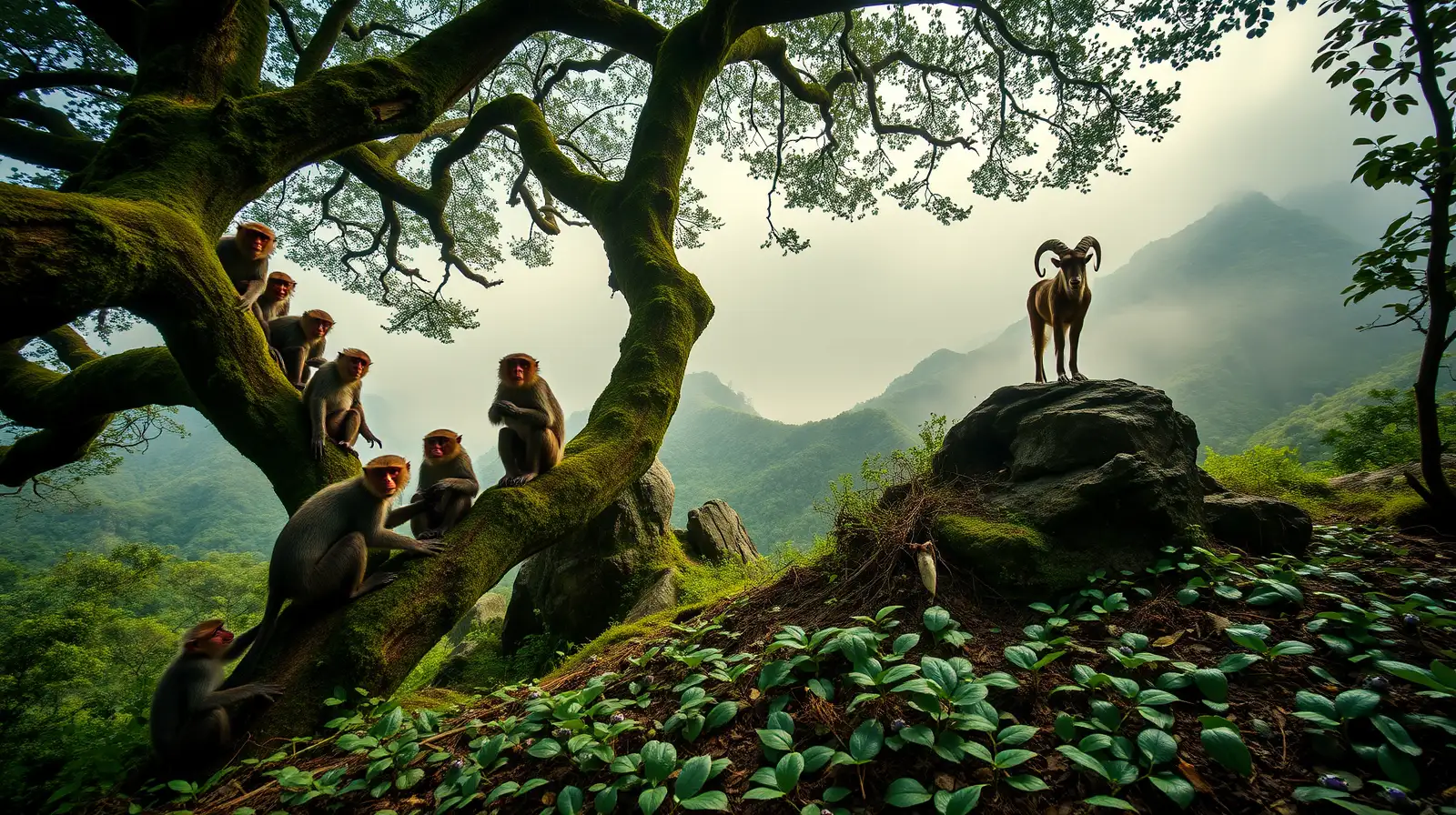
It is highly dependent on mature rainforest habitat and is rarely comfortable in heavily disturbed landscapes. Its restricted distribution makes the survival of its forest habitat particularly important.
Unlike some adaptable monkeys that have become common around human settlements, the lion-tailed macaque remains strongly associated with intact forests. This makes it one of India's most distinctive endemic mammals.
Its powerful build and sure-footed movement allow it to navigate steep terrain. The species is especially associated with the shola-grassland landscapes of the higher Western Ghats.
These mountain ecosystems are themselves highly specialised, which partly explains why animals adapted to them often have limited ranges.
Its unusual appearance and secretive lifestyle make it difficult to spot. Scientists believe its lineage is extremely ancient, with its evolutionary history linked to the breakup and movement of the ancient landmass that once connected parts of India and Madagascar.
For much of the year, this remarkable amphibian remains hidden beneath the soil, emerging briefly to reproduce.
The Nicobar megapode, for example, is found in the Nicobar Islands and has unusual nesting behaviour. Instead of relying on conventional incubation, megapodes use heat generated within large mounds of vegetation and soil to incubate their eggs.
That makes India's forests, mountains and islands more than wildlife attractions. They are irreplaceable homes for species that have evolved nowhere else.
The next time India's wildlife is discussed, the tiger may still dominate the conversation. But some of the country's most extraordinary animals are those that can quietly make a much smaller claim: this is the only place on Earth where we belong.
The Lion-Tailed Macaque Lives in a Narrow World
Deep inside the evergreen forests of the Western Ghats lives the lion-tailed macaque, a primate recognised by its distinctive silver-white mane and tufted tail.It is highly dependent on mature rainforest habitat and is rarely comfortable in heavily disturbed landscapes. Its restricted distribution makes the survival of its forest habitat particularly important.
Unlike some adaptable monkeys that have become common around human settlements, the lion-tailed macaque remains strongly associated with intact forests. This makes it one of India's most distinctive endemic mammals.
The Nilgiri Tahr Belongs to the High Mountains
The Nilgiri tahr is another animal that cannot simply be found anywhere in the world. It is native to the southern Western Ghats, particularly high-altitude grasslands and rocky mountain slopes.Its powerful build and sure-footed movement allow it to navigate steep terrain. The species is especially associated with the shola-grassland landscapes of the higher Western Ghats.
These mountain ecosystems are themselves highly specialised, which partly explains why animals adapted to them often have limited ranges.
The Purple Frog Has an Extraordinary Story
Perhaps one of India's strangest endemic animals is the purple frog. Found in the Western Ghats, it spends most of its life underground and emerges mainly during the monsoon breeding season.Its unusual appearance and secretive lifestyle make it difficult to spot. Scientists believe its lineage is extremely ancient, with its evolutionary history linked to the breakup and movement of the ancient landmass that once connected parts of India and Madagascar.
You may also like
- Raksha Bandhan 2026: Why August 28 Matters More Than August 27 2026
- AI is changing more than technology: Why the TOI AI Quotient Awards 2026 are also about the leaders behind the change
- The fire that witnessed Shiva and Parvati's wedding still burns in Uttarakhand: Couples are now choosing this sacred temple for getting married in place of fancy hotels
- When 'I'm fine' means anything but fine
- Why Mild Low Platelets Are Common in Late Pregnancy
For much of the year, this remarkable amphibian remains hidden beneath the soil, emerging briefly to reproduce.
Island Life Created More Unique Species
India's islands add another dimension to its endemic wildlife. The Andaman and Nicobar Islands have developed distinctive species because island ecosystems can remain geographically isolated for long periods.The Nicobar megapode, for example, is found in the Nicobar Islands and has unusual nesting behaviour. Instead of relying on conventional incubation, megapodes use heat generated within large mounds of vegetation and soil to incubate their eggs.
Why These Animals Matter
Endemic animals are particularly vulnerable because their entire global population may depend on one region. If a habitat disappears locally, there may be nowhere else in the world where the species can survive naturally.That makes India's forests, mountains and islands more than wildlife attractions. They are irreplaceable homes for species that have evolved nowhere else.
The next time India's wildlife is discussed, the tiger may still dominate the conversation. But some of the country's most extraordinary animals are those that can quietly make a much smaller claim: this is the only place on Earth where we belong.






Loving Newspoint? Download the app now
