
Pigeons Over the Rooftops: Old Delhi's Kabootarbaazi Tradition

Stand on any roof in the old city and you can still catch, on a quiet morning, the flash of wings banking against the sky. The pigeons are still there. What is mostly gone is the man who put them there, the kabootarbaaz, the keeper, the one who could read a flock the way a sailor reads a current.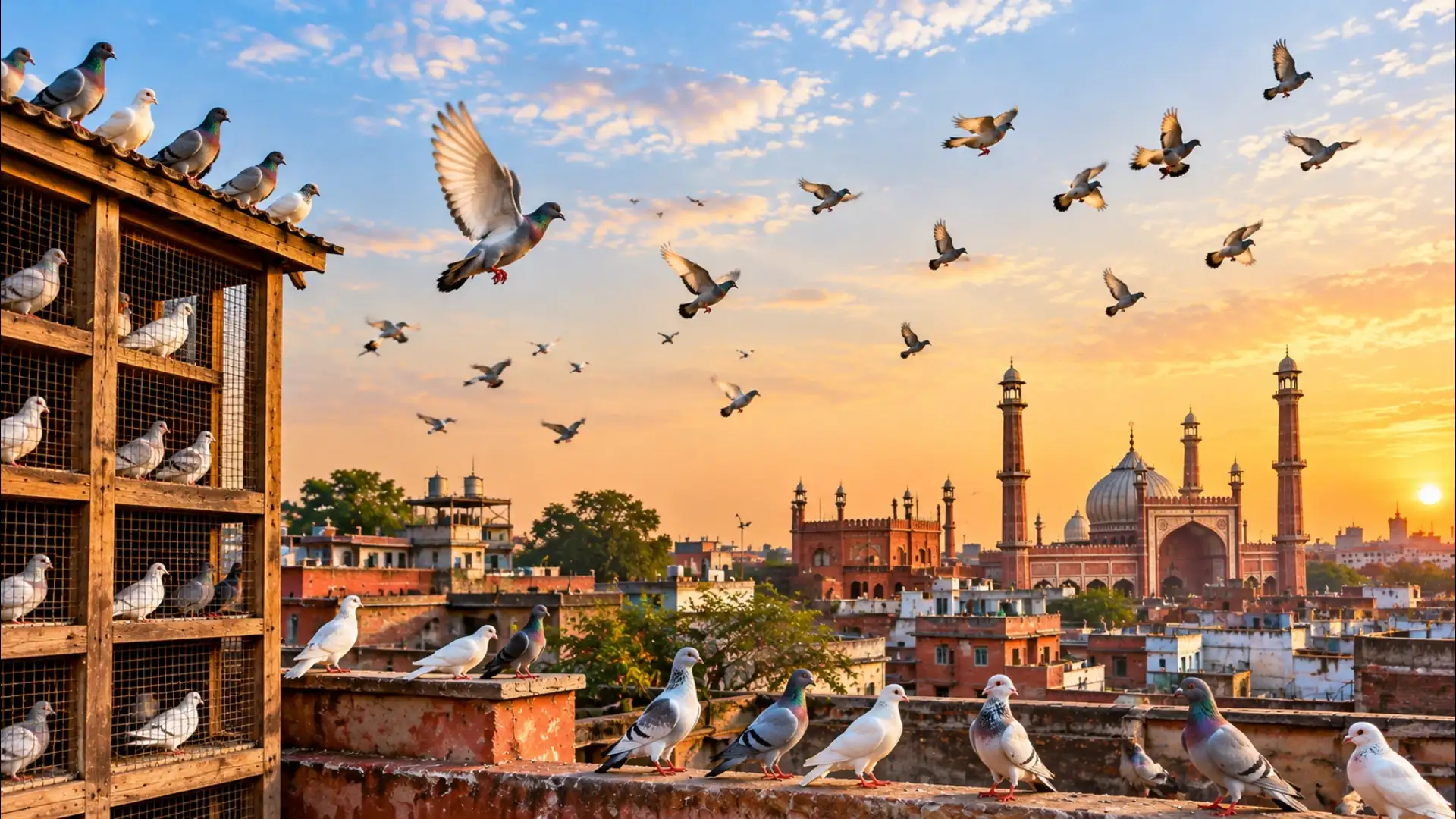
Kabootarbaazi, the keeping and competitive flying of pigeons, was once woven into the social fabric of Shahjahanabad, the walled city that Shah Jahan built in the seventeenth century and that Delhi still calls its old heart. It was not unique to Delhi; Lucknow, Lahore, Hyderabad, and Agra all had their traditions. But in the narrow lanes between the Jama Masjid and the Red Fort, on the packed terraces of Chandni Chowk and Ballimaran, it found a particular intensity.
The pigeons themselves were carefully categorised. The Shirazi, the Kabuli, the Lakkha, each breed had a reputation, a price, and a community of admirers. A good Lakkha, known for its endurance and its ability to fly in tight, hypnotic circles for hours without descending, was a prized possession. Men saved for months for a single bird. The loss of a favourite to a rival's terrace was a genuine grief.
The terrace was the stage. A serious kabootarbaaz built a wooden loft, a kabootarkhana, on the highest accessible point of his roof. The loft had its own hierarchy: the breeding pairs in the back, the trained flyers in front, the young birds learning the sky in a separate pen. The keeper's day began before dawn, when the birds were fed and the loft cleaned, and it ended at dusk, when the flock came home.
The craft had its own vocabulary, its own etiquette, and its own economy. Pigeon markets, the most famous in Delhi was in the lanes near the Jama Masjid, ran on weekend mornings. Breeders, trainers, and buyers argued over bloodlines and wing-shape the way horsemen argued over pedigree. A bird's history mattered: who had trained its father, which flock it had flown in, how many seasons it had survived.
There was a social breadth to it that cut across the usual lines. The Mughal court had its pigeon keepers, the sport was patronised by emperors, and pigeons served as messengers across the subcontinent long before the telegraph. But the terrace version that survived into the twentieth century belonged equally to the cloth merchant, the small trader, the young man with nothing but a rooftop and an afternoon. It was one of the few public pleasures that required no wealth to enter, only knowledge and patience.
That market has thinned to almost nothing. A few sellers still appear, mostly older men, with a handful of birds. The young men who might have been their apprentices are elsewhere. But the lanes themselves remain, the same narrow corridors of sandstone and plaster, the same angle of morning light falling between the buildings, and on some rooftops, a loft still stands.
There were also legal pressures. Pigeon keeping in dense urban areas attracted complaints about hygiene and droppings. In some periods, local authorities discouraged it. The craft had no institution behind it, no federation, no formal school, no written manual. It was transmitted from keeper to keeper, father to son, neighbour to neighbour. When the chain broke, the knowledge went with it.
What remains is carried by a small number of older keepers in the walled city and in similar neighbourhoods in Lucknow and Hyderabad, and by the memory of people who grew up watching the sky from their rooftops. The flock still circles. The man who reads it is harder to find.
Kabootarbaazi was never really about pigeons. It was about the roof as a commons, the sky as a shared arena, and the particular pleasure of mastering something that cannot be hurried. The birds came home when they were ready, and the keeper had to know the difference between a flock that was drifting and a flock that had decided. That distinction, between drift and decision, was what the craft spent a lifetime teaching.
Kabootarbaazi, the keeping and competitive flying of pigeons, was once woven into the social fabric of Shahjahanabad, the walled city that Shah Jahan built in the seventeenth century and that Delhi still calls its old heart. It was not unique to Delhi; Lucknow, Lahore, Hyderabad, and Agra all had their traditions. But in the narrow lanes between the Jama Masjid and the Red Fort, on the packed terraces of Chandni Chowk and Ballimaran, it found a particular intensity.
What the Craft Actually Was
A kabootarbaaz did not simply keep pigeons. He trained them, bred them for specific qualities, the high flyer, the tumbler, the one with the stamina to circle for hours, and he competed. The central contest was called kabootarbaazi or, in the competitive form, kaaj. One trainer would release his flock; a rival would release his. The goal was to lure birds from the opposing flock into your own, drawing them down with whistles, hand signals, and the movement of a white flag or cloth called a jhanda. A bird that landed on a rival's terrace was, by the rules of the game, lost, a prize for the other man. The best trainers could read the wind, anticipate a flock's drift, and call individual birds back by name.The pigeons themselves were carefully categorised. The Shirazi, the Kabuli, the Lakkha, each breed had a reputation, a price, and a community of admirers. A good Lakkha, known for its endurance and its ability to fly in tight, hypnotic circles for hours without descending, was a prized possession. Men saved for months for a single bird. The loss of a favourite to a rival's terrace was a genuine grief.
The terrace was the stage. A serious kabootarbaaz built a wooden loft, a kabootarkhana, on the highest accessible point of his roof. The loft had its own hierarchy: the breeding pairs in the back, the trained flyers in front, the young birds learning the sky in a separate pen. The keeper's day began before dawn, when the birds were fed and the loft cleaned, and it ended at dusk, when the flock came home.
The Social World It Created
Kabootarbaazi was never a solitary pursuit. The terraces of the old city were a horizontal neighbourhood above the vertical one below. A man on his roof could see five other rooftops and their keepers. Rivalries formed and dissolved across lanes too narrow for a cart. Alliances were struck, two keepers coordinating to bring down a third's flock. Boys ran messages between rooftops, carrying news of a good bird for sale or a challenge issued.The craft had its own vocabulary, its own etiquette, and its own economy. Pigeon markets, the most famous in Delhi was in the lanes near the Jama Masjid, ran on weekend mornings. Breeders, trainers, and buyers argued over bloodlines and wing-shape the way horsemen argued over pedigree. A bird's history mattered: who had trained its father, which flock it had flown in, how many seasons it had survived.
There was a social breadth to it that cut across the usual lines. The Mughal court had its pigeon keepers, the sport was patronised by emperors, and pigeons served as messengers across the subcontinent long before the telegraph. But the terrace version that survived into the twentieth century belonged equally to the cloth merchant, the small trader, the young man with nothing but a rooftop and an afternoon. It was one of the few public pleasures that required no wealth to enter, only knowledge and patience.
One Real Place: The Lanes Near Jama Masjid
The pigeon market that once gathered on the lanes south of the Jama Masjid on Friday mornings was the nerve centre of Delhi's kabootarbaazi world. Sellers would arrive with birds in wicker cages, stacked on bicycles or balanced on heads. The transactions were quick, the arguments long. A buyer would hold a bird, feel the weight of it, spread the wing to check the flight feathers, look at the eye. The price was never the first number spoken.That market has thinned to almost nothing. A few sellers still appear, mostly older men, with a handful of birds. The young men who might have been their apprentices are elsewhere. But the lanes themselves remain, the same narrow corridors of sandstone and plaster, the same angle of morning light falling between the buildings, and on some rooftops, a loft still stands.
Why It Faded
No single thing ended kabootarbaazi in Delhi. The pressures accumulated. The old havelis of Shahjahanabad were subdivided across generations until the rooftops that once belonged to one household were parcelled among several families, none with enough uncontested space for a loft. Urban density pushed upward; water tanks, mobile towers, and added floors ate the open terraces. The cost of keeping a serious flock rose as the city around it changed.There were also legal pressures. Pigeon keeping in dense urban areas attracted complaints about hygiene and droppings. In some periods, local authorities discouraged it. The craft had no institution behind it, no federation, no formal school, no written manual. It was transmitted from keeper to keeper, father to son, neighbour to neighbour. When the chain broke, the knowledge went with it.
What remains is carried by a small number of older keepers in the walled city and in similar neighbourhoods in Lucknow and Hyderabad, and by the memory of people who grew up watching the sky from their rooftops. The flock still circles. The man who reads it is harder to find.
Kabootarbaazi was never really about pigeons. It was about the roof as a commons, the sky as a shared arena, and the particular pleasure of mastering something that cannot be hurried. The birds came home when they were ready, and the keeper had to know the difference between a flock that was drifting and a flock that had decided. That distinction, between drift and decision, was what the craft spent a lifetime teaching.
Next Story