
S Radhakrishnan's Prescription For An Ethical Education System


The massive scale of examination paper leaks in high-profile competitive tests has evolved from an administrative failure into a national tragedy. Months of gruelling student preparation are instantly erased by organised syndicates, throwing academic integrity into chaos. For many young aspirants, the crushing weight of shattered dreams, combined with intense societal pressure, has triggered severe clinical depression, driving several to suicide.
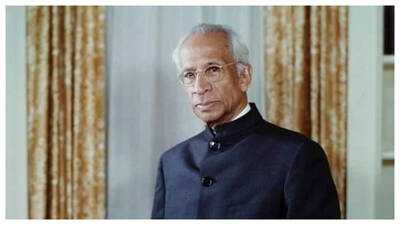
This systemic rot exposes a profound moral vacuum at the heart of our modern educational structure. While governments rush to enforce stricter laws and severe criminal penalties, structural enforcement alone cannot heal this broken system. Laws regulate behaviour through fear, but they cannot manufacture an internal conscience. To permanently eradicate this corruption, we must move past cosmetic legal fixes and restructure education using the philosophical vision of Sarvepalli Radhakrishnan who firmly believed that “true religion is not a matter of belief, but of behaviour; true education must awaken the inner spiritual conscience of man."
Radhakrishnan, an iconic educator and philosopher who chaired the historic University Education Commission of 1948–49, argued that true education is not the commercial accumulation of facts or the chasing of degrees and certificates. Instead, he defined it as the "awakening of the soul" and the cultivation of inner integrity (Seela). The black market for leaked papers thrives because modern society views education strictly as a commercial transaction—a high-stakes game where securing a degree or a government post justifies any corrupt means. Radhakrishnan’s educational views demand an immediate shift from this hyper-competitive, degree-centric obsession to value-centric learning. He appropriately warned us of the dangers of a purely materialistic education: “Education must be humane in order to be complete; it must encompass not only intellectual training but also heart refinement.”
When schools and universities prioritise character over rote learning, the market demand for leaked materials naturally collapses. Furthermore, Radhakrishnan launched direct critiques against the tyranny of single-day, high-stakes examinations. He observed that testing memory rather than understanding creates a toxic environment of panic. This absolute reliance on a single, high-pressure test is precisely what fuels the desperation behind paper leaks and student suicides. His solution was a structural reform: replacing high-stress terminal exams with continuous evaluation . Assessing students through holistic understanding, creative critical thinking, and year-round practical applications eliminates the "all-or-nothing" panic, instantly destroying the illicit value of stolen question keys.
Beyond structural design, Radhakrishnan’s profound spiritual ideology, rooted in universal ethics, offers an internal shield against corruption. He advocated for a spiritual democracy where every human life is respected as an expression of the divine. Integrating secular moral education and mental resilience into classrooms allows students to find their core self-worth, making them resilient to setbacks. At the same time, teachers must be elevated to moral anchors.
Radhakrishnan famously believed that teachers should be the finest minds in the country and must lead not merely by instruction, but by moral example. An inspiring teacher-student bond fosters academic honesty, steering young minds away from deceptive shortcuts. Eradicating paper leaks demands a comprehensive approach. Strict security protocols and administrative laws are necessary to punish criminals, but they treat only the external symptoms of deeper moral decay. The long-term cure lies in a complete spiritual and structural rebirth of our educational institutions.
By embracing Radhakrishnan's timeless ideals—reforming toxic examinations, restoring the moral authority of teachers, and prioritising inner character over degrees—we can build an honest, compassionate educational ecosystem that protects our students' futures, mental health, and lives.
Authored by: Anup Taneja
The writer is senior academic fellow, ICHR
This systemic rot exposes a profound moral vacuum at the heart of our modern educational structure. While governments rush to enforce stricter laws and severe criminal penalties, structural enforcement alone cannot heal this broken system. Laws regulate behaviour through fear, but they cannot manufacture an internal conscience. To permanently eradicate this corruption, we must move past cosmetic legal fixes and restructure education using the philosophical vision of Sarvepalli Radhakrishnan who firmly believed that “true religion is not a matter of belief, but of behaviour; true education must awaken the inner spiritual conscience of man."
Radhakrishnan, an iconic educator and philosopher who chaired the historic University Education Commission of 1948–49, argued that true education is not the commercial accumulation of facts or the chasing of degrees and certificates. Instead, he defined it as the "awakening of the soul" and the cultivation of inner integrity (Seela). The black market for leaked papers thrives because modern society views education strictly as a commercial transaction—a high-stakes game where securing a degree or a government post justifies any corrupt means. Radhakrishnan’s educational views demand an immediate shift from this hyper-competitive, degree-centric obsession to value-centric learning. He appropriately warned us of the dangers of a purely materialistic education: “Education must be humane in order to be complete; it must encompass not only intellectual training but also heart refinement.”
When schools and universities prioritise character over rote learning, the market demand for leaked materials naturally collapses. Furthermore, Radhakrishnan launched direct critiques against the tyranny of single-day, high-stakes examinations. He observed that testing memory rather than understanding creates a toxic environment of panic. This absolute reliance on a single, high-pressure test is precisely what fuels the desperation behind paper leaks and student suicides. His solution was a structural reform: replacing high-stress terminal exams with continuous evaluation . Assessing students through holistic understanding, creative critical thinking, and year-round practical applications eliminates the "all-or-nothing" panic, instantly destroying the illicit value of stolen question keys.
Beyond structural design, Radhakrishnan’s profound spiritual ideology, rooted in universal ethics, offers an internal shield against corruption. He advocated for a spiritual democracy where every human life is respected as an expression of the divine. Integrating secular moral education and mental resilience into classrooms allows students to find their core self-worth, making them resilient to setbacks. At the same time, teachers must be elevated to moral anchors.
Radhakrishnan famously believed that teachers should be the finest minds in the country and must lead not merely by instruction, but by moral example. An inspiring teacher-student bond fosters academic honesty, steering young minds away from deceptive shortcuts. Eradicating paper leaks demands a comprehensive approach. Strict security protocols and administrative laws are necessary to punish criminals, but they treat only the external symptoms of deeper moral decay. The long-term cure lies in a complete spiritual and structural rebirth of our educational institutions.
By embracing Radhakrishnan's timeless ideals—reforming toxic examinations, restoring the moral authority of teachers, and prioritising inner character over degrees—we can build an honest, compassionate educational ecosystem that protects our students' futures, mental health, and lives.
Authored by: Anup Taneja
The writer is senior academic fellow, ICHR
Next Story