
What Plant Roots Really Do Underground: 5 Hidden Secrets Beneath Your Garden

Beneath the surface of your garden lies a continuous search for survival. While stems and leaves focus on capturing sunlight, the underground system works around the clock to anchor the entire organism and absorb essential nutrients. Microscopic root hairs branch out into microscopic spaces between soil particles, searching for dissolved minerals like nitrogen, phosphorus and potassium. These tiny structures dramatically increase surface area, allowing the plant to draw up moisture against gravity. Without this constant subterranean activity, foliage would quickly wither, regardless of how much sunlight shines from above.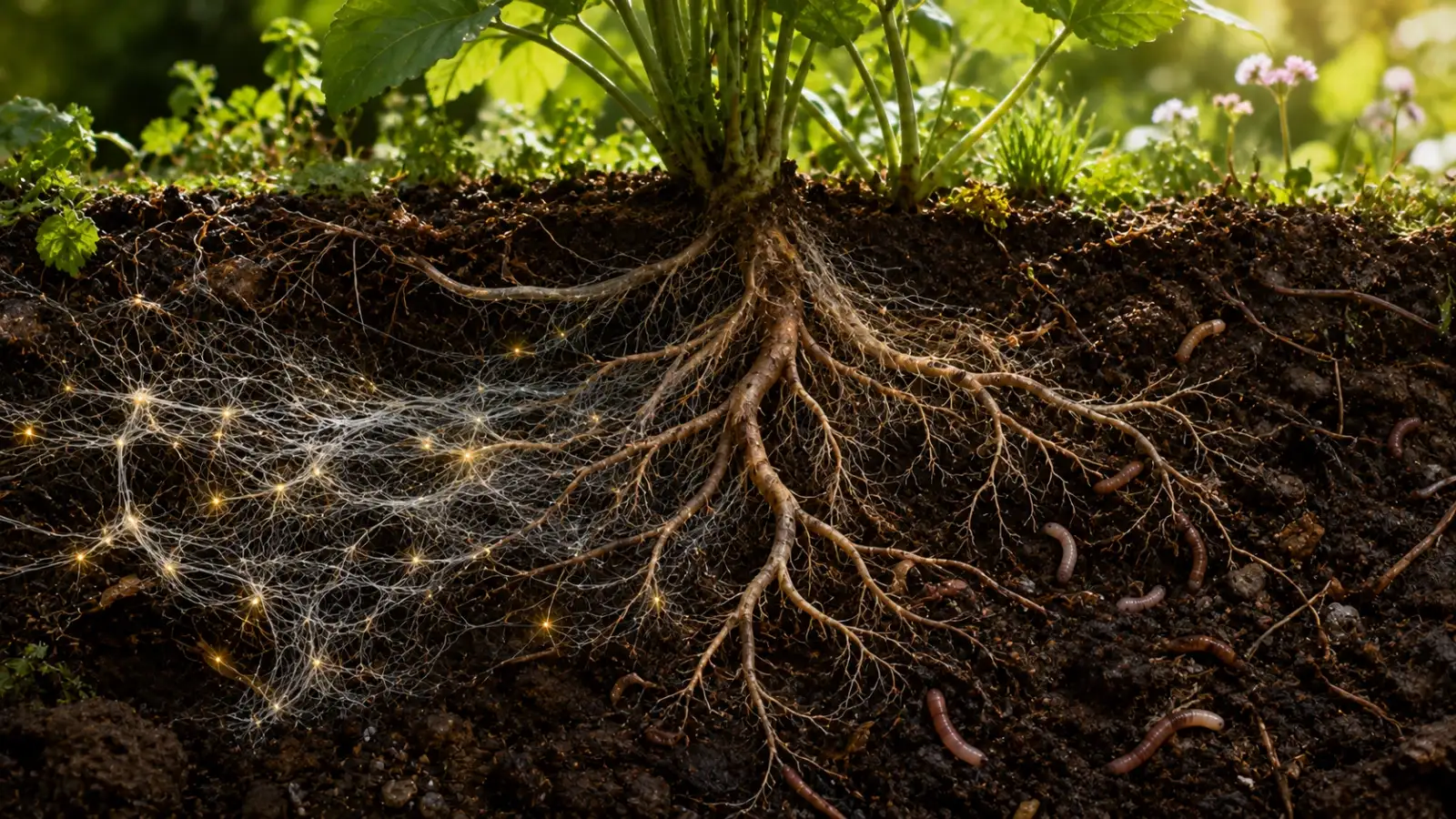
Connecting to the Underground Fungal Network
One of the most fascinating aspects of subterranean life involves partnerships with beneficial soil fungi. Mycorrhizal fungi attach directly to root tissue, forming vast fungal threads that extend much further than the plant could manage on its own. In exchange for carbon sugars produced through photosynthesis above ground, these underground partners deliver hard-to-reach minerals and extra water directly back to the host system. This mutually beneficial exchange turns the soil into a cooperative ecosystem, helping plants survive dry spells and poor nutrient conditions far better than they ever could alone.
Sending Chemical Signals to Neighbouring Plants
Far from being silent structures, underground networks constantly release complex chemical compounds into the surrounding earth. These chemical signals allow neighbouring species to communicate about changing conditions nearby. When an insect attacks an individual above ground, its underground system releases stress signals into the soil. Nearby plants detect these warning signals through their own root tips and begin producing defensive chemicals before the pests even arrive. This natural communication system helps botanical communities protect themselves cooperatively against shared environmental threats.
Exuding Organic Matter to Feed Soil Biology
Roots are not just consumers of nutrients; they actively shape the soil environment around them by exuding rich organic compounds. Sugars, amino acids and enzymes seep from root tips directly into the surrounding earth, creating a nutrient-rich zone known as the rhizosphere. This specific zone attracts millions of beneficial bacteria, earthworms and microorganisms that break down organic matter into forms plants can easily absorb. By feeding these helpful organisms, the root system creates its own self-sustaining habitat that keeps the surrounding soil loose, aerated and fertile over time.
Restructuring Soil and Preventing Erosion
As subterranean structures push through dense layers of earth, they physically shape the landscape in remarkable ways. Strong primary roots break up hard clay, creating small natural channels that allow rainwater to soak deep into the earth rather than running off the surface. Meanwhile, fine fibrous systems act like living nets, holding loose soil particles together and preventing severe erosion during heavy downpours. By continuously expanding, decaying and reforming, these underground systems create healthy soil structures that support diverse insect life, earthworms and future generations of growing plants.
Connecting to the Underground Fungal Network
One of the most fascinating aspects of subterranean life involves partnerships with beneficial soil fungi. Mycorrhizal fungi attach directly to root tissue, forming vast fungal threads that extend much further than the plant could manage on its own. In exchange for carbon sugars produced through photosynthesis above ground, these underground partners deliver hard-to-reach minerals and extra water directly back to the host system. This mutually beneficial exchange turns the soil into a cooperative ecosystem, helping plants survive dry spells and poor nutrient conditions far better than they ever could alone.
You may also like
- Peanuts With or Without Skin: Which Is Healthier and What Is the Best Way to Eat Them?
- 'This is my tiny house, though it looks straight out of a postcard, I live here': Woman reveals the issues she is facing living in a 'picture-perfect' house
- Why do Kodagu brides wear their saree backwards? The fascinating story behind their iconic drape
- Your child seems distracted while studying? These overlooked vision problems could be making reading and learning harder
- Why Zurich deserves more than a layover
Sending Chemical Signals to Neighbouring Plants
Far from being silent structures, underground networks constantly release complex chemical compounds into the surrounding earth. These chemical signals allow neighbouring species to communicate about changing conditions nearby. When an insect attacks an individual above ground, its underground system releases stress signals into the soil. Nearby plants detect these warning signals through their own root tips and begin producing defensive chemicals before the pests even arrive. This natural communication system helps botanical communities protect themselves cooperatively against shared environmental threats.
Exuding Organic Matter to Feed Soil Biology
Roots are not just consumers of nutrients; they actively shape the soil environment around them by exuding rich organic compounds. Sugars, amino acids and enzymes seep from root tips directly into the surrounding earth, creating a nutrient-rich zone known as the rhizosphere. This specific zone attracts millions of beneficial bacteria, earthworms and microorganisms that break down organic matter into forms plants can easily absorb. By feeding these helpful organisms, the root system creates its own self-sustaining habitat that keeps the surrounding soil loose, aerated and fertile over time.
Restructuring Soil and Preventing Erosion
As subterranean structures push through dense layers of earth, they physically shape the landscape in remarkable ways. Strong primary roots break up hard clay, creating small natural channels that allow rainwater to soak deep into the earth rather than running off the surface. Meanwhile, fine fibrous systems act like living nets, holding loose soil particles together and preventing severe erosion during heavy downpours. By continuously expanding, decaying and reforming, these underground systems create healthy soil structures that support diverse insect life, earthworms and future generations of growing plants.






Loving Newspoint? Download the app now
