
How Machu Picchu's Stone Walls Survive Earthquakes Without Mortar

Machu Picchu has survived dozens of earthquakes that flattened colonial Spanish buildings in the valleys below it. The Inca citadel sits at roughly 2,430 metres above sea level in the Andes, a mountain range that sits directly on the Pacific Ring of Fire. The ground beneath it shifts regularly. The walls do not fall. The reason is a construction method so precise that it has become a subject of serious study in earthquake engineering.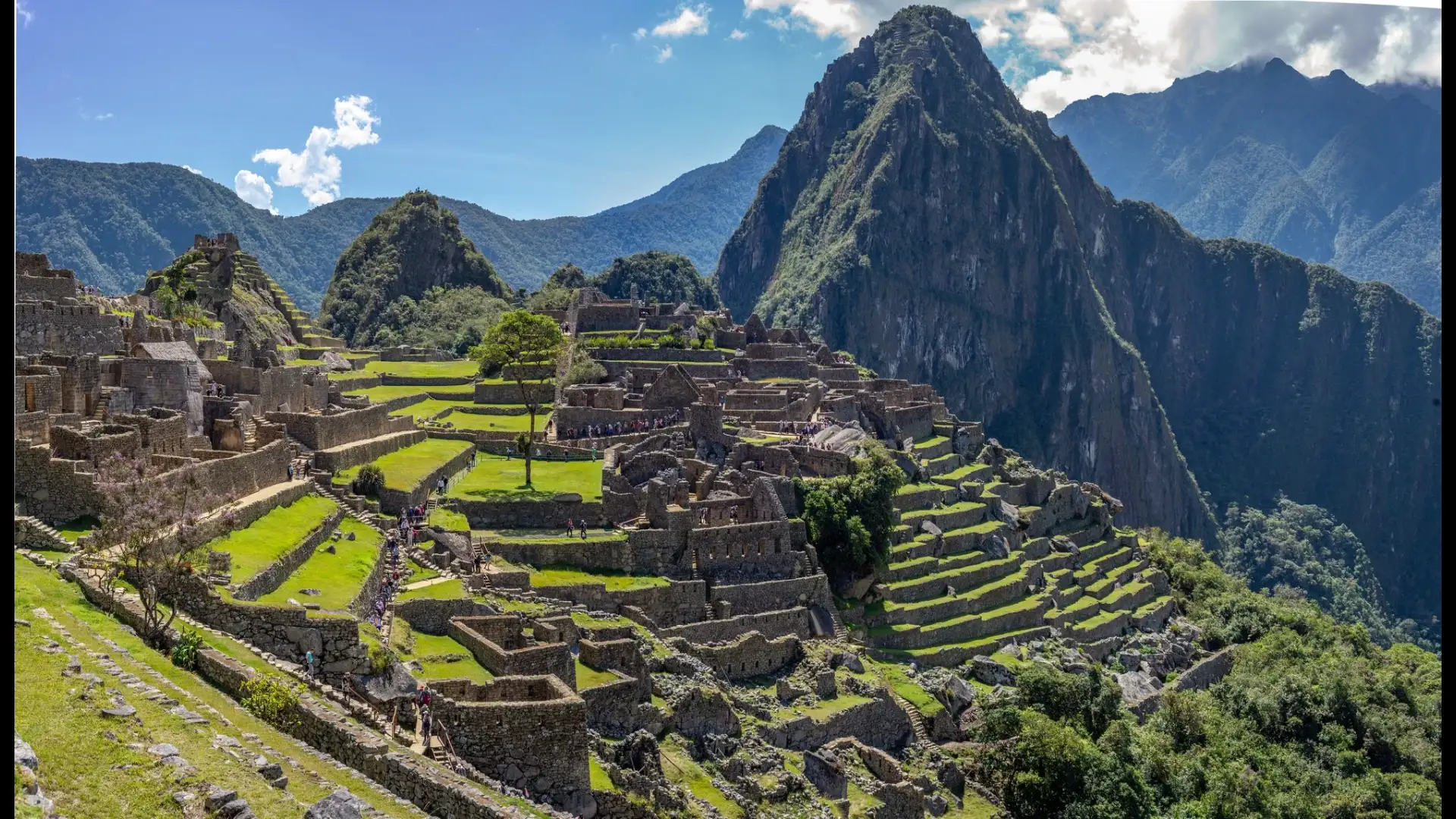
The Technique Is Called Ashlar
The Inca cut their stones so that each face fits tightly against the next without any binding agent between them. This method is called ashlar masonry. What makes the Inca version unusual is the degree of fit, surfaces ground against each other until they lock, with joints so tight that a knife blade cannot pass between them in the best-preserved sections. The stones are not identical rectangles stacked in rows. Each one is shaped to its specific neighbour, which means no two joints in a wall align vertically. That offset pattern is the same principle modern engineers call running bond, and it is one of the basic rules of stable wall construction.Why No Mortar Is Actually the Point
Mortar-bound walls behave as a single rigid unit. When seismic energy travels through a rigid structure, the structure either absorbs it or cracks along its weakest line, which is usually the mortar joint. Inca walls are not rigid. Each stone can shift slightly against its neighbour and then settle back. Engineers who have studied the walls describe this as a kind of controlled flexibility, the wall dances with the earthquake rather than resisting it. The energy dissipates through thousands of tiny micro-movements across the entire surface rather than concentrating at one point until something breaks. The absence of mortar is not a limitation of Inca technology. It is the technology.The Stones Are Shaped to Work With Gravity
Look closely at an Inca wall and the stones appear to lean slightly inward toward the top. This is not an optical illusion. The walls are built with a deliberate inward tilt called batter, typically a few degrees from vertical. A battered wall has a lower centre of gravity than a perfectly vertical one. When shaking pushes it, it wants to return to plumb rather than continuing to tip. The stones are also slightly trapezoidal, wider at the base than at the top, which means gravity itself holds each stone in its socket. The heavier the stone, the more securely it sits.The Ground Was Engineered Too
The walls are only part of the system. Beneath Machu Picchu, archaeologists and engineers have found an extensive drainage network, channels, terraces, and sub-surface rubble fills, that prevents water from saturating the soil. Saturated soil amplifies seismic waves and can liquefy under shaking. By keeping the ground well-drained, the Inca reduced the energy the foundations ever had to handle. Estimates from hydrological studies suggest that roughly sixty percent of the construction effort at Machu Picchu went into this invisible infrastructure below ground level, not into the walls and buildings visitors see.What Modern Engineering Took From It
The principle of base isolation, allowing a structure to move independently of the ground beneath it, is now standard in earthquake-resistant design for hospitals, bridges, and government buildings. The Inca arrived at a version of this principle through empirical observation across generations of building in a geologically violent landscape. They had no seismographs and no calculus. They had centuries of watching what fell and what stood, and they built accordingly. The walls of Machu Picchu are not a curiosity from the past. They are a working demonstration of a structural idea that took the rest of the world until the twentieth century to formalise.Next Story