
Simple Lifestyle Changes To Stay Germ-Free And Healthy During The Monsoon

The monsoon brings relief from the heat, but the increased moisture and frequent waterlogging can make everyday hygiene more difficult. Wet surroundings, damp clothes and contaminated water can create more opportunities for people to come into contact with unwanted germs.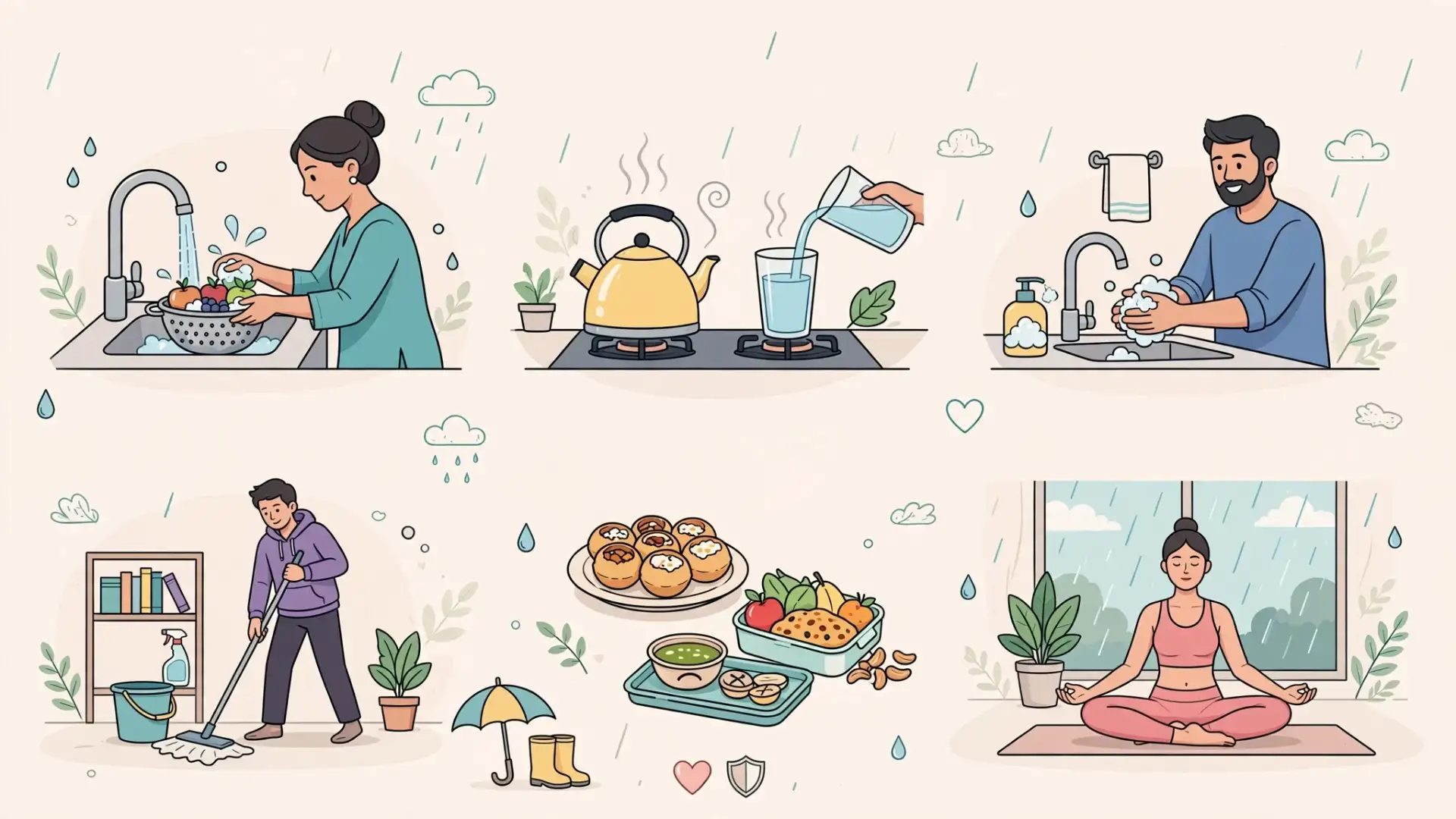
Staying healthy during the rainy season does not require complicated routines. Small, consistent changes to daily habits can help reduce exposure to germs and keep the home environment cleaner. According to health experts, good hygiene, safe food practices and careful handling of drinking water remain important during periods of heavy rain.
Keep a hand sanitiser available when soap and water are not immediately accessible. However, visibly dirty or greasy hands should be washed properly with soap and water rather than relying only on sanitiser.
Use a reliable source of drinking water and follow local guidance if there are concerns about contamination. Avoid consuming food that has been left exposed for long periods, particularly in unhygienic surroundings.
Do not allow stagnant water to accumulate around the house. Apart from hygiene concerns, standing water can provide breeding sites for mosquitoes, making it an important part of rainy season health precautions.
Pay particular attention to towels, socks and other items that may remain damp for long periods. Wash and dry them properly instead of allowing them to stay moist indoors.
Industry observers note that hygiene works best as a routine rather than an occasional deep-cleaning exercise. A few minutes spent maintaining clean hands, dry surroundings and safe food and water habits can make everyday monsoon hygiene easier to manage.
If someone develops persistent symptoms such as fever, vomiting, diarrhoea or significant weakness, seek appropriate medical advice rather than relying solely on home remedies.
Image Courtesy: Meta AI
Staying healthy during the rainy season does not require complicated routines. Small, consistent changes to daily habits can help reduce exposure to germs and keep the home environment cleaner. According to health experts, good hygiene, safe food practices and careful handling of drinking water remain important during periods of heavy rain.
Make Hand Hygiene A Daily Priority
Regular handwashing is one of the simplest ways to maintain good monsoon hygiene . Wash your hands with soap and clean water before eating or preparing food, after using the toilet and after returning home from outside.Keep a hand sanitiser available when soap and water are not immediately accessible. However, visibly dirty or greasy hands should be washed properly with soap and water rather than relying only on sanitiser.
Be Careful With Food And Drinking Water
Rainy weather can make food safety particularly important. Wash fruits and vegetables thoroughly before eating or cooking, and make sure meals are cooked properly and stored appropriately.You may also like
- Want to Own Your Dream House? These 5 Zodiac Signs May Have Stars in Their Favour
- Is the Mediterranean Diet Good for Fertility? Benefits, Foods to Eat and Meal Tips
- UAE's first AI-enabled toy marketplace wants to solve parents' birthday gifting dilemma
- Does your toddler grind their teeth while sleeping? Here's why it happens and when parents should see a doctor
- This state spends 95% of its total earnings on salaries and pensions; its coffers are running dry
Use a reliable source of drinking water and follow local guidance if there are concerns about contamination. Avoid consuming food that has been left exposed for long periods, particularly in unhygienic surroundings.
Keep Your Home Dry And Clean
Moisture can make homes feel damp and uncomfortable. Check areas such as bathrooms, balconies, kitchens and corners where water may collect, and clean up spills or leaks promptly.Do not allow stagnant water to accumulate around the house. Apart from hygiene concerns, standing water can provide breeding sites for mosquitoes, making it an important part of rainy season health precautions.
Change Out Of Damp Clothes
Staying in wet clothes for extended periods can be uncomfortable and may irritate the skin. Change into clean, dry clothes after getting wet in the rain and dry footwear thoroughly before wearing it again.Pay particular attention to towels, socks and other items that may remain damp for long periods. Wash and dry them properly instead of allowing them to stay moist indoors.
Keep Frequently Touched Surfaces Clean
Door handles, switches, taps, mobile phones and frequently used household surfaces are touched repeatedly throughout the day. Cleaning them regularly can help maintain better hygiene around the home.Industry observers note that hygiene works best as a routine rather than an occasional deep-cleaning exercise. A few minutes spent maintaining clean hands, dry surroundings and safe food and water habits can make everyday monsoon hygiene easier to manage.
If someone develops persistent symptoms such as fever, vomiting, diarrhoea or significant weakness, seek appropriate medical advice rather than relying solely on home remedies.
Image Courtesy: Meta AI






Loving Newspoint? Download the app now
