
Easy Rangoli Designs for Beginners: Simple Patterns Anyone Can Create at Home

Rangoli is a traditional Indian art form that adds colour and warmth to homes during festivals, family gatherings and special occasions. From small floral patterns near the entrance to colourful geometric designs in the courtyard, rangoli can make any space feel more welcoming. If you have never made one before, you do not need artistic experience or expensive supplies to get started. A simple pattern, a little patience and a few basic materials are enough to create an attractive design. With the right approach, beginners can learn to make neat rangoli patterns at home and gradually experiment with more detailed styles.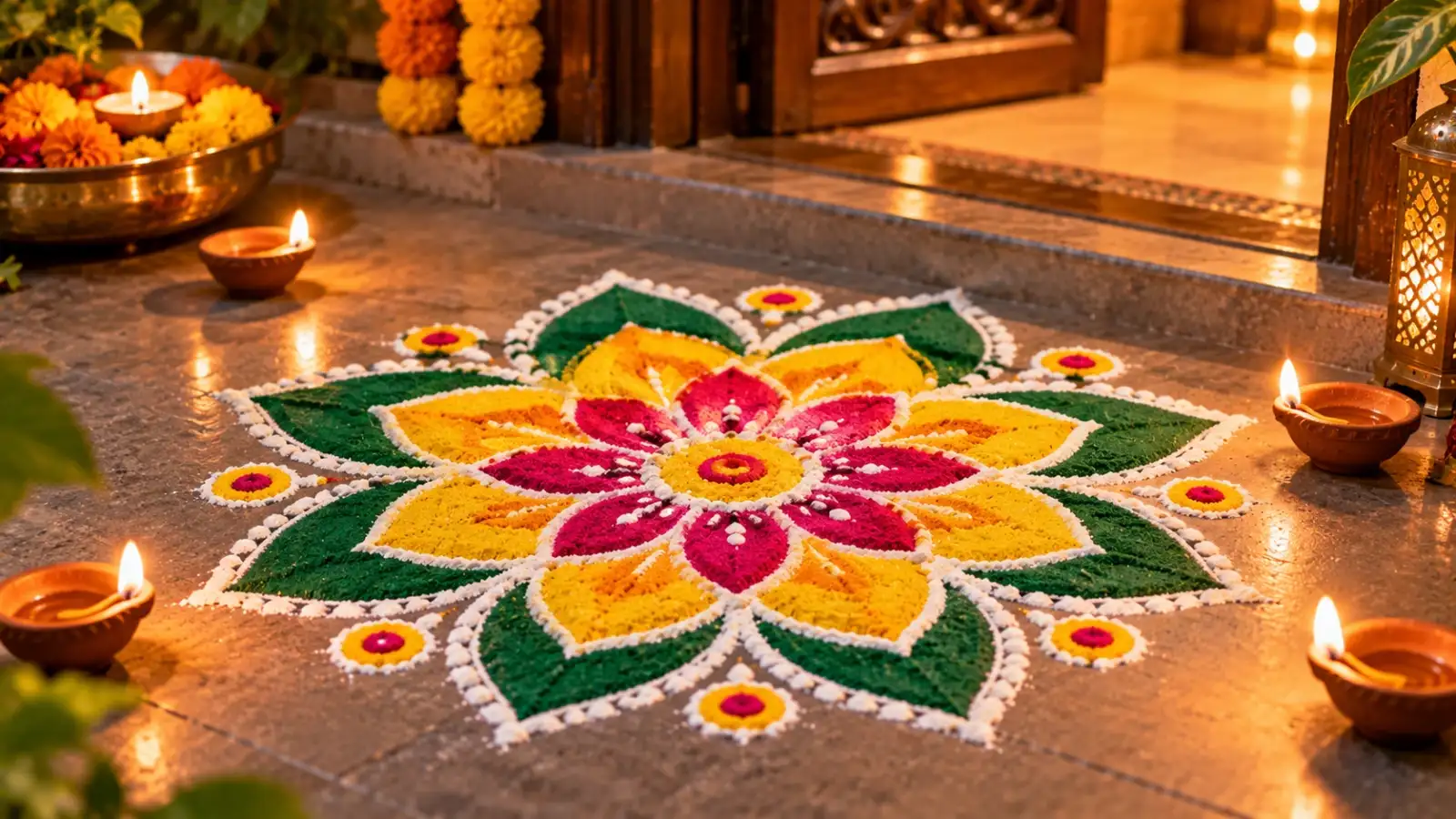
A circular rangoli is particularly easy to practise because it gives you a clear centre and a balanced shape. You can also draw a flower with four or eight petals and fill each petal with a different colour.
Look at a reference image before starting if you need inspiration. Choose a pattern that you can reproduce comfortably instead of selecting one with too many fine details.
Choose a location where people are unlikely to walk through your design while you are working. Near the entrance is a popular choice, but leave enough space for people to enter safely.
If you are working indoors, protect delicate flooring as needed and test the powder on a small area first. Some coloured powders may leave stains, especially on porous surfaces.
You can place a round plate on the floor and trace around it to make a neat circle. For symmetrical designs, mark a few guide points before connecting the lines.
Do not worry if the first outline is imperfect. Small corrections are easier to make before adding colour, so take a moment to check the spacing and overall shape.
Begin with the central area and move towards the outer sections, or follow one colour at a time. Keep the powder within the outlined shapes to make the design look tidy.
For a simple colour combination, try red and yellow, pink and white, or green and orange. You do not need many colours to create an eye-catching result. Two or three complementary shades can be enough.
You can also add a few flower petals around the design or place unlit clay diyas nearby for a traditional festive touch. Keep decorative objects outside walking paths, and never leave lit lamps unattended.
Avoid adding too many details at once. A clean, balanced design often looks better than one filled with unnecessary patterns.
Start by marking the outline with a few whole flowers or leaves. Fill the larger sections with petals, keeping the colours separate for a neat appearance.
Flower rangoli is a useful option for people who prefer natural materials. After the celebration, collect the petals and compost them where suitable rather than leaving them mixed with general waste.
Avoid working on a damp or dusty surface, as this can affect the finish. Do not make the design too close to a doorway where people may accidentally step on it.
If a line looks uneven, correct it gently with a spoon or your fingertips. Remember that rangoli is a creative activity, so minor imperfections are part of learning.
You do not need professional skills or expensive materials to create something attractive. A little preparation, a suitable space and a few minutes of patience can help you make a welcoming rangoli for Diwali or any special occasion.
1. Gather the Materials You Need
Before starting, collect everything you need so you can work without interruptions. For a basic rangoli, you will need:- Rangoli powder in two or three colours
- White chalk or a pencil for outlining
- A small bowl or plate for each colour
- A spoon or paper cone for controlled powder placement
- A clean, dry floor
- A ruler or round plate to help create shapes, if required
2. Choose a Small and Simple Design
Beginners should start with a compact design rather than attempting a large, complicated pattern. A flower, a circle with dots, a simple diya motif or a symmetrical geometric design can look attractive without requiring advanced skills.A circular rangoli is particularly easy to practise because it gives you a clear centre and a balanced shape. You can also draw a flower with four or eight petals and fill each petal with a different colour.
Look at a reference image before starting if you need inspiration. Choose a pattern that you can reproduce comfortably instead of selecting one with too many fine details.
3. Clean and Prepare the Floor
A clean surface makes rangoli easier to create and helps the powder stay in place. Sweep the area carefully and ensure that it is dry before drawing the outline.Choose a location where people are unlikely to walk through your design while you are working. Near the entrance is a popular choice, but leave enough space for people to enter safely.
If you are working indoors, protect delicate flooring as needed and test the powder on a small area first. Some coloured powders may leave stains, especially on porous surfaces.
4. Draw the Basic Outline
Use white chalk to sketch the main shape lightly. If you are making a flower, draw a small circle in the centre and add evenly spaced petals around it. For a geometric rangoli, begin with a circle, square or diamond and build the pattern outward.You can place a round plate on the floor and trace around it to make a neat circle. For symmetrical designs, mark a few guide points before connecting the lines.
Do not worry if the first outline is imperfect. Small corrections are easier to make before adding colour, so take a moment to check the spacing and overall shape.
5. Fill the Design With Rangoli Colours
Once the outline looks balanced, start filling the larger sections with coloured powder. Work slowly and use a spoon or your fingertips to control the amount of powder you release.Begin with the central area and move towards the outer sections, or follow one colour at a time. Keep the powder within the outlined shapes to make the design look tidy.
For a simple colour combination, try red and yellow, pink and white, or green and orange. You do not need many colours to create an eye-catching result. Two or three complementary shades can be enough.
6. Add Dots, Borders and Small Details
Small decorative elements can make a basic rangoli look more complete. Add white dots around the border, draw thin lines between petals or place small circles near the corners of a geometric pattern.You can also add a few flower petals around the design or place unlit clay diyas nearby for a traditional festive touch. Keep decorative objects outside walking paths, and never leave lit lamps unattended.
Avoid adding too many details at once. A clean, balanced design often looks better than one filled with unnecessary patterns.
7. Try a Flower Rangoli Without Coloured Powder
If you find rangoli powder difficult to handle, try making a simple design with fresh flower petals. Marigold petals, rose petals and green leaves can be arranged into circles, petals or symmetrical patterns.You may also like
- Why Women Must Stop Mistaking Menopause for Normal Aging
- Crucial Daily Habits to Shield Your Lungs as Urban AQI Crashes
- How Cooking Oil Smoke & Urban Smog Are Fueling a Dangerous Lung
- In 2023, families in a Mathura village doubted women could run a mustard oil unit; today five women manage the Rs 14 lakh venture, which has recorded more than Rs 24 lakh in sales since opening
- Bengaluru techie calls human dignity the biggest workplace perk, says he takes leave with just one message and works without strict attendance checks or micromanagement
Start by marking the outline with a few whole flowers or leaves. Fill the larger sections with petals, keeping the colours separate for a neat appearance.
Flower rangoli is a useful option for people who prefer natural materials. After the celebration, collect the petals and compost them where suitable rather than leaving them mixed with general waste.
Common Rangoli Mistakes Beginners Should Avoid
Using too many colours, rushing the outline and applying powder unevenly can make a design look messy. Start with fewer colours and practise controlling the powder before attempting fine patterns.Avoid working on a damp or dusty surface, as this can affect the finish. Do not make the design too close to a doorway where people may accidentally step on it.
If a line looks uneven, correct it gently with a spoon or your fingertips. Remember that rangoli is a creative activity, so minor imperfections are part of learning.
Create a Beautiful Rangoli With Simple Techniques
Making rangoli becomes easier with practice. Start with a small flower, a circle or a simple geometric pattern, and focus on keeping the outline balanced and the colours neatly arranged. As your confidence grows, you can experiment with additional shapes, decorative borders and more elaborate designs.You do not need professional skills or expensive materials to create something attractive. A little preparation, a suitable space and a few minutes of patience can help you make a welcoming rangoli for Diwali or any special occasion.






Loving Newspoint? Download the app now
