
How to Organise the Entrance of an Indian Home With Limited Space

The entrance of a home is often the first place where everyday belongings collect. Shoes may be left near the door, keys placed on the nearest surface and shopping bags kept wherever there is space.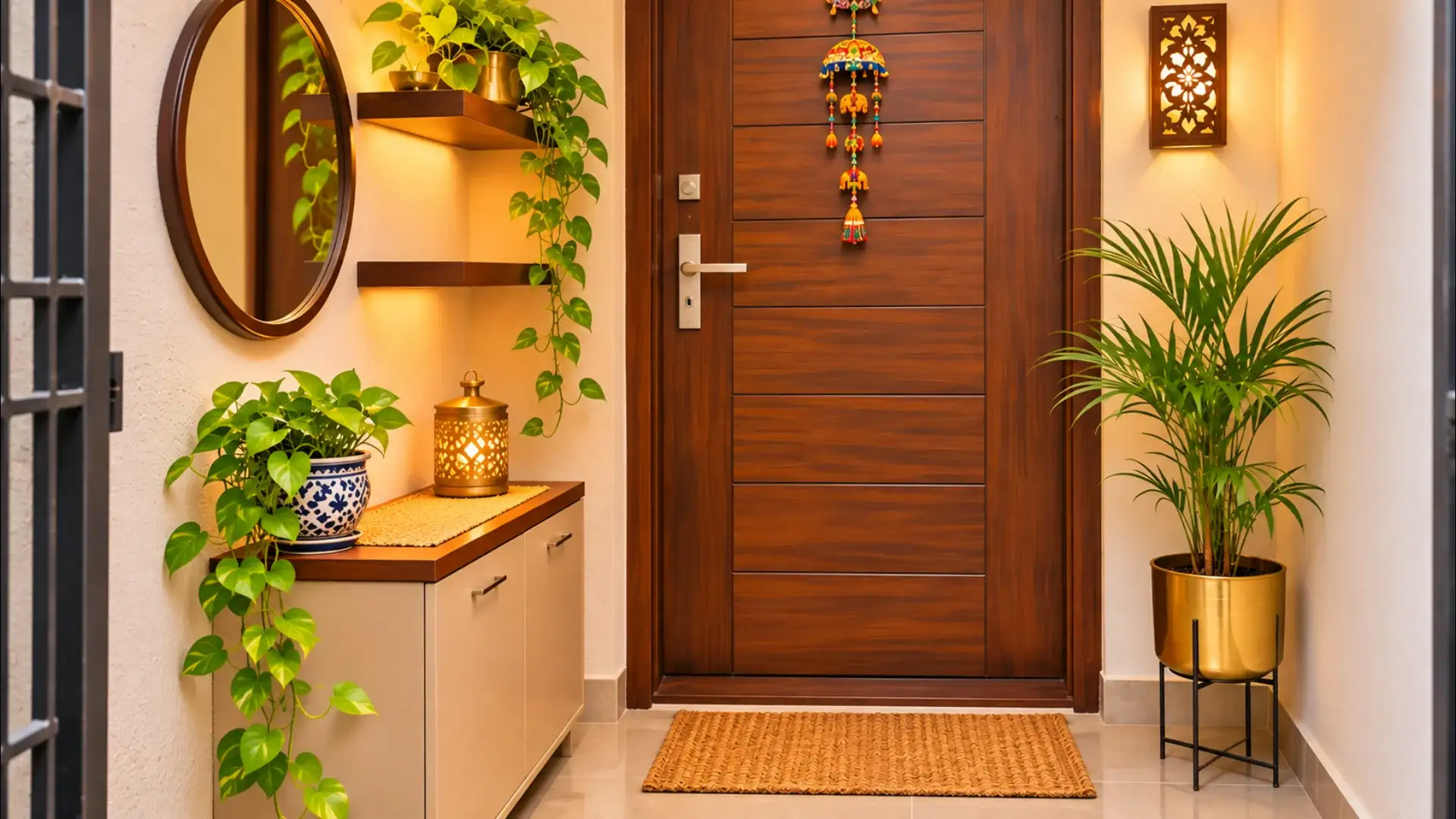
In a compact Indian home, this can quickly make the entrance feel crowded. A practical entryway arrangement can help manage these items without requiring a separate room or expensive furniture.
The aim is to create a small, organised area where frequently used belongings have a clear place.
Check whether the main door opens inwards or outwards, how much walking space is available and whether the entrance is shared with a corridor or staircase.
Measure the available width and depth before selecting a shoe rack, console or storage bench.
Avoid choosing a large unit simply because it looks attractive in a shop. A compact piece that allows people to move comfortably is often more useful.
A narrow shoe rack can help keep pairs together. Choose an open rack if ventilation is important or a closed cabinet if you prefer a cleaner appearance.
Keep frequently used footwear on the easiest-to-reach shelves. Store occasional-use pairs separately so that the everyday section does not become crowded.
If several family members use the entrance, assign a shelf or section to each person.
A small tray or wall-mounted key holder near the entrance can help keep them together.
Choose a location that is convenient for adults but not easily accessible to young children.
Avoid placing important keys in an exposed area that can be seen from outside the home.
Fix them securely to the wall and make sure they do not obstruct the door or the walking path.
If you have children, keep school bags at a suitable height so that they can put them away independently.
A small basket can be used for reusable shopping bags. This makes them easier to find before leaving for the market.
If space allows, keep a small tray or basket for items that need attention. Sort them regularly rather than allowing the pile to grow.
Avoid leaving documents containing personal information in an open entrance area.
If you prefer decoration, choose one small wall hanging, framed print or plant that does not interfere with movement.
A narrow console can hold a decorative object, but avoid filling it with items that do not have a practical purpose.
Do not place large boxes, loose wires or unstable furniture near the door. Keep the path clear for children, older family members and anyone carrying shopping bags.
If you use a wall-mounted shelf or hook, check that it is securely fixed.
Remove empty delivery packets and move items that belong in other rooms.
The entryway does not need to look like a showroom. It simply needs to support the way your household moves in and out every day.
A thoughtful arrangement can make even a small entrance feel more welcoming, functional and easier to maintain.
In a compact Indian home, this can quickly make the entrance feel crowded. A practical entryway arrangement can help manage these items without requiring a separate room or expensive furniture.
The aim is to create a small, organised area where frequently used belongings have a clear place.
Start by understanding the available space
Before buying storage furniture, observe how the entrance is used.Check whether the main door opens inwards or outwards, how much walking space is available and whether the entrance is shared with a corridor or staircase.
Measure the available width and depth before selecting a shoe rack, console or storage bench.
Avoid choosing a large unit simply because it looks attractive in a shop. A compact piece that allows people to move comfortably is often more useful.
Create a dedicated shoe area
Shoes are among the most common sources of clutter near an Indian home's entrance.A narrow shoe rack can help keep pairs together. Choose an open rack if ventilation is important or a closed cabinet if you prefer a cleaner appearance.
Keep frequently used footwear on the easiest-to-reach shelves. Store occasional-use pairs separately so that the everyday section does not become crowded.
If several family members use the entrance, assign a shelf or section to each person.
Give keys and small items a fixed place
Keys, access cards and small everyday objects can easily get misplaced.A small tray or wall-mounted key holder near the entrance can help keep them together.
Choose a location that is convenient for adults but not easily accessible to young children.
Avoid placing important keys in an exposed area that can be seen from outside the home.
Make a place for bags and umbrellas
A few hooks can be useful for hanging lightweight bags, caps and umbrellas.Fix them securely to the wall and make sure they do not obstruct the door or the walking path.
If you have children, keep school bags at a suitable height so that they can put them away independently.
A small basket can be used for reusable shopping bags. This makes them easier to find before leaving for the market.
Manage deliveries and daily paperwork
Delivery packets, courier envelopes and shopping receipts often end up on the nearest table.If space allows, keep a small tray or basket for items that need attention. Sort them regularly rather than allowing the pile to grow.
Avoid leaving documents containing personal information in an open entrance area.
Add a mirror or small decorative element
A mirror can make a compact entrance appear brighter and can be useful before leaving home.If you prefer decoration, choose one small wall hanging, framed print or plant that does not interfere with movement.
A narrow console can hold a decorative object, but avoid filling it with items that do not have a practical purpose.
Keep the walkway clear
The entrance should remain easy to use.Do not place large boxes, loose wires or unstable furniture near the door. Keep the path clear for children, older family members and anyone carrying shopping bags.
If you use a wall-mounted shelf or hook, check that it is securely fixed.
Create a simple daily reset routine
Spend a few minutes each evening returning shoes, keys and bags to their designated places.Remove empty delivery packets and move items that belong in other rooms.
The entryway does not need to look like a showroom. It simply needs to support the way your household moves in and out every day.
A thoughtful arrangement can make even a small entrance feel more welcoming, functional and easier to maintain.
Next Story