
How India's Ancient Temples Were Sculpted From Mountains and Rocky Hills

India's ancient rock-cut temples are remarkable examples of how architecture, religion and craftsmanship came together centuries ago. Instead of building structures with separate blocks of stone, skilled artisans carved entire temples, halls and sculptures directly into hillsides and solid rock formations. Many of these monuments feature detailed pillars, elaborate entrances, religious figures and impressive interiors. Found across different parts of the country, they reflect the artistic traditions of several dynasties and religious communities. From the famous caves of Ajanta and Ellora to the coastal monuments of Mahabalipuram, these structures reveal an extraordinary chapter in India's architectural history.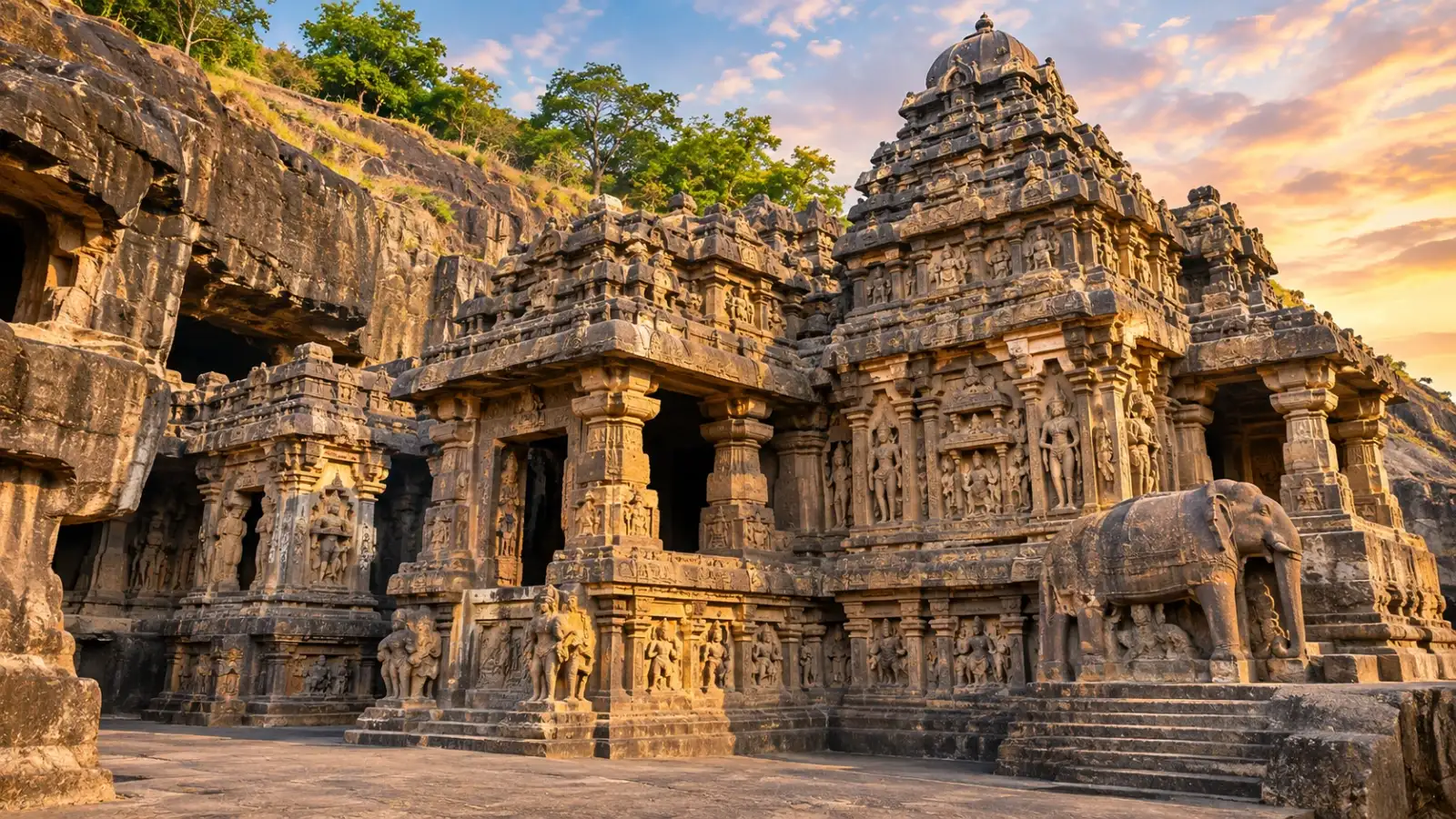
Artisans used chisels, hammers and other hand tools to shape entrances, pillars, chambers, shrines and sculptures. Some structures were carved into the sides of hills, while others were excavated from the top down.
The technique required careful planning because mistakes could be difficult to correct once large sections of rock had been removed.
The Barabar Caves in Bihar are among the oldest surviving rock-cut caves in the country. Several caves were associated with the Ajivika community and are known for their polished interiors and simple architectural forms.
Over time, Buddhist, Hindu and Jain communities developed more elaborate cave complexes, incorporating prayer halls, monasteries, shrines and sculptural decorations.
The complex contains caves developed over different periods, featuring monasteries, prayer halls, sculptures and detailed paintings. Many artworks depict scenes from the life of Buddha and stories associated with his previous births, known as Jataka tales.
The paintings are particularly admired for their expressive figures, colours and storytelling. Ajanta is recognised as a UNESCO World Heritage Site and offers valuable insights into ancient Indian art.
The complex includes Buddhist, Hindu and Jain monuments carved into the Charanandri Hills. Its caves were created over several centuries, reflecting the artistic and religious traditions of different communities.
One of its most remarkable structures is the Kailasa Temple , which was carved out of a single massive rock formation. Its courtyards, pillars, sculptures and detailed carvings demonstrate the extraordinary skill of the artisans involved.
Developed mainly under the Pallava rulers, these monuments include cave temples, open-air reliefs and monolithic structures known as the Pancha Rathas.
The Pancha Rathas are particularly interesting because each monument was carved from a single large granite outcrop. Their architectural forms reveal experiments with temple designs that influenced later South Indian architecture.
The main cave contains several large sculptural panels, including the celebrated Trimurti, which presents three aspects of Shiva in a single monumental composition.
The caves demonstrate the artistic sophistication of early medieval Indian craftsmen and remain an important part of the country's cultural heritage.
They worked systematically, removing stone in stages while maintaining the stability of the remaining structure. Large monuments such as the Kailasa Temple at Ellora demonstrate the scale of planning and coordination required for such projects.
The work also involved sculptors, craftsmen and specialists who created decorative details and religious imagery.
India's ancient rock-cut temples are more than religious monuments. They represent centuries of architectural experimentation, artistic expression and skilled craftsmanship. From the Buddhist paintings of Ajanta to the monumental Kailasa Temple at Ellora and the granite structures of Mahabalipuram, each site tells a different story about India's past. These remarkable monuments continue to attract historians, travellers and architecture enthusiasts, preserving a legacy carved directly into stone.
1. What Are Rock-Cut Temples?
Rock-cut temples are religious structures created by removing stone from natural rock formations. Unlike conventional buildings, which are assembled using bricks or stone blocks, these monuments are carved directly into hills, cliffs and rocky surfaces.Artisans used chisels, hammers and other hand tools to shape entrances, pillars, chambers, shrines and sculptures. Some structures were carved into the sides of hills, while others were excavated from the top down.
The technique required careful planning because mistakes could be difficult to correct once large sections of rock had been removed.
2. The Early History of Rock-Cut Architecture in India
Rock-cut architecture in India developed prominently during the Mauryan period, with some of the earliest surviving examples dating to the third century BCE.The Barabar Caves in Bihar are among the oldest surviving rock-cut caves in the country. Several caves were associated with the Ajivika community and are known for their polished interiors and simple architectural forms.
Over time, Buddhist, Hindu and Jain communities developed more elaborate cave complexes, incorporating prayer halls, monasteries, shrines and sculptural decorations.
3. Ajanta Caves: A Centre of Buddhist Art
The Ajanta Caves in Maharashtra are among India's most celebrated examples of Buddhist rock-cut architecture.The complex contains caves developed over different periods, featuring monasteries, prayer halls, sculptures and detailed paintings. Many artworks depict scenes from the life of Buddha and stories associated with his previous births, known as Jataka tales.
The paintings are particularly admired for their expressive figures, colours and storytelling. Ajanta is recognised as a UNESCO World Heritage Site and offers valuable insights into ancient Indian art.
4. Ellora Caves : Where Three Religious Traditions Meet
The Ellora Caves represent one of the most impressive achievements of India's rock-cut architecture.The complex includes Buddhist, Hindu and Jain monuments carved into the Charanandri Hills. Its caves were created over several centuries, reflecting the artistic and religious traditions of different communities.
One of its most remarkable structures is the Kailasa Temple , which was carved out of a single massive rock formation. Its courtyards, pillars, sculptures and detailed carvings demonstrate the extraordinary skill of the artisans involved.
5. Mahabalipuram: Temples Carved From Granite
The Group of Monuments at Mahabalipuram in Tamil Nadu are known for their distinctive rock-cut and structural monuments.Developed mainly under the Pallava rulers, these monuments include cave temples, open-air reliefs and monolithic structures known as the Pancha Rathas.
The Pancha Rathas are particularly interesting because each monument was carved from a single large granite outcrop. Their architectural forms reveal experiments with temple designs that influenced later South Indian architecture.
6. Elephanta Caves : A Tribute to Lord Shiva
The Elephanta Caves are located on Elephanta Island near Mumbai. They are famous for their impressive sculptures dedicated mainly to Lord Shiva.The main cave contains several large sculptural panels, including the celebrated Trimurti, which presents three aspects of Shiva in a single monumental composition.
The caves demonstrate the artistic sophistication of early medieval Indian craftsmen and remain an important part of the country's cultural heritage.
7. Why Were These Temples Carved Into Rocks?
There were several reasons behind the development of rock-cut architecture in India.- Religious devotion: Caves provided spaces for worship, meditation and religious gatherings.
- Durability: Carving structures into solid rock created monuments that could survive for centuries.
- Natural surroundings: Hills and rocky landscapes offered suitable locations for religious complexes.
- Artistic expression: Rock surfaces allowed artisans to create detailed sculptures and elaborate interiors.
- Royal patronage: Kings, merchants and wealthy donors supported the construction of religious monuments as acts of devotion and public patronage.
8. The Remarkable Skills Behind Rock-Cut Temples
Creating a rock-cut temple required extensive knowledge of stone, geometry and construction techniques. Artisans had to understand the natural structure of the rock before deciding where to carve entrances, pillars and chambers.They worked systematically, removing stone in stages while maintaining the stability of the remaining structure. Large monuments such as the Kailasa Temple at Ellora demonstrate the scale of planning and coordination required for such projects.
The work also involved sculptors, craftsmen and specialists who created decorative details and religious imagery.
India's ancient rock-cut temples are more than religious monuments. They represent centuries of architectural experimentation, artistic expression and skilled craftsmanship. From the Buddhist paintings of Ajanta to the monumental Kailasa Temple at Ellora and the granite structures of Mahabalipuram, each site tells a different story about India's past. These remarkable monuments continue to attract historians, travellers and architecture enthusiasts, preserving a legacy carved directly into stone.
Next Story