
The Story Behind Kashmir's Famous Pashmina Weaving Tradition and Its Rich Heritage

Pashmina is one of India's most recognised traditional textile crafts, admired for its softness, warmth and delicate appearance. Closely associated with Kashmir, this luxurious fabric has a history shaped by Himalayan communities, skilled artisans and generations of weaving knowledge. Its journey begins with fine wool obtained from the Changthangi goat , which lives in the high-altitude regions of Ladakh. The fibre is carefully processed and transformed into beautiful shawls, scarves and other garments. Behind every authentic Pashmina product lies a detailed process that reflects patience, traditional skills and the cultural heritage of the Kashmir Valley.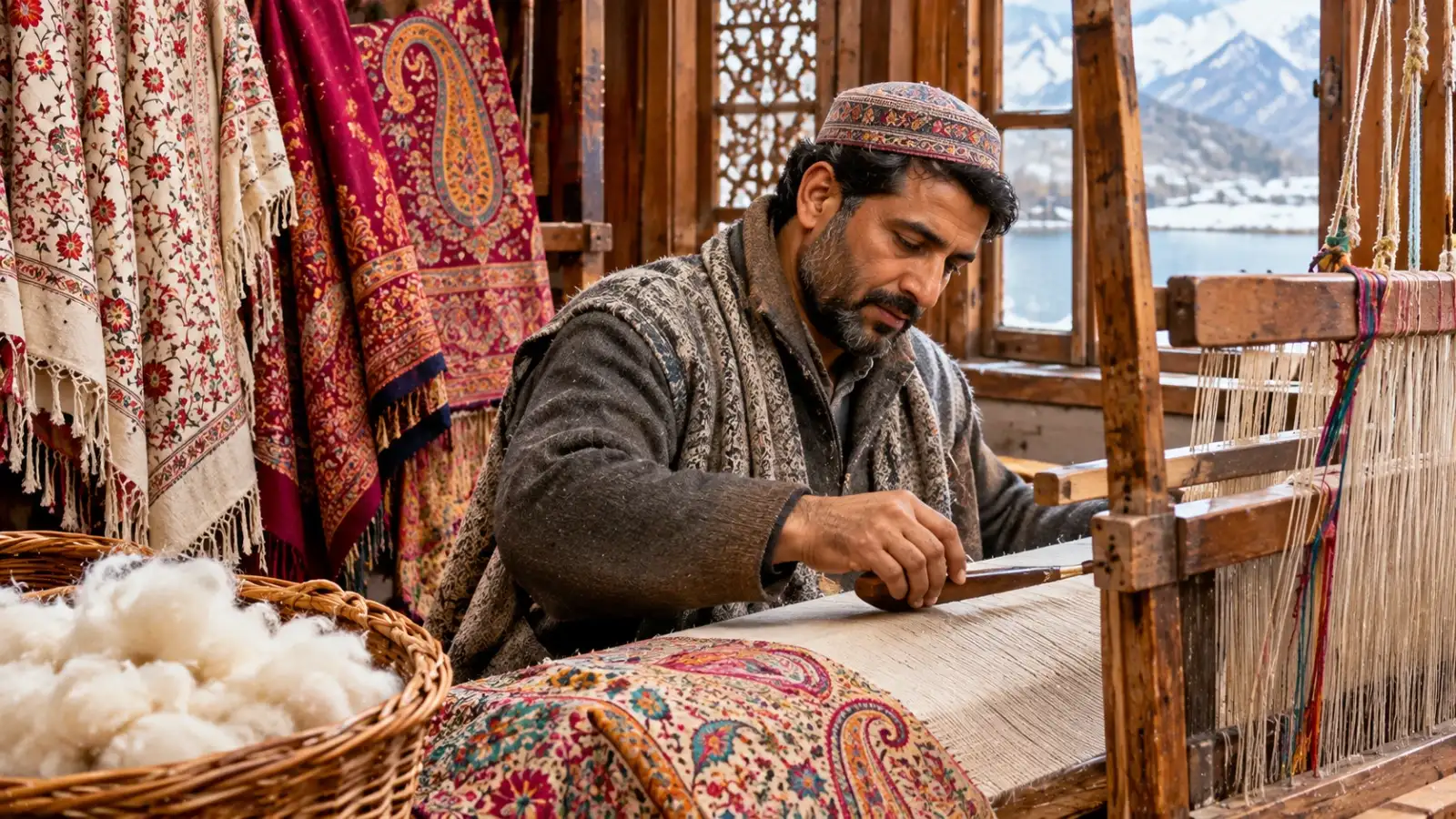
To protect themselves from the harsh climate, the goats develop an exceptionally fine inner layer of wool beneath their coarser outer hair. This soft undercoat is the raw material used to produce traditional Pashmina fibre.
The name Pashmina is derived from the Persian word pashm, meaning wool.
The collected material contains fine fibres mixed with coarser hair and other impurities. It must therefore undergo cleaning and sorting before it is ready for further processing.
The quality of the final fabric depends partly on the fineness, length and consistency of the fibre.
The process requires considerable patience because the fibres are extremely fine and delicate. Artisans carefully draw out and twist the wool into thin threads without breaking them.
This hand-spinning tradition has been an important part of the craft's cultural and economic history.
The weaving process requires precision because Pashmina yarn is delicate and needs careful handling. Depending on the design, a shawl may take several days or even weeks to complete.
The traditional craft is particularly associated with Kashmir's weaving communities, where knowledge and techniques have been passed down through generations.
Despite its delicate appearance, Pashmina provides considerable warmth. Its natural insulating properties make it suitable for cold weather without creating the heaviness associated with some thicker woollen fabrics.
However, softness alone cannot establish whether a product is genuine. Buyers should look for reliable certification and information about the fibre's origin.
Artisans create floral patterns, paisley motifs and decorative borders through closely spaced stitches. Some elaborate designs require weeks or months of skilled work, depending on the complexity and coverage.
These embroidered shawls demonstrate the close relationship between Kashmir's textile weaving and embroidery traditions.
Paisley patterns, flowers, leaves and ornamental arrangements are common design elements. Creating such intricate textiles requires considerable technical skill and time.
These decorative styles have contributed to the reputation of Kashmiri textile craftsmanship.
Kashmiri shawls became particularly popular among elite consumers in South Asia and Europe during the eighteenth and nineteenth centuries. Their influence can also be seen in the development of paisley-inspired designs in European fashion.
This international demand helped establish Pashmina as a symbol of refined textile craftsmanship.
Buyers should check product labels, fibre composition and seller credentials before purchasing. In India, the Pashmina certification system introduced by the Bureau of Indian Standards provides a way to identify certified products that meet specified requirements.
A reliable certificate and traceable information about the product are more useful than relying on traditional burn tests or appearance alone.
However, the craft faces challenges such as imitation products, changing consumer preferences and the time required for handmade production.
Supporting genuine artisans and purchasing properly certified products can help sustain this traditional knowledge. It also ensures that the skills associated with Pashmina weaving continue to be passed on to future generations.
Pashmina weaving is a remarkable example of how natural resources, traditional skills and cultural heritage come together to create a distinctive textile. From collecting fine Himalayan wool to spinning, weaving and adding delicate embroidery, every stage requires patience and expertise. More than a luxury garment, an authentic Pashmina shawl represents the craftsmanship of communities in Ladakh and Kashmir. Preserving this tradition means recognising the people and skills behind one of India's most celebrated textile crafts.
1. The Himalayan Origins of Pashmina
Pashmina is traditionally made from the fine undercoat of the Changthangi goat, also known as the Pashmina goat. These animals live in the cold, high-altitude regions of Ladakh, where temperatures can fall significantly during winter.To protect themselves from the harsh climate, the goats develop an exceptionally fine inner layer of wool beneath their coarser outer hair. This soft undercoat is the raw material used to produce traditional Pashmina fibre.
The name Pashmina is derived from the Persian word pashm, meaning wool.
2. How the Fine Pashmina Fibre Is Collected
The collection of Pashmina wool is a careful seasonal process. Traditionally, the fine undercoat is gathered during the spring moulting season when goats naturally shed some of their winter fibre.The collected material contains fine fibres mixed with coarser hair and other impurities. It must therefore undergo cleaning and sorting before it is ready for further processing.
The quality of the final fabric depends partly on the fineness, length and consistency of the fibre.
3. Traditional Hand-Spinning Techniques
Once the raw wool has been cleaned and sorted, it is converted into yarn. Traditional Pashmina spinning is often carried out by skilled women artisans using a hand-operated spinning wheel called a yinder.The process requires considerable patience because the fibres are extremely fine and delicate. Artisans carefully draw out and twist the wool into thin threads without breaking them.
This hand-spinning tradition has been an important part of the craft's cultural and economic history.
4. The Art of Pashmina Weaving in Kashmir
After spinning, the yarn is sent for weaving. Skilled weavers use traditional handlooms to transform the fine threads into soft fabric.The weaving process requires precision because Pashmina yarn is delicate and needs careful handling. Depending on the design, a shawl may take several days or even weeks to complete.
The traditional craft is particularly associated with Kashmir's weaving communities, where knowledge and techniques have been passed down through generations.
5. Why Authentic Pashmina Feels So Soft
One of the main reasons Pashmina is highly valued is the exceptional fineness of its fibres. The fine undercoat of the Changthangi goat produces a lightweight yarn that feels soft against the skin.Despite its delicate appearance, Pashmina provides considerable warmth. Its natural insulating properties make it suitable for cold weather without creating the heaviness associated with some thicker woollen fabrics.
However, softness alone cannot establish whether a product is genuine. Buyers should look for reliable certification and information about the fibre's origin.
6. The Beauty of Kashmiri Pashmina Embroidery
Many traditional Pashmina shawls feature intricate embroidery that adds to their artistic appeal. One of the best-known techniques is Sozni embroidery, which involves delicate needlework using fine threads.Artisans create floral patterns, paisley motifs and decorative borders through closely spaced stitches. Some elaborate designs require weeks or months of skilled work, depending on the complexity and coverage.
These embroidered shawls demonstrate the close relationship between Kashmir's textile weaving and embroidery traditions.
7. Jamawar and Other Decorative Pashmina Styles
Kashmir is also known for Jamawar textiles, which are recognised for their detailed patterns and rich designs. Traditionally, Jamawar shawls featured elaborate motifs woven into the fabric rather than simply added through surface embroidery.Paisley patterns, flowers, leaves and ornamental arrangements are common design elements. Creating such intricate textiles requires considerable technical skill and time.
These decorative styles have contributed to the reputation of Kashmiri textile craftsmanship.
8. Pashmina's Historical Connection With Royalty
Pashmina textiles have enjoyed a long association with royal courts and wealthy patrons. Their softness, warmth and elaborate designs made them desirable luxury items in different historical periods.Kashmiri shawls became particularly popular among elite consumers in South Asia and Europe during the eighteenth and nineteenth centuries. Their influence can also be seen in the development of paisley-inspired designs in European fashion.
This international demand helped establish Pashmina as a symbol of refined textile craftsmanship.
9. How to Identify Authentic Pashmina
With Pashmina's popularity, imitation products have also become common in the market. Some shawls are made using blended fibres or other materials while being marketed as genuine Pashmina.Buyers should check product labels, fibre composition and seller credentials before purchasing. In India, the Pashmina certification system introduced by the Bureau of Indian Standards provides a way to identify certified products that meet specified requirements.
A reliable certificate and traceable information about the product are more useful than relying on traditional burn tests or appearance alone.
10. Why Preserving the Pashmina Tradition Matters
Traditional Pashmina production supports the livelihoods of several communities involved in fibre collection, spinning, weaving, dyeing and embroidery.However, the craft faces challenges such as imitation products, changing consumer preferences and the time required for handmade production.
Supporting genuine artisans and purchasing properly certified products can help sustain this traditional knowledge. It also ensures that the skills associated with Pashmina weaving continue to be passed on to future generations.
Pashmina weaving is a remarkable example of how natural resources, traditional skills and cultural heritage come together to create a distinctive textile. From collecting fine Himalayan wool to spinning, weaving and adding delicate embroidery, every stage requires patience and expertise. More than a luxury garment, an authentic Pashmina shawl represents the craftsmanship of communities in Ladakh and Kashmir. Preserving this tradition means recognising the people and skills behind one of India's most celebrated textile crafts.
Next Story