
Why Madhubani Painting Is One of India's Most Beautiful Traditional Art Forms

India has several traditional art forms that reflect the culture, beliefs and everyday lives of its communities. Madhubani painting , also known as Mithila painting , is one such artistic tradition that originated in the Mithila region of Bihar. Recognised for its vibrant colours, intricate patterns and distinctive figures, this folk art has been practised for generations. Traditionally created by women on the walls and floors of their homes, Madhubani paintings gradually found their way onto paper, fabric and other surfaces. Today, this celebrated art form represents an important part of India's cultural heritage.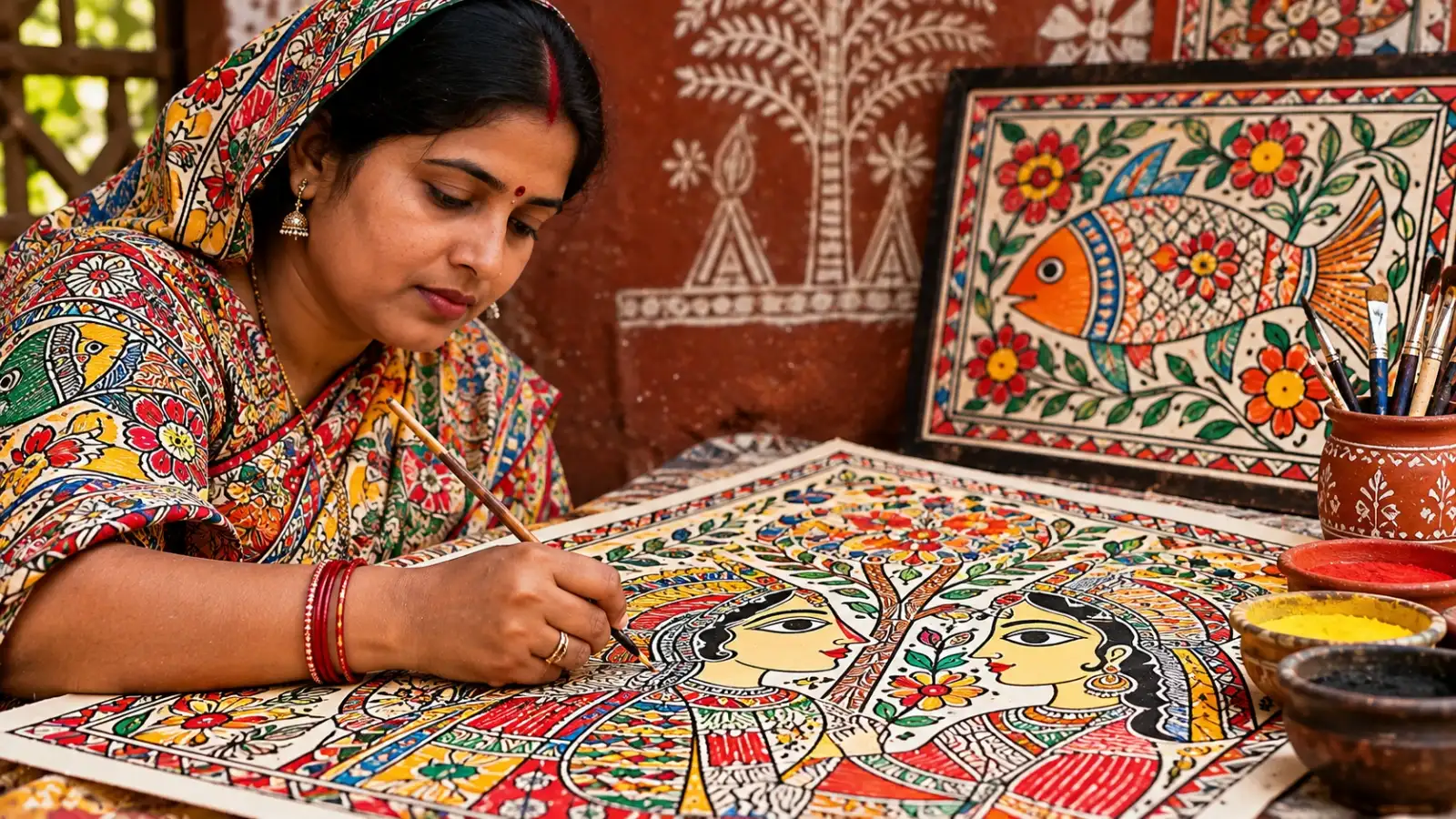
According to popular tradition, the practice is associated with the ancient kingdom of Mithila and the wedding of Lord Rama and Sita. However, the exact historical beginnings of the painting tradition are difficult to establish. For generations, women decorated the walls and floors of their homes with colourful designs during festivals, weddings and other auspicious occasions.
Women created paintings to decorate homes and mark important occasions. These artworks were not simply decorative pieces but also reflected cultural identity, religious beliefs and everyday experiences.
Over time, Madhubani painting became an important source of livelihood for many women, allowing them to share their artistic skills beyond their villages.
The surrounding landscape, local festivals, religious practices and village life have influenced its themes and designs. Paintings often depict village homes, trees, animals, rivers, marriage ceremonies and scenes from traditional stories.
This strong regional connection gives Madhubani art its distinctive identity and makes it an important expression of Mithila's cultural heritage.
Different ingredients were used to create distinctive shades. Turmeric could provide yellow, indigo was used for blue, and soot or other dark materials helped produce black. Red shades could be obtained from flowers and other natural sources.
Artists traditionally used bamboo sticks, cotton-wrapped twigs and brushes to apply colours. Modern artists also use commercially available paints, but natural pigments remain an important part of the art form's traditional history.
Figures often have large, expressive eyes and stylised features. Empty spaces are usually filled with smaller motifs rather than being left plain.
The use of repeated patterns, fine lines and contrasting colours gives the artwork its characteristic appearance.
Nature is another major source of inspiration. Artists depict the sun, moon, peacocks, fish, elephants, turtles, lotus flowers and trees.
These elements often carry symbolic meanings connected with fertility, prosperity, protection and good fortune.
Bharni is recognised for its colourful compositions, while Kachni relies heavily on fine lines and intricate patterns. Tantrik paintings often feature religious and spiritual subjects.
Kohbar paintings are traditionally associated with marriage ceremonies and fertility symbolism. These styles demonstrate the variety and artistic depth within the Madhubani tradition.
This development helped bring wider attention to the tradition and created new opportunities for local artists. Madhubani paintings gradually appeared on handmade paper, textiles, clothing, stationery and home decoration products.
The art form also gained recognition through exhibitions and cultural programmes in India and abroad.
The tradition has also received wider cultural recognition through exhibitions, museums and handicraft initiatives. Several artists have contributed to preserving and promoting the art form through their work.
This recognition has helped Madhubani painting reach new audiences while keeping its regional roots visible.
Some creators also experiment with modern subjects while retaining traditional patterns and techniques. This combination allows the art form to remain relevant to younger audiences.
Buying authentic handmade Madhubani products can also support the artists and communities that continue to practise this traditional craft.
Madhubani painting is much more than a decorative art form. It represents generations of artistic knowledge, cultural traditions and the creativity of women from the Mithila region. From colourful religious scenes to detailed nature-inspired patterns, every composition reflects a connection with local life and beliefs. As artists continue to explore new materials and uses, this traditional Bihar art form remains an important part of India's diverse cultural heritage.
1. The Origins of Madhubani Painting
Madhubani painting originated in the Mithila region, which includes parts of present-day Bihar and neighbouring areas of Nepal. The art form is closely connected with local customs, religious beliefs and community celebrations.According to popular tradition, the practice is associated with the ancient kingdom of Mithila and the wedding of Lord Rama and Sita. However, the exact historical beginnings of the painting tradition are difficult to establish. For generations, women decorated the walls and floors of their homes with colourful designs during festivals, weddings and other auspicious occasions.
2. Traditionally Created by Women
One of the most distinctive aspects of Madhubani painting is its strong association with women artists. Traditionally, mothers and grandmothers passed artistic techniques and motifs to younger generations within families.Women created paintings to decorate homes and mark important occasions. These artworks were not simply decorative pieces but also reflected cultural identity, religious beliefs and everyday experiences.
Over time, Madhubani painting became an important source of livelihood for many women, allowing them to share their artistic skills beyond their villages.
3. The Connection With the Mithila Region
Madhubani painting takes its name from the Madhubani district of Bihar, although the tradition extends across a wider part of the Mithila region.The surrounding landscape, local festivals, religious practices and village life have influenced its themes and designs. Paintings often depict village homes, trees, animals, rivers, marriage ceremonies and scenes from traditional stories.
This strong regional connection gives Madhubani art its distinctive identity and makes it an important expression of Mithila's cultural heritage.
4. The Use of Natural Colours
Traditional Madhubani artists often prepared colours using natural materials found in their surroundings.Different ingredients were used to create distinctive shades. Turmeric could provide yellow, indigo was used for blue, and soot or other dark materials helped produce black. Red shades could be obtained from flowers and other natural sources.
Artists traditionally used bamboo sticks, cotton-wrapped twigs and brushes to apply colours. Modern artists also use commercially available paints, but natural pigments remain an important part of the art form's traditional history.
5. Recognisable Patterns and Designs
Madhubani paintings are famous for their detailed patterns and distinctive visual style. Artists commonly fill the entire composition with flowers, leaves, geometric designs, lines and decorative borders.Figures often have large, expressive eyes and stylised features. Empty spaces are usually filled with smaller motifs rather than being left plain.
The use of repeated patterns, fine lines and contrasting colours gives the artwork its characteristic appearance.
6. Religious Stories and Nature-Inspired Themes
Traditional Madhubani paintings frequently feature Hindu deities such as Krishna, Rama, Shiva, Durga and Lakshmi. Scenes from the Ramayana and other religious stories are also common subjects.Nature is another major source of inspiration. Artists depict the sun, moon, peacocks, fish, elephants, turtles, lotus flowers and trees.
These elements often carry symbolic meanings connected with fertility, prosperity, protection and good fortune.
7. Different Styles of Madhubani Painting
Madhubani painting includes several traditional styles, each with its own characteristics. Some well-known styles include Bharni, Kachni, Tantrik, Godna and Kohbar.Bharni is recognised for its colourful compositions, while Kachni relies heavily on fine lines and intricate patterns. Tantrik paintings often feature religious and spiritual subjects.
Kohbar paintings are traditionally associated with marriage ceremonies and fertility symbolism. These styles demonstrate the variety and artistic depth within the Madhubani tradition.
8. How Madhubani Painting Became Popular Beyond Villages
For generations, Madhubani paintings were mainly created on household walls and floors. Their transition to paper became particularly significant during the 1960s, when artists began producing portable artworks that could be sold and shared beyond the region.This development helped bring wider attention to the tradition and created new opportunities for local artists. Madhubani paintings gradually appeared on handmade paper, textiles, clothing, stationery and home decoration products.
The art form also gained recognition through exhibitions and cultural programmes in India and abroad.
You may also like
- Jaden Smith opened a restaurant where money does not decide who eats. No fixed prices, nobody turned away, and people pay what they can to help others eat.
- Electric Kettle Uses: Not just for heating water—make these 7 things in an electric kettle..
- Trust and transparency are crucial in the pre-owned luxury car market: Manzil Pathan
- From folk traditions to Gen Z relationships: Ayaz Gorakhpuri on finding poetry in everyday life
- She returned to Bihar after studying engineering and working abroad; Shweta Suman is now building AI-powered semiconductor design tools and showcased her startup at SEMICON India 2026
9. Madhubani Painting and Its Recognition
Madhubani painting received the Geographical Indication (GI) tag in 2007, helping recognise its association with the Mithila region and its traditional artistic identity.The tradition has also received wider cultural recognition through exhibitions, museums and handicraft initiatives. Several artists have contributed to preserving and promoting the art form through their work.
This recognition has helped Madhubani painting reach new audiences while keeping its regional roots visible.
10. Madhubani Painting in Modern Homes and Fashion
Today, Madhubani art is used in a variety of contemporary products. Artists and designers incorporate its colourful motifs into wall paintings, sarees, dupattas, bags, notebooks, cushion covers and decorative objects.Some creators also experiment with modern subjects while retaining traditional patterns and techniques. This combination allows the art form to remain relevant to younger audiences.
Buying authentic handmade Madhubani products can also support the artists and communities that continue to practise this traditional craft.
Madhubani painting is much more than a decorative art form. It represents generations of artistic knowledge, cultural traditions and the creativity of women from the Mithila region. From colourful religious scenes to detailed nature-inspired patterns, every composition reflects a connection with local life and beliefs. As artists continue to explore new materials and uses, this traditional Bihar art form remains an important part of India's diverse cultural heritage.






Loving Newspoint? Download the app now
