
What Does a T-Square Mean in Your Horoscope? A Guide to Planetary Tensions and Growth

In astrology, a T-square is a planetary pattern that astrologers interpret as a source of tension, challenge and motivation in a birth chart. It forms when three planets create a specific geometric arrangement, with two planets in opposition and a third forming a square aspect to both. The pattern resembles the letter T when viewed on a chart. Astrologers associate it with conflicting needs, pressure to make decisions and opportunities to develop resilience. Its interpretation depends on the planets involved, their zodiac signs and the astrological houses they occupy. Understanding this pattern can help explain how astrologers interpret complex planetary relationships.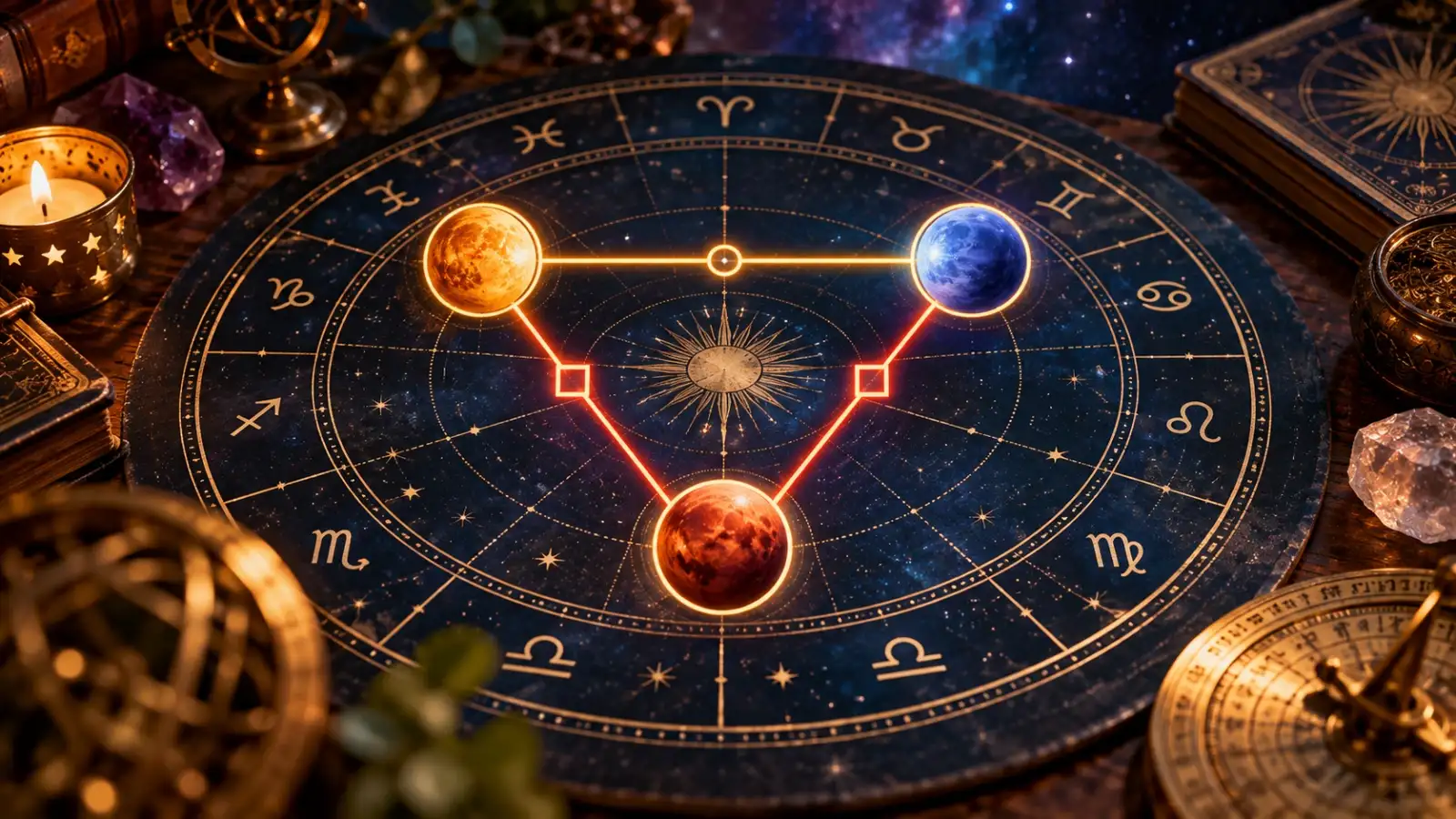
This creates a triangular arrangement that resembles a T. In traditional astrological interpretation, the opposition represents a conflict or contrast between two areas of life, while the squares indicate friction involving the third planet.
For example, a T-square might involve the Moon, Mars and Saturn. An astrologer would interpret the combination by considering the symbolic meanings of all three planets, rather than treating the pattern as having one fixed meaning.
The opposition creates the base of the pattern, while the third planet sits approximately halfway between the two opposing planets in angular terms, forming a square with each.
The configuration can occur in different combinations of zodiac signs and astrological houses. These details influence how an astrologer interprets the pattern and which themes they believe it emphasises.
Astrologers may describe this arrangement as challenging because it can symbolise situations in which a person feels pulled between different responsibilities or desires.
At the same time, some interpretations emphasise determination, persistence and problem-solving. The idea is that pressure may encourage a person to confront difficulties rather than avoid them. These meanings belong to astrological belief systems and are not scientifically established predictions about personality or life events.
Astrologers often give this planet special attention because they interpret it as the main outlet for the pattern's tension. Its symbolic meaning, zodiac sign and house placement are used to explore the areas of life where challenges or motivation might be expressed.
For example, if Mars is the focal planet, an astrologer might associate the pattern with action, competition, assertiveness or managing anger. If Venus occupies this position, the interpretation might focus on relationships, values or personal priorities.
These are symbolic readings rather than guaranteed descriptions of a person's behaviour.
Astrologers consider these qualities when exploring how the planets might interact. A T-square involving fixed signs, for instance, is often interpreted as symbolising persistence and resistance to change. One involving cardinal signs may be associated with initiative and action, while mutable signs are linked with adjustment and flexibility.
The specific interpretation depends on the full configuration. The signs alone do not determine whether a T-square will be considered positive or difficult.
They should not be understood as scientifically verified personality classifications.
For instance, a configuration involving planets associated with work, relationships and personal identity might be interpreted as highlighting competing priorities between these areas. Another configuration could be read through themes involving communication, emotional needs or ambition.
Some astrologers also examine the point opposite the focal planet, sometimes called the empty leg. They may interpret this area as symbolising qualities or perspectives that could help balance the configuration. However, this is one interpretive approach rather than a universally accepted rule.
A T-square in astrology is a three-planet configuration involving one opposition and two square aspects. Astrologers traditionally interpret it through themes of tension, competing needs, persistence and personal development. The focal planet, zodiac signs and house placements all contribute to the reading, while the wider birth chart provides additional context. Although the pattern has an established place in astrological practice, astrology has not been scientifically demonstrated to predict personality or life outcomes reliably. Its interpretations are best understood as part of a symbolic tradition rather than as established scientific facts.
1. What Is a T-Square in Astrology ?
A T-square is an astrological configuration involving three planets or chart points. Two form an opposition, generally around 180 degrees apart, while the third forms a square aspect, approximately 90 degrees, to each of them.This creates a triangular arrangement that resembles a T. In traditional astrological interpretation, the opposition represents a conflict or contrast between two areas of life, while the squares indicate friction involving the third planet.
For example, a T-square might involve the Moon, Mars and Saturn. An astrologer would interpret the combination by considering the symbolic meanings of all three planets, rather than treating the pattern as having one fixed meaning.
2. How Does a T-Square Form in a Birth Chart?
A T-square forms when planetary positions create the required angular relationships. Astrologers usually allow a certain margin, known as an orb, around the exact angles. The accepted orb can vary according to the astrologer's approach and the planets involved.The opposition creates the base of the pattern, while the third planet sits approximately halfway between the two opposing planets in angular terms, forming a square with each.
The configuration can occur in different combinations of zodiac signs and astrological houses. These details influence how an astrologer interprets the pattern and which themes they believe it emphasises.
3. What Does a T-Square Symbolise?
Within astrological traditions, a T-square is often associated with internal conflict, competing priorities and the need to take action. The two opposing planets are interpreted as representing contrasting drives, while the third planet is viewed as the focal point where much of the tension is expressed.Astrologers may describe this arrangement as challenging because it can symbolise situations in which a person feels pulled between different responsibilities or desires.
At the same time, some interpretations emphasise determination, persistence and problem-solving. The idea is that pressure may encourage a person to confront difficulties rather than avoid them. These meanings belong to astrological belief systems and are not scientifically established predictions about personality or life events.
4. What Is the Role of the Focal Planet?
The focal planet, sometimes called the apex planet, is the one that forms square aspects to both planets in opposition.Astrologers often give this planet special attention because they interpret it as the main outlet for the pattern's tension. Its symbolic meaning, zodiac sign and house placement are used to explore the areas of life where challenges or motivation might be expressed.
For example, if Mars is the focal planet, an astrologer might associate the pattern with action, competition, assertiveness or managing anger. If Venus occupies this position, the interpretation might focus on relationships, values or personal priorities.
These are symbolic readings rather than guaranteed descriptions of a person's behaviour.
5. How Do Zodiac Signs Influence a T-Square?
The zodiac signs occupied by the three planets add another layer to an astrological interpretation. Each sign is traditionally associated with particular qualities, such as emotional sensitivity, practicality, independence or adaptability.Astrologers consider these qualities when exploring how the planets might interact. A T-square involving fixed signs, for instance, is often interpreted as symbolising persistence and resistance to change. One involving cardinal signs may be associated with initiative and action, while mutable signs are linked with adjustment and flexibility.
The specific interpretation depends on the full configuration. The signs alone do not determine whether a T-square will be considered positive or difficult.
6. What Is a Cardinal, Fixed or Mutable T-Square ?
Astrologers commonly classify T-squares according to the qualities of the zodiac signs involved.- Cardinal T-square : Associated in astrology with initiative, leadership and the urge to take action.
- Fixed T-square : Traditionally linked with persistence, stability and possible resistance to change.
- Mutable T-square: Often interpreted through themes of flexibility, adaptation and changing priorities.
They should not be understood as scientifically verified personality classifications.
7. How Do Astrologers Interpret a T-Square in Daily Life?
Astrologers generally examine a T-square within the context of the entire birth chart rather than interpreting it in isolation. They consider the planets involved, their houses, the signs they occupy and other major aspects.For instance, a configuration involving planets associated with work, relationships and personal identity might be interpreted as highlighting competing priorities between these areas. Another configuration could be read through themes involving communication, emotional needs or ambition.
Some astrologers also examine the point opposite the focal planet, sometimes called the empty leg. They may interpret this area as symbolising qualities or perspectives that could help balance the configuration. However, this is one interpretive approach rather than a universally accepted rule.
A T-square in astrology is a three-planet configuration involving one opposition and two square aspects. Astrologers traditionally interpret it through themes of tension, competing needs, persistence and personal development. The focal planet, zodiac signs and house placements all contribute to the reading, while the wider birth chart provides additional context. Although the pattern has an established place in astrological practice, astrology has not been scientifically demonstrated to predict personality or life outcomes reliably. Its interpretations are best understood as part of a symbolic tradition rather than as established scientific facts.
Next Story