
Why Pune's Shaniwar Wada Is Named After a Day of the Week

Shaniwar Wada does not announce its age quietly. The burnt-orange bastions rise from the centre of Pune with the confidence of something that once held an empire together. The name itself is a small puzzle sitting in plain sight, Shaniwar means Saturday in Marathi, and Wada means a large enclosed residence or mansion. Put them together and you have a palace named after a day of the week, which is exactly what it is.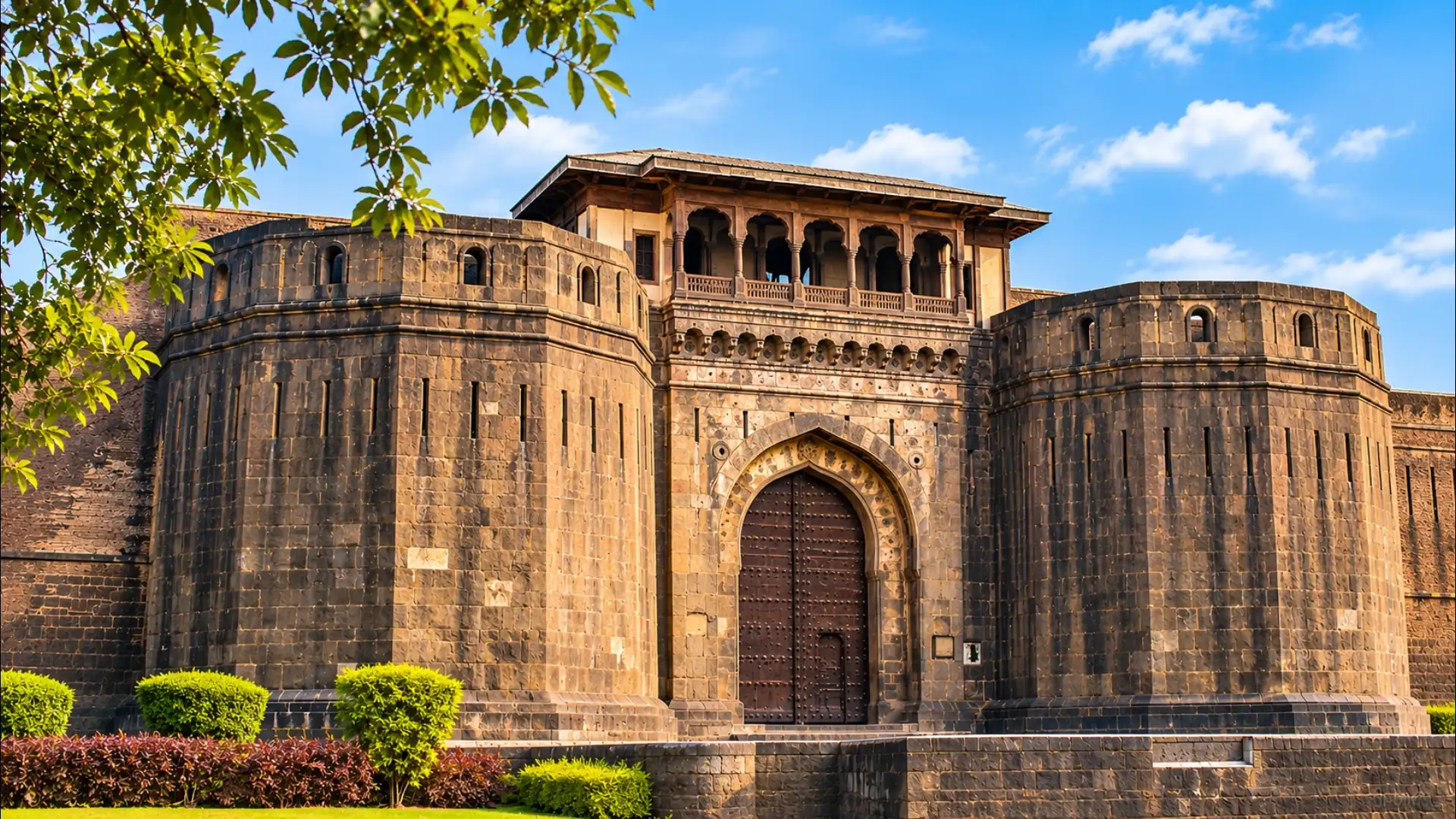
The Foundation Stone and the Day It Was Laid
On a Saturday in January 1730, Peshwa Baji Rao I chose this plot of land near the Mutha river to begin construction of a permanent seat for the Peshwa administration. The Peshwas were the hereditary prime ministers of the Maratha Empire, and by this point Baji Rao I had made them the real power behind the Chhatrapati throne. He needed a residence worthy of that standing. The foundation stone went into the ground on a Shaniwar, and the building took that day as its permanent name. The logic was straightforward: in the Maratha tradition, the day a significant structure was founded was recorded and sometimes enshrined in its name. Shaniwar Wada is the most prominent example of that practice surviving into everyday use.What the Wada Actually Was
The complex that rose on that foundation was not a palace in the European sense of a single grand building. A wada was a compound, a walled world containing a main residential structure, courtyards, gardens, a temple, administrative halls, and quarters for the household. Shaniwar Wada at its fullest extent covered roughly 625 acres and was surrounded by a high bastion wall with five gates, each with its own name and function. The Dilli Darwaza, the main gate facing north, was tall enough to let an elephant pass with a howdah on its back. The gate facing south, the Mastani Darwaza, was deliberately built shorter, a detail that carries its own layer of court politics. Mastani, the companion of Baji Rao I, was not permitted to enter through the main gate, and the shorter entrance she used was named for her after his death. The building encoded its own social hierarchies in stone and height.You may also like
- Baba Vanga's prediction: Goddess Lakshmi will be kind to these 3 zodiac signs, there will be a rain of money on Diwali
- Why Does Lord Balaji Have a White Mark on His Chin?
- He knew he could never defeat Ravana, yet 60,000-year-old Jatayu risked his life to save Sita; centuries later, the legendary bird's sacrifice lives on through a gigantic 200-ft sculpture in Kerala
- He left India in 1972 with just $8 and worked as a salesman to survive; 54 years later, the Hyderabad-born investor known as 'Canada's Warren Buffett' is making a ₹52,878 crore bank deal
- Why Does Chhath Puja Begin With Just One Lauki?
The Peshwas Who Lived There
Baji Rao I did not live long enough to see the wada fully complete. He died in 1740, a decade after the foundation was laid. His successors, Balaji Baji Rao, known as Nana Saheb, and those who followed, expanded and refined the complex across several generations. The wada became the administrative heart of a confederacy that stretched across much of the subcontinent. Durbar halls hosted diplomacy, the inner courtyards held the rhythms of daily court life, and the gardens were designed with a formality that reflected Persian and Mughal influences absorbed into Maratha taste. For roughly a century, decisions made inside Shaniwar Wada shaped the politics of India.The Fire and What Remained
In 1828, a fire broke out inside the complex and burned for several days. The cause has never been definitively established, accounts from the period mention an accidental fire in the servants' quarters, though other explanations circulated then and since. Whatever started it, the fire destroyed most of the wooden interior structures, the residential buildings, and the gardens. What survived was the outer fortification wall, the bastions, and the gates. The British, who had taken control of Pune following the Third Anglo-Maratha War of 1817 to 1818, were by then the administrative authority and had already converted parts of the wada to their own uses. The fire reduced the interior to open ground. That open ground is what visitors walk today, a wide, quiet expanse inside walls that remember what stood here, even if the walls themselves cannot say it plainly.The Name That Stayed
Pune grew around Shaniwar Wada across the nineteenth and twentieth centuries. The neighbourhood took its character from the structure at its centre, and the name embedded itself in the city's geography. Today the area around the wada is simply called Shaniwar Peth, the Saturday quarter, which means a day of the week has named not just a building but an entire part of a city. The Archaeological Survey of India maintains the surviving structure. The burnt-orange walls, the carved teak gates, and the lotus fountain base in the main courtyard are what remain of what was once the nerve centre of the Maratha confederacy. The name, at least, came through the fire intact.





Loving Newspoint? Download the app now
