
Morning Chai for Two: Small Rituals That Hold a Marriage Together

Nobody writes a wedding speech about who makes the chai. The vows are about storms weathered and mountains climbed, about forever and always. But the marriage, the actual daily texture of it, lives somewhere else entirely, in the cup placed on the right side of the desk, in the way one person always pours first.
Psychologists who study long-term relationships have a term for this accumulation: emotional attunement . It describes the degree to which two people track each other's inner states without being told. The chai ritual is attunement made visible. You know how they take it. You know when they need it before they say so. You make it anyway.

This is what makes rituals different from routines. A routine is something you do to get something done. A ritual is something you do to mark that this moment, and this person, matter. The chai is ready in four minutes. The marking takes a lifetime.
When one person is travelling and the other makes chai alone, the absence is loud. That loudness is information. It tells you what the ritual was actually doing.
The ritual breaking is not the cause of the distance. It is the signal. By the time a couple notices they have stopped doing the small thing, the small thing had already been doing a great deal.
This is why rebuilding after a rough patch so often starts with something embarrassingly simple. Not a conversation about everything that went wrong, but a Sunday morning where one person makes the chai and the other sits down and they do not talk about anything important at all.
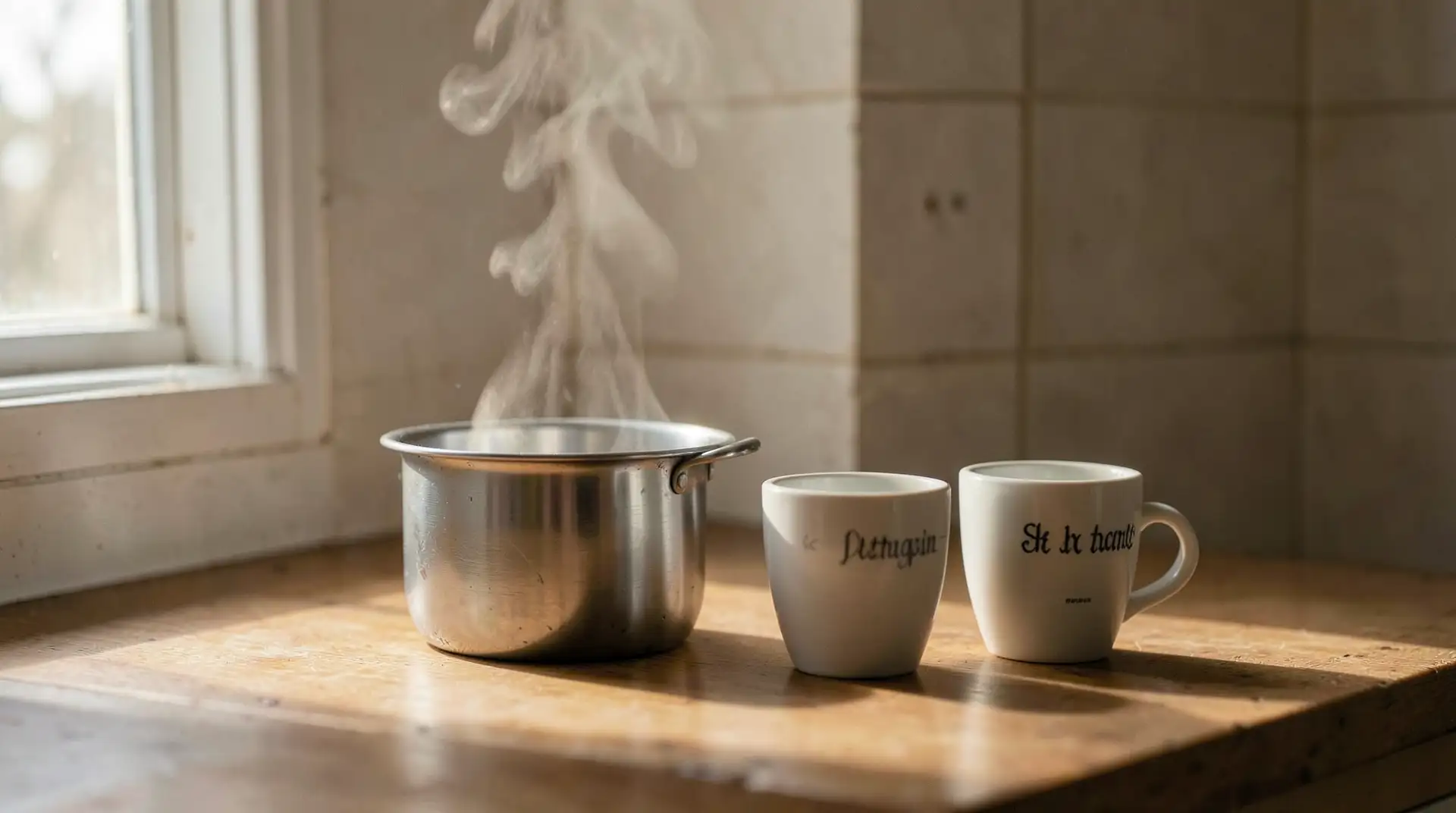
A chosen ritual feels slightly self-conscious at first. That passes. Within a few weeks it stops being a choice and becomes the thing you do, which is exactly what it was always supposed to become.
The ritual does not need to be beautiful or photogenic. It does not need to mean anything to anyone outside the two of you. It only needs to be repeated, and it only needs to be yours.
The cup placed on the right side of the desk, every morning, without being asked, that is a whole language. Most marriages are built on exactly this kind of fluency, accumulated one unremarkable morning at a time.
Why Small Things Carry More Weight Than They Look
Every couple has a vocabulary nobody taught them. A look across a crowded room that means let's go. A particular knock before entering a room. The side of the bed that was never negotiated but was decided in the first week and has not changed since. These are not habits in the way that brushing teeth is a habit. They are agreements made without words, renewed every morning without ceremony.Psychologists who study long-term relationships have a term for this accumulation: emotional attunement . It describes the degree to which two people track each other's inner states without being told. The chai ritual is attunement made visible. You know how they take it. You know when they need it before they say so. You make it anyway.
The Ritual Is Not About the Chai
A couple in their fifties, together for nearly thirty years, might struggle to name the last time they said something profound to each other. What they can describe, without effort, is the morning routine: who wakes first, who opens the windows, who puts the water on. The ritual holds the relationship the way a frame holds a painting, not the point of it, but what keeps it from falling.This is what makes rituals different from routines. A routine is something you do to get something done. A ritual is something you do to mark that this moment, and this person, matter. The chai is ready in four minutes. The marking takes a lifetime.
When one person is travelling and the other makes chai alone, the absence is loud. That loudness is information. It tells you what the ritual was actually doing.
What Happens When the Ritual Breaks
Couples therapists often ask partners to describe what a typical morning looks like. The answer is rarely about conflict. It is about drift. One person started leaving earlier. The other started eating at the desk. The chai stopped being made together and started being grabbed separately, on the way out. Nobody decided this. It happened in increments, the way most distance does.The ritual breaking is not the cause of the distance. It is the signal. By the time a couple notices they have stopped doing the small thing, the small thing had already been doing a great deal.
This is why rebuilding after a rough patch so often starts with something embarrassingly simple. Not a conversation about everything that went wrong, but a Sunday morning where one person makes the chai and the other sits down and they do not talk about anything important at all.
Making a Ritual on Purpose
Most rituals arrive without planning. But some couples, especially those who have lived through a long separation or a difficult year, choose one deliberately. A walk before dinner. Reading in the same room without speaking. The morning chai, reinstated as a decision rather than a default.A chosen ritual feels slightly self-conscious at first. That passes. Within a few weeks it stops being a choice and becomes the thing you do, which is exactly what it was always supposed to become.
The ritual does not need to be beautiful or photogenic. It does not need to mean anything to anyone outside the two of you. It only needs to be repeated, and it only needs to be yours.
The cup placed on the right side of the desk, every morning, without being asked, that is a whole language. Most marriages are built on exactly this kind of fluency, accumulated one unremarkable morning at a time.
Next Story