
How Chillies Reached India and Completely Changed Its Food

Before the chilli, Indian cooks reached for long pepper, black pepper, and dried ginger when they wanted heat. The food was spiced, complex, and layered, but the sharp, immediate fire that now defines a Chettinad curry or a Kolhapuri gravy simply did not exist. Then, sometime in the late fifteenth or early sixteenth century, Portuguese ships docked at Goa, and everything changed.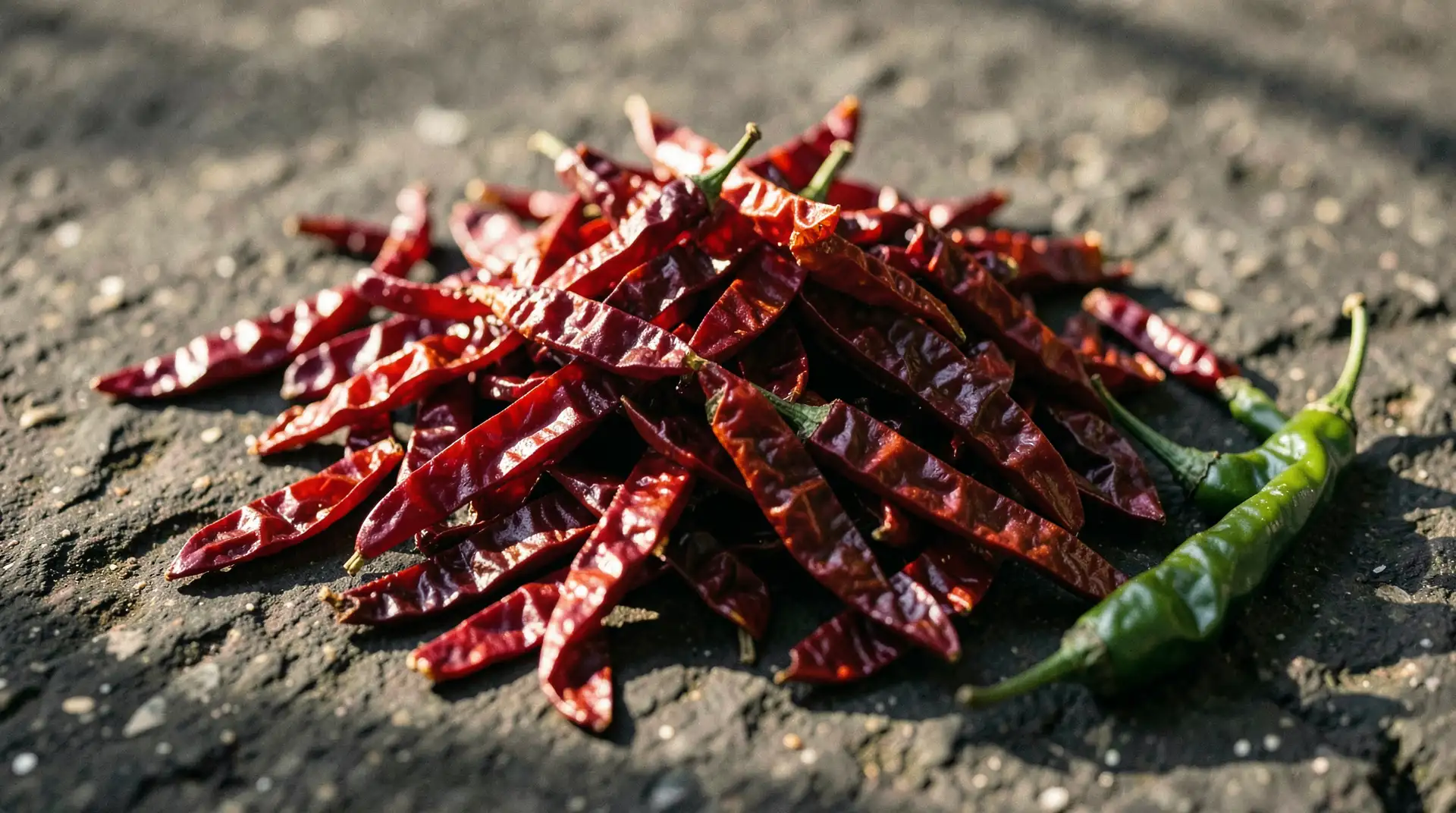
The Portuguese, who were building a trading empire along the coasts of Africa, India, and Southeast Asia, carried it east. Goa was their foothold on the Indian subcontinent, and it became the chilli's first Indian home.
A family that could not afford imported pepper could grow its own heat. Second, it preserved food. The capsaicin in chillies inhibits the growth of certain bacteria, which mattered enormously in a warm climate before refrigeration. Pickles, chutneys, and fermented preparations that relied on chilli lasted longer. Third, and most simply, it tasted good with what was already there. Indian cooking already understood the relationship between fat, spice, and slow heat. The chilli slotted into that grammar as if it had always been there.
Andhra and Telangana embraced the Guntur chilli, one of the hottest varieties grown in India, and built a cuisine around that intensity. Goa, where the chilli first landed, developed the vindaloo, a dish whose name traces to the Portuguese vinha d'alhos, wine and garlic, transformed over generations into something entirely Goan.
In Rajasthan, where water was scarce and preservation was essential, the chilli became a staple of sun-dried and pickled preparations. Each region did not simply adopt the chilli; it bred and selected varieties suited to its soil, its climate, and its palate. India now grows hundreds of named chilli varieties, from the Bhut Jolokia of Nagaland to the mild Byadagi of Karnataka, each with a distinct flavour profile beyond raw heat.
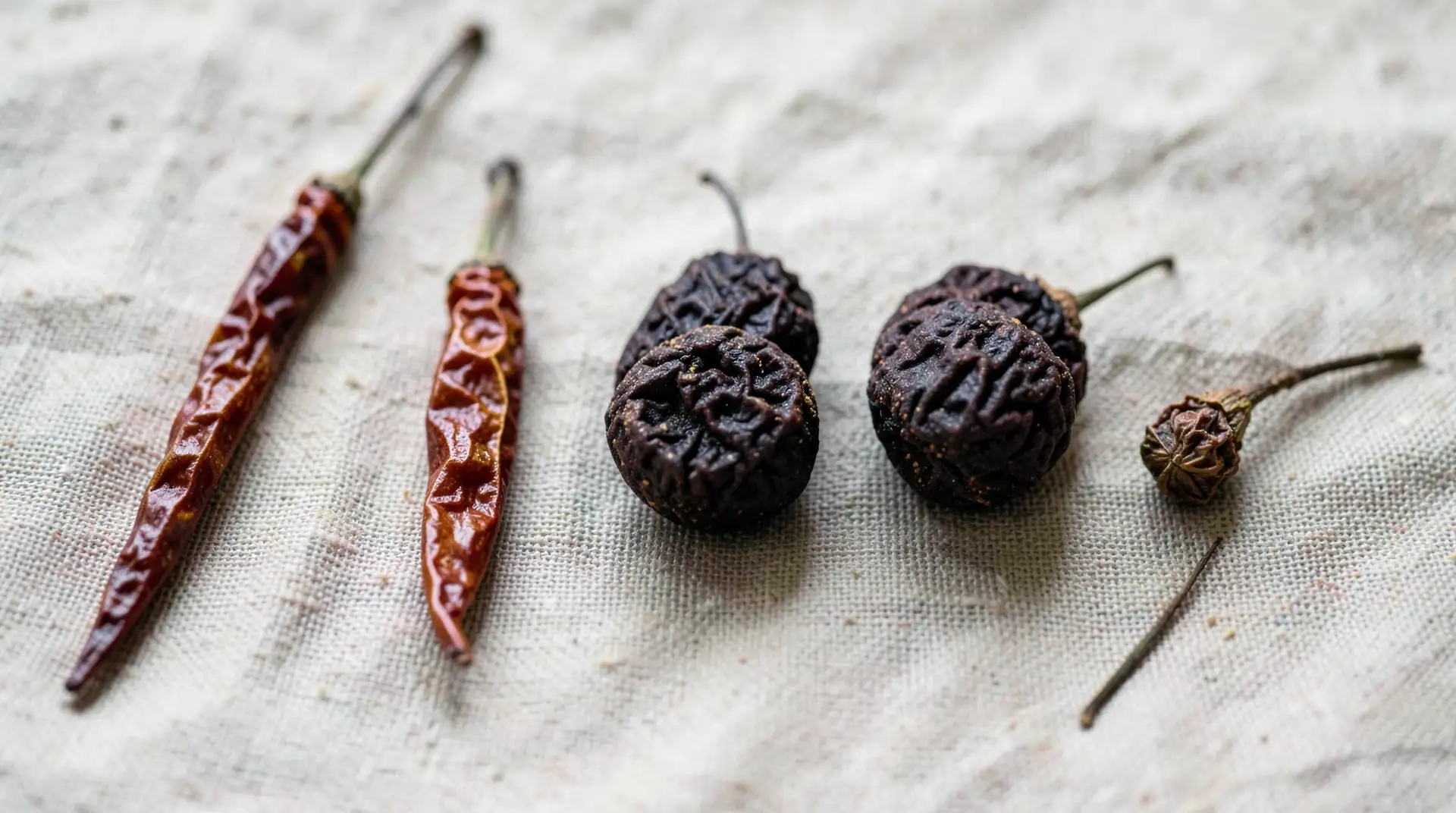
The older vocabulary of heat, ginger, mustard seed, asafoetida, survived and was woven around the new arrival. What the chilli changed most was the baseline expectation of a meal. A dish that once relied on the slow warmth of ginger now had a sharper, more immediate heat available to it. Cooks did not abandon subtlety; they gained a new instrument and learned to play it alongside the others.
The Guntur farmer who tends his chilli crop, the Goan cook who grinds her recheado masala, the Kashmiri butcher who coats his meat in red paste, none of them are working with something borrowed. They are working with something that became theirs, completely and irreversibly, over the course of a few hundred years. That is what absorption looks like when it goes all the way.
Where the Chilli Came From
The chilli plant, Capsicum annuum and its relatives, is native to the Americas, where it had been cultivated for thousands of years. When Columbus reached the Caribbean in 1492, he encountered it and brought samples back to Europe, calling it a pepper because of its heat, though it belongs to an entirely different botanical family.The Portuguese, who were building a trading empire along the coasts of Africa, India, and Southeast Asia, carried it east. Goa was their foothold on the Indian subcontinent, and it became the chilli's first Indian home.
Why It Spread So Fast
A spice that conquers a continent in a few generations needs something going for it beyond flavour. The chilli had three things. First, it was cheap to grow. Black pepper required specific forest conditions and careful cultivation; the chilli grew readily in kitchen gardens, on rooftops, in poor soil.A family that could not afford imported pepper could grow its own heat. Second, it preserved food. The capsaicin in chillies inhibits the growth of certain bacteria, which mattered enormously in a warm climate before refrigeration. Pickles, chutneys, and fermented preparations that relied on chilli lasted longer. Third, and most simply, it tasted good with what was already there. Indian cooking already understood the relationship between fat, spice, and slow heat. The chilli slotted into that grammar as if it had always been there.
You may also like
- 'Mogging' is Collins Dictionary's Word of the Year. But what does it mean, and 5 other words that made it to the list?
- Losing Belly Fat Last? Here's Why Your Body Chooses Where Fat Goes First
- What Really Happens to Your Fat Cells When You Lose Weight?
- Why Fat Cells Shrink but Rarely Disappear
- Italy emerges as a popular study destination for Indian students, Leverage Edu data shows
How Different Regions Made It Their Own
Within roughly two centuries of its arrival, the chilli had been absorbed so completely into regional cooking that each part of India treated it as its own. Kashmiri cooks prized the Kashmiri mirch, large, mild, and deeply red, for the colour it gave to roghan josh and the wazwan.Andhra and Telangana embraced the Guntur chilli, one of the hottest varieties grown in India, and built a cuisine around that intensity. Goa, where the chilli first landed, developed the vindaloo, a dish whose name traces to the Portuguese vinha d'alhos, wine and garlic, transformed over generations into something entirely Goan.
In Rajasthan, where water was scarce and preservation was essential, the chilli became a staple of sun-dried and pickled preparations. Each region did not simply adopt the chilli; it bred and selected varieties suited to its soil, its climate, and its palate. India now grows hundreds of named chilli varieties, from the Bhut Jolokia of Nagaland to the mild Byadagi of Karnataka, each with a distinct flavour profile beyond raw heat.
What It Replaced and What It Kept
The chilli did not erase what came before it. Long pepper, which had been a major export from India to Rome and the ancient world, declined sharply, partly because the chilli was cheaper, partly because it was simply more vivid. Black pepper held on, and still appears in many dishes alongside chilli rather than in place of it.The older vocabulary of heat, ginger, mustard seed, asafoetida, survived and was woven around the new arrival. What the chilli changed most was the baseline expectation of a meal. A dish that once relied on the slow warmth of ginger now had a sharper, more immediate heat available to it. Cooks did not abandon subtlety; they gained a new instrument and learned to play it alongside the others.
A Foreign Spice That Became Native
The story of the chilli in India is one of the clearest examples of how a food culture absorbs and transforms what arrives from outside. No one today thinks of the chilli as a Portuguese import. It is written into the identity of regional cuisines so deeply that its foreign origin reads as a footnote rather than a fact.The Guntur farmer who tends his chilli crop, the Goan cook who grinds her recheado masala, the Kashmiri butcher who coats his meat in red paste, none of them are working with something borrowed. They are working with something that became theirs, completely and irreversibly, over the course of a few hundred years. That is what absorption looks like when it goes all the way.






Loving Newspoint? Download the app now
