
The Indian Food That Takes Days to Prepare: Why Some Traditional Dishes Need Patience

In an age of pressure cookers, instant mixes and 10-minute recipes, some Indian foods still refuse to be hurried. Their preparation can involve soaking grains overnight, grinding ingredients by hand, fermenting mixtures for hours or even drying food under the sun before it is cooked. For generations, these slow processes were not seen as inconvenient. They were practical ways of improving flavour, preserving seasonal ingredients and making food easier to digest. From fermented batters to elaborate pickles, Indian culinary traditions contain foods where waiting is not a delay in the recipe. It is actually one of the most important ingredients.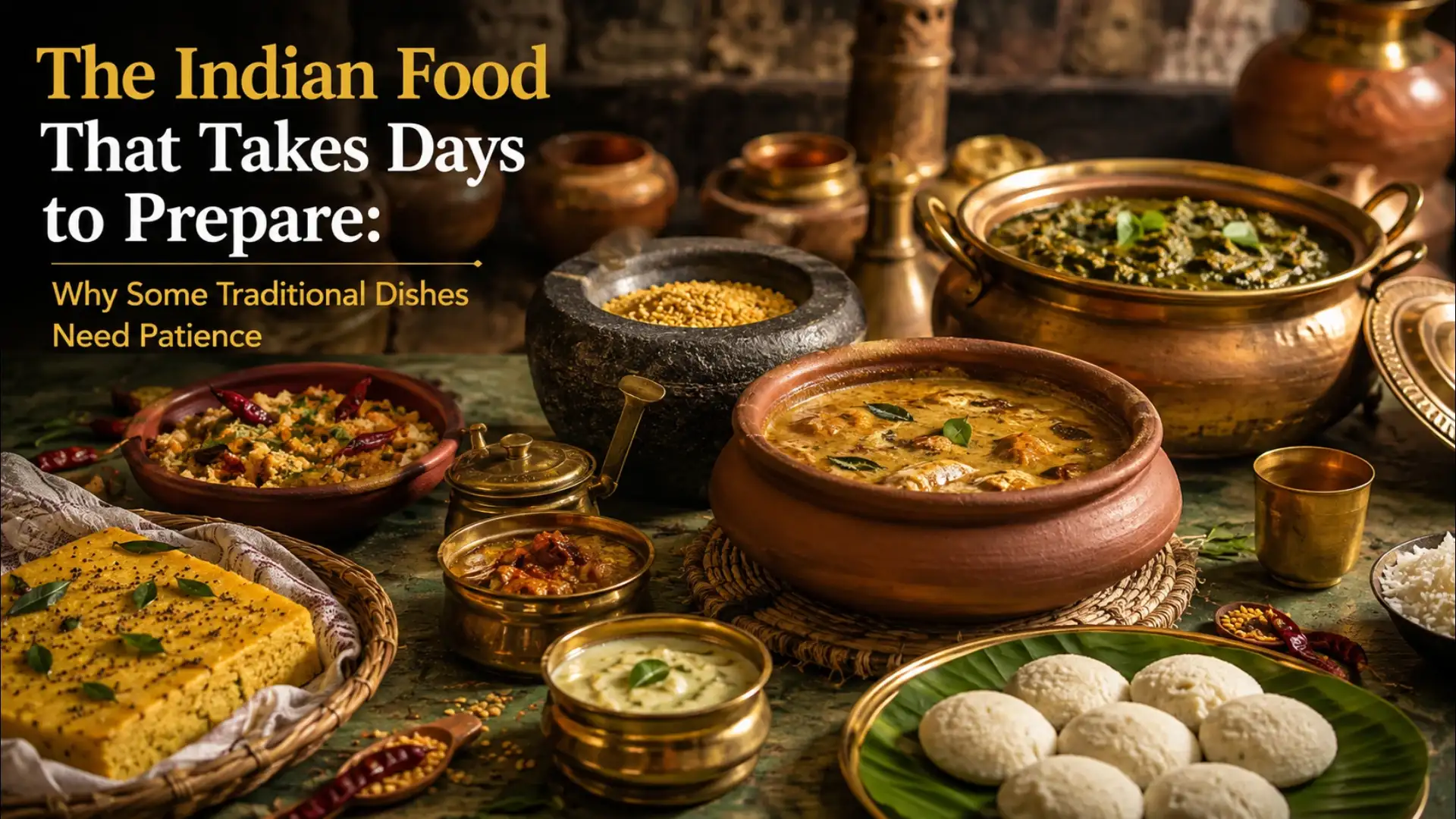
Fermentation also has nutritional implications. Research has found that traditional fermentation can alter the nutritional profile of foods and may improve the bioavailability of certain nutrients. The process can also help reduce some naturally occurring compounds that interfere with nutrient absorption.
The exact fermentation time varies according to temperature, ingredients and the desired result. In cooler conditions, the same batter may need considerably longer.
Mango pickles, for instance, may involve salting mango pieces, adding spices and oil, and allowing the mixture to mature. Sunlight and time help develop the distinctive flavour associated with many regional varieties.
Before modern refrigeration, techniques such as salting, drying, fermenting and pickling were essential household methods for extending the availability of food beyond its growing season.
The drying stage is particularly important because it removes moisture, making the food less vulnerable to spoilage.
Similar principles appear in many traditional Indian foods, including sun-dried vegetables, vadis and certain spice preparations. These methods effectively turned seasonal abundance into food that could be stored for later use.
They also explain why traditional Indian food can have such complex flavours. Time allows fermentation, drying, curing and maturation to change ingredients in ways that simply cannot happen in a microwave or pressure cooker.
The next time you eat a dosa, open a jar of pickle or roast a papad, there may be more history behind it than you realise. In traditional Indian cooking, patience was never merely a virtue. Quite often, it was part of the recipe.
Fermentation Is the Secret Behind Many Traditional Foods
One of the clearest examples is dosa and idli batter. Rice and black gram are soaked separately, ground and then left to ferment, traditionally overnight. Warm temperatures help naturally occurring microorganisms transform the batter, creating its characteristic aroma, texture and slight sourness.Fermentation also has nutritional implications. Research has found that traditional fermentation can alter the nutritional profile of foods and may improve the bioavailability of certain nutrients. The process can also help reduce some naturally occurring compounds that interfere with nutrient absorption.
The exact fermentation time varies according to temperature, ingredients and the desired result. In cooler conditions, the same batter may need considerably longer.
Pickles Can Be a Waiting Game
Indian pickles provide another fascinating example of food that rewards patience. Some traditional preparations are ready relatively quickly, while others are deliberately matured over days, weeks or even months.You may also like
- Raksha Bandhan 2026: Why August 28 Matters More Than August 27 2026
- AI is changing more than technology: Why the TOI AI Quotient Awards 2026 are also about the leaders behind the change
- The fire that witnessed Shiva and Parvati's wedding still burns in Uttarakhand: Couples are now choosing this sacred temple for getting married in place of fancy hotels
- When 'I'm fine' means anything but fine
- Why Mild Low Platelets Are Common in Late Pregnancy
Mango pickles, for instance, may involve salting mango pieces, adding spices and oil, and allowing the mixture to mature. Sunlight and time help develop the distinctive flavour associated with many regional varieties.
Before modern refrigeration, techniques such as salting, drying, fermenting and pickling were essential household methods for extending the availability of food beyond its growing season.
Papad and Other Foods Need Time Before the Pan
Papad is another everyday example of preparation that extends well beyond cooking. A dough made from pulses or grains is seasoned, rolled into thin discs and dried, often in sunlight. Once completely dry, the pieces can be stored and cooked much later.The drying stage is particularly important because it removes moisture, making the food less vulnerable to spoilage.
Similar principles appear in many traditional Indian foods, including sun-dried vegetables, vadis and certain spice preparations. These methods effectively turned seasonal abundance into food that could be stored for later use.
Why Slow Food Still Matters Today
These techniques may look time-consuming compared with modern cooking, but they reveal how earlier generations understood food preservation without relying on refrigerators, industrial packaging or artificial processing.They also explain why traditional Indian food can have such complex flavours. Time allows fermentation, drying, curing and maturation to change ingredients in ways that simply cannot happen in a microwave or pressure cooker.
The next time you eat a dosa, open a jar of pickle or roast a papad, there may be more history behind it than you realise. In traditional Indian cooking, patience was never merely a virtue. Quite often, it was part of the recipe.






Loving Newspoint? Download the app now
