
The Indian Forests Where Trees Are Older Than Nearby Villages

Some of India's forests are old enough to make human history feel surprisingly recent. In parts of Meghalaya, the Western Ghats and other regions, patches of woodland have survived because communities protected them for generations. These forests are not necessarily enormous national parks. Some are surprisingly small, surrounded by villages, farms and roads. Yet inside them, old trees, rare plants and undisturbed soil preserve ecological histories that may stretch back centuries. Mawphlang in Meghalaya is among the best-known examples. Its ancient sacred grove has been protected through Khasi traditions, creating an unusual situation where cultural belief has effectively become a form of conservation.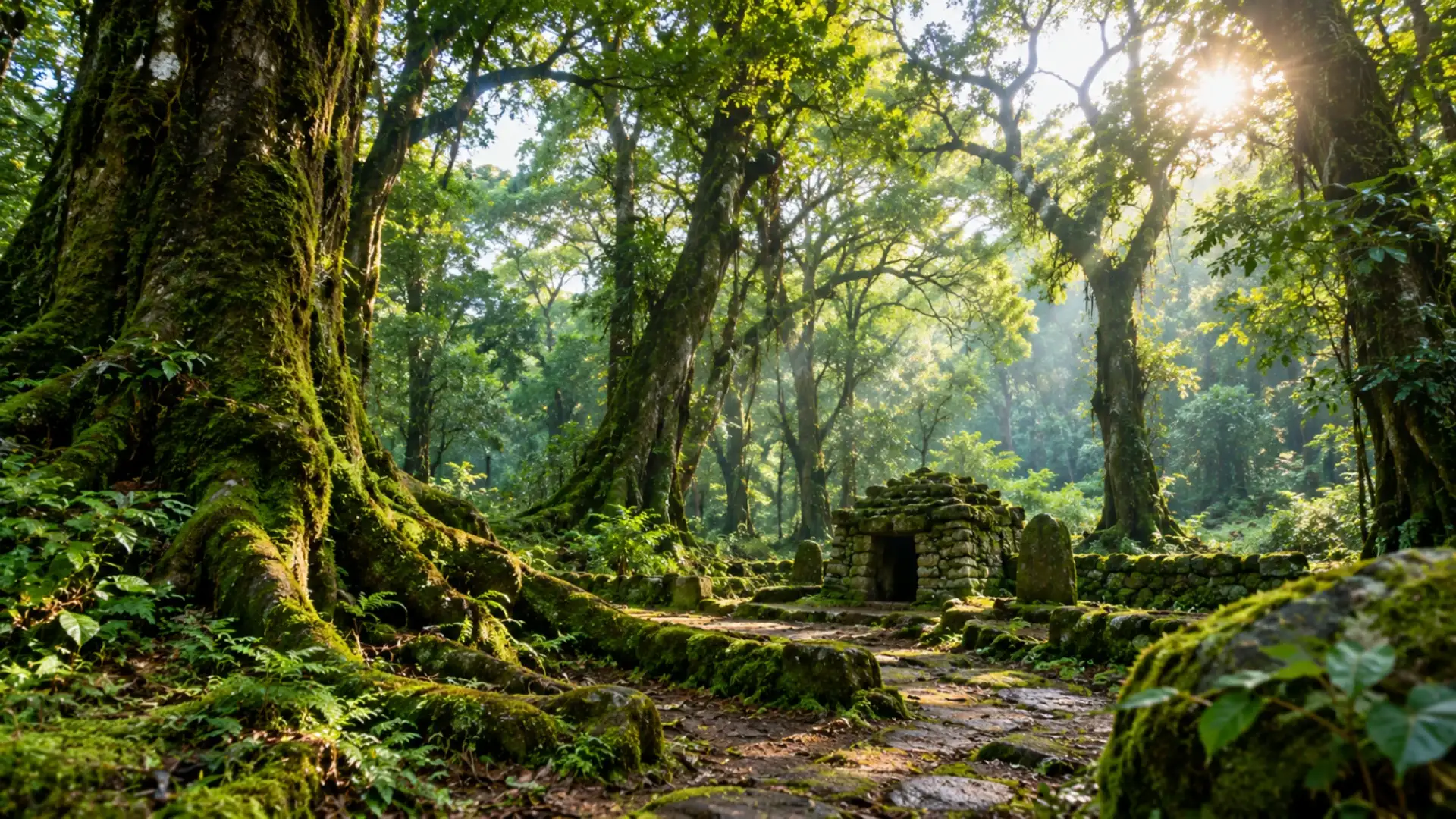
The rules are strikingly simple. Visitors are not supposed to remove anything, even a twig or stone. The restriction comes from the sacred status of the forest and the Khasi belief systems surrounding it.
That cultural protection has had a powerful ecological consequence.
Research from the Western Ghats similarly describes sacred groves as fragments of tropical forest protected through religious and cultural practices. Scientists have found that such groves can act as refuges for forest species in landscapes increasingly dominated by agriculture and human settlement.
This is what makes them so fascinating. A village may change around the forest, while the forest itself remains relatively stable.
A forest can maintain continuity through generations of trees. Fallen trunks decay, seedlings grow and species replace one another. What survives is the ecosystem and its ecological relationships.
In Mawphlang, old trees share the landscape with orchids, mushrooms and other plants that thrive beneath the dense canopy.
They demonstrate that local customs can also protect biodiversity.
For visitors, the experience is equally powerful. Walking into a forest preserved by generations of people can feel like stepping into a different period of India's history. The oldest thing there may not be a monument or inscription. It may simply be a tree that has quietly watched the village change around it.
Mawphlang Is a Forest Protected by Tradition
The Mawphlang Sacred Grove in Meghalaya is often described as more than 800 years old. Meghalaya Tourism identifies it as one of the state's most celebrated ancient sacred groves.The rules are strikingly simple. Visitors are not supposed to remove anything, even a twig or stone. The restriction comes from the sacred status of the forest and the Khasi belief systems surrounding it.
That cultural protection has had a powerful ecological consequence.
Why Sacred Groves Became Natural Time Capsules
The Meghalaya Biodiversity Board describes sacred groves as among the least disturbed forest patches in the region. Because cutting trees and collecting plants is traditionally prohibited, these areas can preserve species that have disappeared from more heavily used landscapes.Research from the Western Ghats similarly describes sacred groves as fragments of tropical forest protected through religious and cultural practices. Scientists have found that such groves can act as refuges for forest species in landscapes increasingly dominated by agriculture and human settlement.
This is what makes them so fascinating. A village may change around the forest, while the forest itself remains relatively stable.
Older Than a Village Does Not Mean Every Tree Is Ancient
There is an important distinction here. Saying that a forest is centuries old does not mean every individual tree has survived for hundreds or thousands of years.A forest can maintain continuity through generations of trees. Fallen trunks decay, seedlings grow and species replace one another. What survives is the ecosystem and its ecological relationships.
In Mawphlang, old trees share the landscape with orchids, mushrooms and other plants that thrive beneath the dense canopy.
Why These Forests Matter Today
Sacred groves offer an important lesson at a time when conservation is often associated with fences, laws and large protected areas.They demonstrate that local customs can also protect biodiversity.
For visitors, the experience is equally powerful. Walking into a forest preserved by generations of people can feel like stepping into a different period of India's history. The oldest thing there may not be a monument or inscription. It may simply be a tree that has quietly watched the village change around it.
Next Story