
The Indian Forts That Were Built Without Huge Royal Palaces

When people imagine Indian forts , they often picture enormous gateways, decorated courtyards and elaborate royal apartments. But not every fort was designed to impress a visiting court. Some were essentially military machines built into hills, cliffs and coastlines. Their priorities were water, food storage, escape routes, lookout points and layers of defence. Chitradurga in Karnataka and Lohagad in Maharashtra are striking examples. Their surviving remains tell a different story of Indian fort architecture, one where survival mattered more than luxury. These forts remind us that power was not always displayed through palaces. Sometimes it was hidden behind thick walls and clever engineering.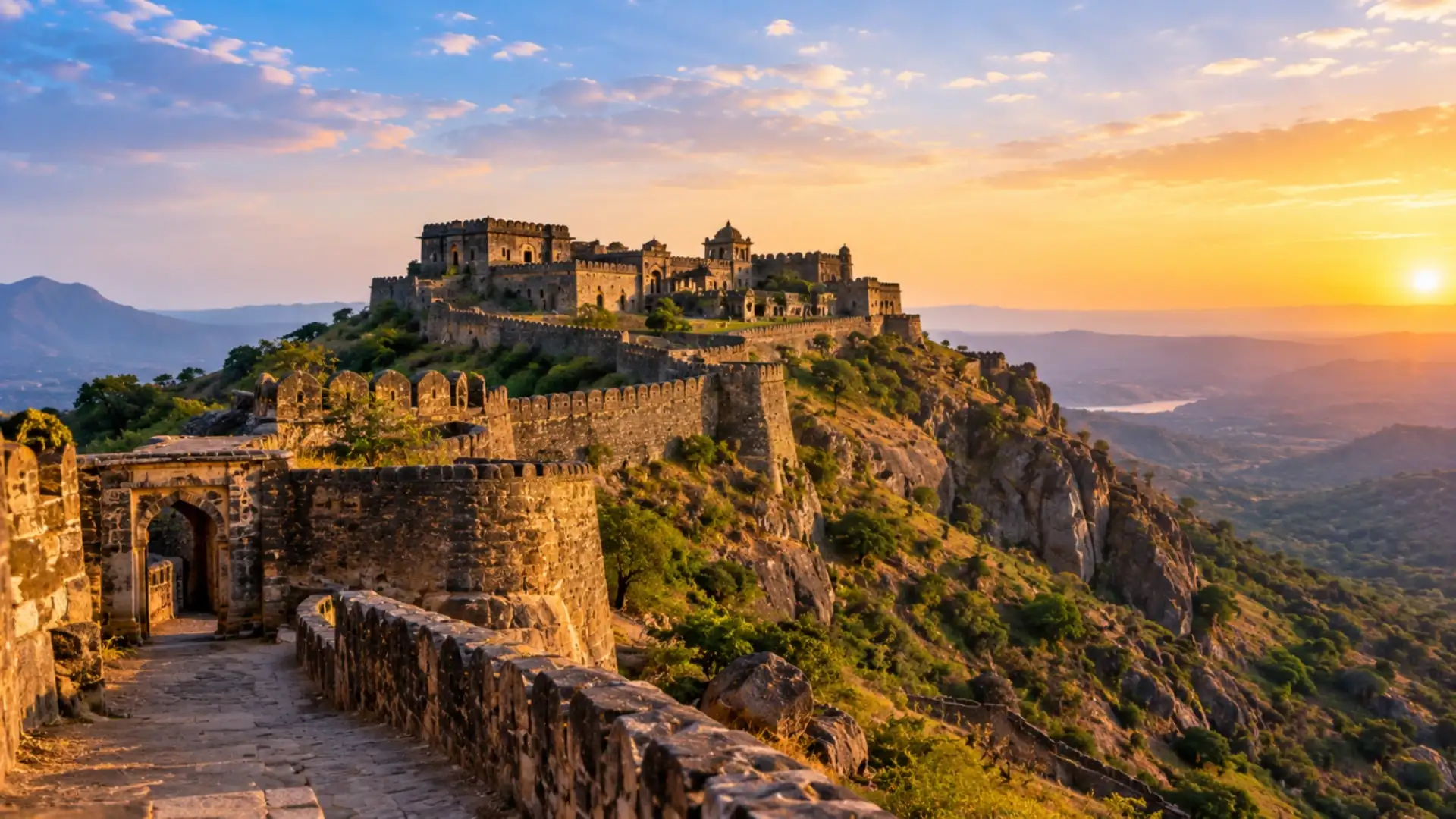
The Karnataka government describes the complex as combining hill, water and forest-fort characteristics. It contains numerous gateways, secret entrances, watch points, military quarters, granaries, temples and water systems.
There are remnants of royal buildings, but they do not dominate the landscape in the way that palace complexes do at some famous Rajput forts. Instead, the visitor encounters a sprawling defensive system designed to confuse and exhaust an approaching enemy.
Its most memorable features are defensive. Four major gateways, strong walls, water cisterns, storage areas and the dramatic Vinchukada, or Scorpion’s Tail, demonstrate how the natural mountain terrain was incorporated into the fort's design.
The fort was also used by Shivaji Maharaj and later became associated with the storage of wealth captured during military campaigns.
That distinction matters today because India's forts are often treated simply as monuments. In reality, they are records of military science, geography and resource management.
The recent recognition of the Maratha Military Landscapes by UNESCO has further highlighted the importance of understanding forts as interconnected defensive systems rather than isolated monuments.
These forts were not built simply to be beautiful. They were built to endure. And that may be the most fascinating form of architectural ambition of all.
Chitradurga Was Designed Like a Military Puzzle
Chitradurga Fort in Karnataka is one of the clearest examples of defence taking centre stage. The fort developed over centuries and eventually became famous for its seven concentric ramparts.The Karnataka government describes the complex as combining hill, water and forest-fort characteristics. It contains numerous gateways, secret entrances, watch points, military quarters, granaries, temples and water systems.
There are remnants of royal buildings, but they do not dominate the landscape in the way that palace complexes do at some famous Rajput forts. Instead, the visitor encounters a sprawling defensive system designed to confuse and exhaust an approaching enemy.
Lohagad Put Strategy Before Showmanship
Lohagad in Maharashtra has an equally practical character. Perched more than 1,000 metres above sea level, the fort was valued for its commanding position in the Sahyadris.You may also like
- Love Piping-Hot Tea or Coffee? Research Links Very Hot Drinks to Higher Esophageal Cancer Risk
- Taking Painkillers Too Often? Your Kidneys Could Be at Risk, Nephrologists Warn
- EPFO Update: From PF-related tasks to UAN activation—get these things done in a jiffy without having to make rounds to your employer..
- Meet Jyoti Srivastava: She once designed rockets for the Indian Army; now she makes baby food inspired by her son's own diet
- Bank Holiday: Will banks in Delhi remain closed on September 11? Know the full facts regarding the BRICS Summit and the strike..
Its most memorable features are defensive. Four major gateways, strong walls, water cisterns, storage areas and the dramatic Vinchukada, or Scorpion’s Tail, demonstrate how the natural mountain terrain was incorporated into the fort's design.
The fort was also used by Shivaji Maharaj and later became associated with the storage of wealth captured during military campaigns.
A Different Idea of Royal Power
These forts challenge the assumption that historical rulers always wanted to surround themselves with extravagance. In many strategic locations, a ruler needed a fortress that could survive a siege rather than a palace that could host grand ceremonies.That distinction matters today because India's forts are often treated simply as monuments. In reality, they are records of military science, geography and resource management.
The recent recognition of the Maratha Military Landscapes by UNESCO has further highlighted the importance of understanding forts as interconnected defensive systems rather than isolated monuments.
The Architecture of Survival
A fort without a spectacular palace is not necessarily less impressive. In many cases, its real achievement lies in what is less obvious: how soldiers obtained water, where supplies were stored, how attackers were funnelled towards vulnerable points and how the surrounding landscape became part of the defence.These forts were not built simply to be beautiful. They were built to endure. And that may be the most fascinating form of architectural ambition of all.






Loving Newspoint? Download the app now
