
How Chai Became India's Everyday Drink After Starting as a Plantation Export

Every morning, across railway platforms, roadside dhabas, and kitchen stoves from Assam to Kerala, the same ritual plays out, water and milk brought to a boil, loose tea tipped in, sugar added without measuring, sometimes a bruised cardamom pod or a coin of ginger. The resulting cup is so woven into daily life that it is hard to imagine it was ever foreign. It was not always this way.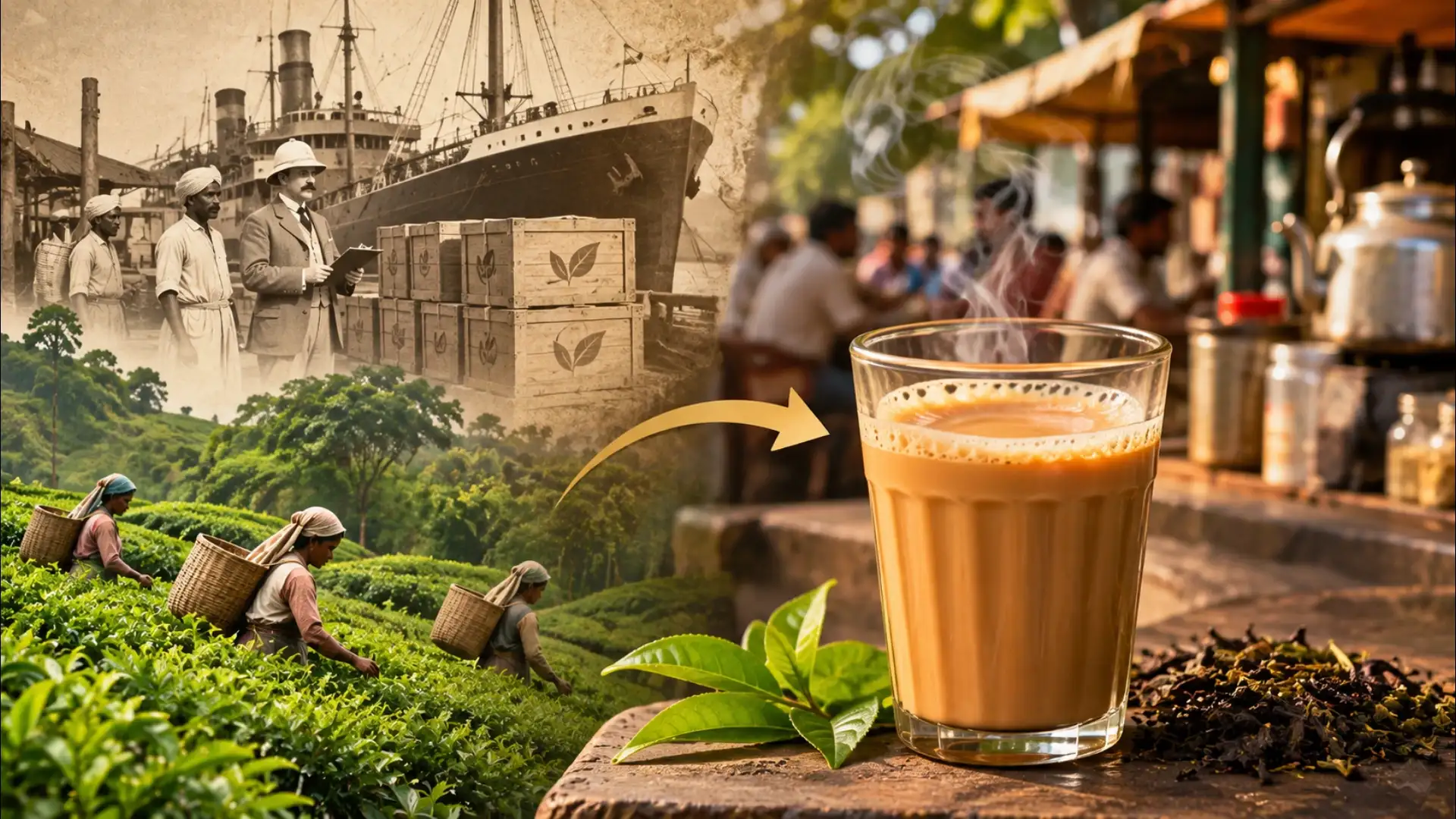
Indians at the time drank very little tea. The dominant warm beverage across most of the subcontinent was milk-based, spiced, and sweet, what we would now recognise as the base of masala chai, minus the tea itself. Coffee held ground in the south. Tea was, for most people, an export crop they happened to live near.
The campaign worked, but not quite as planned. The Association wanted Indians to drink tea the British way: weak, with a little milk added to a cup of hot water. What Indians actually did was take the cheap tea and throw it into the pot alongside the milk and spices they were already using. The drink that emerged was stronger, sweeter, and far more assertive than anything a London drawing room would have recognised as tea. The Association reportedly complained about this for years. It made no difference.
The proportions and the exact combination vary enormously by region. In Gujarat and Rajasthan, the tea is often very sweet and heavily milked. In Kashmir, a pink-hued tea called noon chai, made with green tea, salt, and baking soda, has almost nothing in common with the masala chai of the plains. In the south, strong, dark tea with condensed milk, pulled dramatically between two cups to create froth, is its own tradition entirely. There is no single chai. There are dozens, each shaped by what the local kitchen already contained.
The kulhad, the small unglazed clay cup, deserves its own note. It kept the tea warm through the clay's insulating properties, it was disposable without creating lasting waste, and it gave the tea a faint earthy flavour that many drinkers found pleasant. When railways switched to disposable plastic cups in the latter decades of the twentieth century, the kulhad retreated to heritage and nostalgia. Some stations have brought it back. The argument for it has not changed.
Chai carries that history in every cup, the Assam leaf, the Ayurvedic spice, the railway stall, the mill break, the clay kulhad. None of those things were planned to go together. They just did, and kept doing so until it became impossible to imagine the morning without them.
Tea Was Grown in India for Britain, Not for Indians
The British East India Company began cultivating tea in Assam in the 1830s, after botanist Robert Fortune smuggled plants and seeds out of China. The goal was simple, break China's monopoly on tea supply to Britain. By the latter half of the nineteenth century, Assam and Darjeeling were producing enormous quantities. Almost none of it stayed in India. It moved by rail to Calcutta's port and onto ships bound for London, where it filled the cups of a market that had been drinking tea for two centuries.Indians at the time drank very little tea. The dominant warm beverage across most of the subcontinent was milk-based, spiced, and sweet, what we would now recognise as the base of masala chai, minus the tea itself. Coffee held ground in the south. Tea was, for most people, an export crop they happened to live near.
The Campaign That Invented a Habit
By the early twentieth century, plantation owners and the Indian Tea Association faced a problem: global prices were falling and supply was outpacing British demand. The solution they landed on was to manufacture a domestic market. Beginning around 1900 and accelerating through the 1920s and 1930s, the Association ran an organised campaign to push tea into Indian life. They paid for tea stalls at railway stations. They subsidised chai vendors in textile mills, offering workers a mid-shift break structured around the drink. They distributed small quantities of cheap, low-grade tea, the broken leaf and dust grades that did not meet export standards, to build the habit at minimal cost.The campaign worked, but not quite as planned. The Association wanted Indians to drink tea the British way: weak, with a little milk added to a cup of hot water. What Indians actually did was take the cheap tea and throw it into the pot alongside the milk and spices they were already using. The drink that emerged was stronger, sweeter, and far more assertive than anything a London drawing room would have recognised as tea. The Association reportedly complained about this for years. It made no difference.
You may also like
- Hot Water Without Waste: Geyser Timing, Tank Size and the Habit That Doubles Your Bill
- Spraying vinegar on your mattress: What this simple household cleaning trick does, how to apply it correctly and how often to use it to tackle mild odours and keep your mattress fresh
- Astrological Insights: Rahu and Ketu's Upcoming Transit and Its Impact on Zodiac Signs
- Why Kali Is Shown with Her Tongue Out and What the Posture Means
- Why Onam Is Celebrated as a King's Homecoming in Kerala's Oldest Story
The Spice Question: Masala Chai's Roots
The spices that now define masala chai, cardamom, ginger, cloves, black pepper, cinnamon, were not added to tea by accident. Each of these had a long prior life in Ayurvedic practice as warming, digestive, or stimulating ingredients. Ginger and black pepper were used in traditional kadha preparations drunk for colds and congestion. Cardamom was a common flavouring in milk-based sweets and drinks. When Indians adapted the British tea into something their own, they reached for ingredients already in the kitchen and already trusted.The proportions and the exact combination vary enormously by region. In Gujarat and Rajasthan, the tea is often very sweet and heavily milked. In Kashmir, a pink-hued tea called noon chai, made with green tea, salt, and baking soda, has almost nothing in common with the masala chai of the plains. In the south, strong, dark tea with condensed milk, pulled dramatically between two cups to create froth, is its own tradition entirely. There is no single chai. There are dozens, each shaped by what the local kitchen already contained.
The Chai Wallah and the Economy of the Cup
The figure of the chai wallah, the vendor with a battered aluminium pot and a row of small glasses or clay kulhads, became a fixture of Indian public life across the twentieth century. Railway stations were the first sites because the Tea Association had specifically targeted them, but the model spread to bus depots, market lanes, factory gates, and roadside corners everywhere. The economics worked because the margins on a single cup were thin but the volume was constant. A good location near a busy junction could sustain a family.The kulhad, the small unglazed clay cup, deserves its own note. It kept the tea warm through the clay's insulating properties, it was disposable without creating lasting waste, and it gave the tea a faint earthy flavour that many drinkers found pleasant. When railways switched to disposable plastic cups in the latter decades of the twentieth century, the kulhad retreated to heritage and nostalgia. Some stations have brought it back. The argument for it has not changed.
What the Cup Actually Became
The British planted tea to serve their own market and found, a century later, that the country they planted it in had become one of the largest tea-consuming nations on earth, on its own terms. The drink that Indians made from plantation leftovers and kitchen spices is not a version of British tea. It is something that did not exist before, created by the friction between a colonial commodity and a domestic culture that had no interest in drinking it as instructed.Chai carries that history in every cup, the Assam leaf, the Ayurvedic spice, the railway stall, the mill break, the clay kulhad. None of those things were planned to go together. They just did, and kept doing so until it became impossible to imagine the morning without them.






Loving Newspoint? Download the app now
