
The Roads That Disappear Under the Sea: How Tidal Roads Work

Most roads are designed to keep water away. But in a few extraordinary places, the road itself disappears beneath the sea. These tidal causeways are built across shallow coastal waters and are covered by the incoming tide at certain times. When the sea retreats, the route re-emerges and becomes usable again. One of the best-known examples is the Passage du Gois in France, a causeway connecting Noirmoutier Island with the mainland. It is a spectacular reminder that some roads are controlled not by traffic lights, but by the rhythm of the ocean.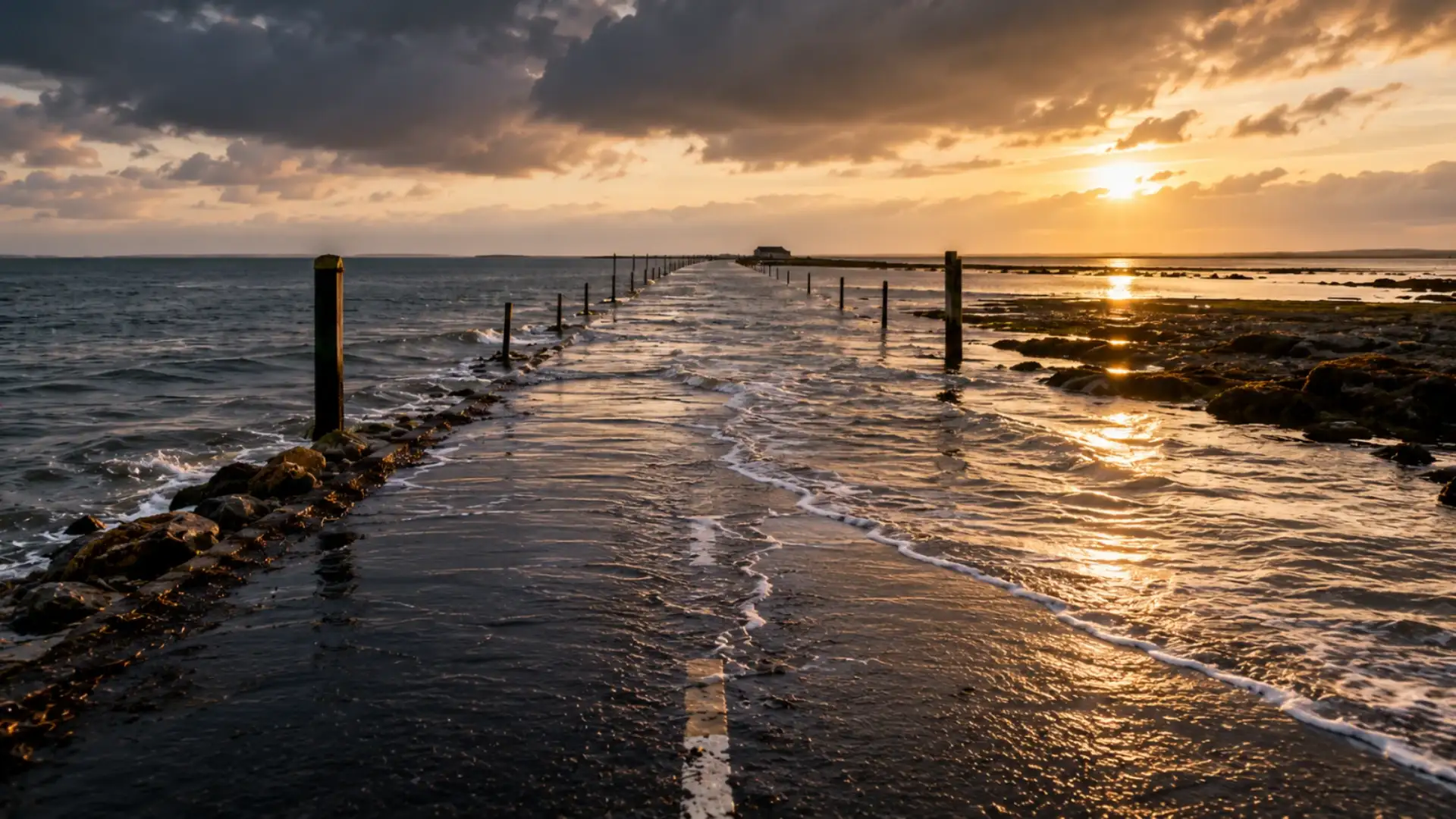
The timing is critical. Drivers cannot simply assume that a road visible in the morning will remain safe later in the day.
Tide tables are essential for planning a crossing.
Before modern engineering made large bridges and tunnels more accessible, taking advantage of naturally shallow coastal areas could provide an efficient connection.
The downside is obvious: the sea remains in charge.
This makes these roads unusual not only from an engineering perspective but also from a safety point of view.
The ocean's movement is governed by gravitational interactions involving the Earth, Moon and Sun. Local geography then determines how dramatically the water level changes at a particular location.
For visitors, driving across a tidal road can feel like travelling on a temporary landscape.
But the disappearing road is not a trick. It is a carefully timed meeting between engineering and the sea.
The next time you see a road stretching towards the horizon, remember that somewhere in the world there are roads that literally vanish beneath the waves and return a few hours later.
A Road Controlled by the Tide
The Passage du Gois is a natural-looking but carefully established route across a tidal bay. For part of the day, it is covered by seawater. As the tide falls, the road becomes accessible again.The timing is critical. Drivers cannot simply assume that a road visible in the morning will remain safe later in the day.
Tide tables are essential for planning a crossing.
Why Build a Road Like This?
Historically, tidal causeways provided valuable links between islands and mainland areas without requiring expensive bridges.You may also like
- Health Tips: These are the main symptoms of swine flu, do not ignore them
- Health Tips: To get rid of fatty liver problems, include these three things in your diet today
- Union Minister Kiren Rijiju responds to Arunachal girl's cute request, “Humko Indian bolo”: “You have become famous; the whole of India loves you”
- High heels were originally made for men, here's surprising story
- 5 Cucumber Skincare Secrets for Fresh, Glowing Skin
Before modern engineering made large bridges and tunnels more accessible, taking advantage of naturally shallow coastal areas could provide an efficient connection.
The downside is obvious: the sea remains in charge.
What Happens If Someone Gets Caught?
Vehicles that remain on the causeway too long can become surrounded by rising water. Some tidal crossings have elevated refuge structures where people can climb above the water level if they misjudge the timing.This makes these roads unusual not only from an engineering perspective but also from a safety point of view.
Nature Shapes the Journey
Tidal roads demonstrate something modern infrastructure often hides: human transport still depends heavily on natural systems.The ocean's movement is governed by gravitational interactions involving the Earth, Moon and Sun. Local geography then determines how dramatically the water level changes at a particular location.
For visitors, driving across a tidal road can feel like travelling on a temporary landscape.
But the disappearing road is not a trick. It is a carefully timed meeting between engineering and the sea.
The next time you see a road stretching towards the horizon, remember that somewhere in the world there are roads that literally vanish beneath the waves and return a few hours later.






Loving Newspoint? Download the app now
