
The Room That Stays Made for a Week After a Child Leaves for Hostel


The bag was packed on a Sunday. By Wednesday, the pillow on the left side of the bed was still exactly where it was when you last smoothed it down. You hadn't gone in. Not to clean, not to check. You'd just left it.
There is a specific kind of loss that arrives not in one wave but in a series of small domestic encounters. The untouched glass on the nightstand. The charger still coiled around the bedpost because he took a new one. The room that smells, for a few days, like the person who used to be in it. Grief researchers call this phenomenon continuing bonds, the way attachment does not end when physical presence does, but finds new objects to rest on. The made bed is not a shrine. It is the nervous system's way of keeping a door open while the mind catches up.
Why the Room Becomes the Relationship
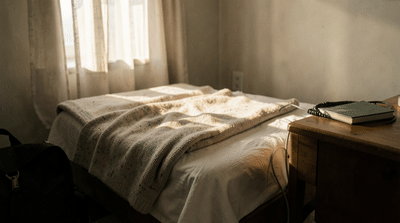
 The first week after child leaves home brings a quiet stillness to familiar spaces. A moment of reflection.
For years, that room was a living argument. Clothes on the floor. A plate that somehow never made it back to the kitchen. A light left on at two in the morning. The room was the child, in all the ways that irritated and delighted in equal measure. When the child goes, the room does not stop being the child. It becomes a kind of holding space, the place where the relationship continues to exist in its physical form while the emotional reality is still being processed.
Psychologists who study attachment in family systems note that parents, particularly primary caregivers, often experience a child's departure for residential schooling or college as an ambiguous loss. Unlike a death, the child is reachable. Unlike a visit, they are not here. The brain, which is not especially good at ambiguous things, keeps running its old routines. You walk past the door and your hand almost knocks. You buy the brand of biscuit they liked and only notice at the checkout. These are not signs of pathology. They are signs that the attachment was real and the nervous system is honest about it.
The First Week Is Its Own ThingThe first seven days after a child leaves for hostel tend to follow a particular shape, and most parents who have been through it describe something similar without having compared notes. The first two days carry a kind of suspension, the house is quiet in a way that feels temporary, as if they have just stepped out. By the third day, the quiet has a different quality. It is clearly not temporary. This is when the room tends to get left alone most deliberately, not out of forgetfulness but out of something that feels like respect for the absence.
By the end of the week, most parents have either entered the room for a practical reason, to retrieve something, to open a window, or they haven't, and the not-entering has become its own ritual. Neither response is wrong. The parent who tidies the room on day two and repaints it by day ten is not grieving less. The parent who leaves the curtains at the exact angle they were on Sunday is not grieving more. These are just different ways the same attachment expresses itself through action and through stillness.
What the Child Is Doing With the Same Time
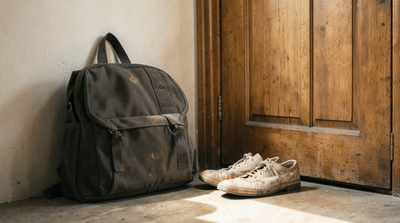 The quiet stillness before the first week after child leaves home. A moment of reflection.
It is worth holding this alongside what is usually happening on the other end. A child settling into hostel life in the first week is, in most cases, overwhelmed in a way that leaves little room for homesickness in its pure form. The logistics of a new place, where the bathroom is, how the mess works, who the person in the next bed is, occupy most of the available attention. Homesickness, when it arrives, tends to come later: around the third or fourth week, once the novelty has worn down and the routines of the new place have not yet become comfortable.
This timing mismatch is one of the harder things for parents to sit with. The child calls on day two sounding fine, almost distracted, and the parent who has been standing at a made bed for three days does not know quite what to do with that. It does not mean the attachment runs in one direction. It means the child is doing what children are supposed to do, which is move into the world, and the parent is doing what parents are supposed to do, which is feel the full weight of that.
The Room Will Change, and That Is the PointAt some point, a week, a month, whenever it happens, the room will be entered properly. A window will be opened. The charger will be put away. The pillow will be flipped. This is not erasure. It is the parent's version of what the child is doing at the other end: building a new normal around the shape of what changed.
Some families convert the room quickly and find that useful. Others keep it mostly as it was for months and find that useful too. What tends not to be useful is treating either choice as a measure of love. The room was never the child. It was just the place where the child happened to be, for a long time, and the body remembers the geography of love even when the mind is ready to move.
The made bed, the closed door, the untouched glass, these are not failure to let go. They are evidence that something real was there. The week passes. The room gets entered. The relationship continues in a different form, which is what it was always going to do.
Experiencing stress or misunderstandings in your relationship with your child? Your name energy may play a role. Check your name energy here.
Unlock insightful tips and inspiration on personal growth, productivity, and well-being. Stay motivated and updated with the latest at My Life XP.
There is a specific kind of loss that arrives not in one wave but in a series of small domestic encounters. The untouched glass on the nightstand. The charger still coiled around the bedpost because he took a new one. The room that smells, for a few days, like the person who used to be in it. Grief researchers call this phenomenon continuing bonds, the way attachment does not end when physical presence does, but finds new objects to rest on. The made bed is not a shrine. It is the nervous system's way of keeping a door open while the mind catches up.
Why the Room Becomes the Relationship
For years, that room was a living argument. Clothes on the floor. A plate that somehow never made it back to the kitchen. A light left on at two in the morning. The room was the child, in all the ways that irritated and delighted in equal measure. When the child goes, the room does not stop being the child. It becomes a kind of holding space, the place where the relationship continues to exist in its physical form while the emotional reality is still being processed.
Psychologists who study attachment in family systems note that parents, particularly primary caregivers, often experience a child's departure for residential schooling or college as an ambiguous loss. Unlike a death, the child is reachable. Unlike a visit, they are not here. The brain, which is not especially good at ambiguous things, keeps running its old routines. You walk past the door and your hand almost knocks. You buy the brand of biscuit they liked and only notice at the checkout. These are not signs of pathology. They are signs that the attachment was real and the nervous system is honest about it.
The First Week Is Its Own ThingThe first seven days after a child leaves for hostel tend to follow a particular shape, and most parents who have been through it describe something similar without having compared notes. The first two days carry a kind of suspension, the house is quiet in a way that feels temporary, as if they have just stepped out. By the third day, the quiet has a different quality. It is clearly not temporary. This is when the room tends to get left alone most deliberately, not out of forgetfulness but out of something that feels like respect for the absence.
By the end of the week, most parents have either entered the room for a practical reason, to retrieve something, to open a window, or they haven't, and the not-entering has become its own ritual. Neither response is wrong. The parent who tidies the room on day two and repaints it by day ten is not grieving less. The parent who leaves the curtains at the exact angle they were on Sunday is not grieving more. These are just different ways the same attachment expresses itself through action and through stillness.
What the Child Is Doing With the Same Time
It is worth holding this alongside what is usually happening on the other end. A child settling into hostel life in the first week is, in most cases, overwhelmed in a way that leaves little room for homesickness in its pure form. The logistics of a new place, where the bathroom is, how the mess works, who the person in the next bed is, occupy most of the available attention. Homesickness, when it arrives, tends to come later: around the third or fourth week, once the novelty has worn down and the routines of the new place have not yet become comfortable.
This timing mismatch is one of the harder things for parents to sit with. The child calls on day two sounding fine, almost distracted, and the parent who has been standing at a made bed for three days does not know quite what to do with that. It does not mean the attachment runs in one direction. It means the child is doing what children are supposed to do, which is move into the world, and the parent is doing what parents are supposed to do, which is feel the full weight of that.
The Room Will Change, and That Is the PointAt some point, a week, a month, whenever it happens, the room will be entered properly. A window will be opened. The charger will be put away. The pillow will be flipped. This is not erasure. It is the parent's version of what the child is doing at the other end: building a new normal around the shape of what changed.
Some families convert the room quickly and find that useful. Others keep it mostly as it was for months and find that useful too. What tends not to be useful is treating either choice as a measure of love. The room was never the child. It was just the place where the child happened to be, for a long time, and the body remembers the geography of love even when the mind is ready to move.
The made bed, the closed door, the untouched glass, these are not failure to let go. They are evidence that something real was there. The week passes. The room gets entered. The relationship continues in a different form, which is what it was always going to do.
Experiencing stress or misunderstandings in your relationship with your child? Your name energy may play a role. Check your name energy here.
Unlock insightful tips and inspiration on personal growth, productivity, and well-being. Stay motivated and updated with the latest at My Life XP.
Next Story